
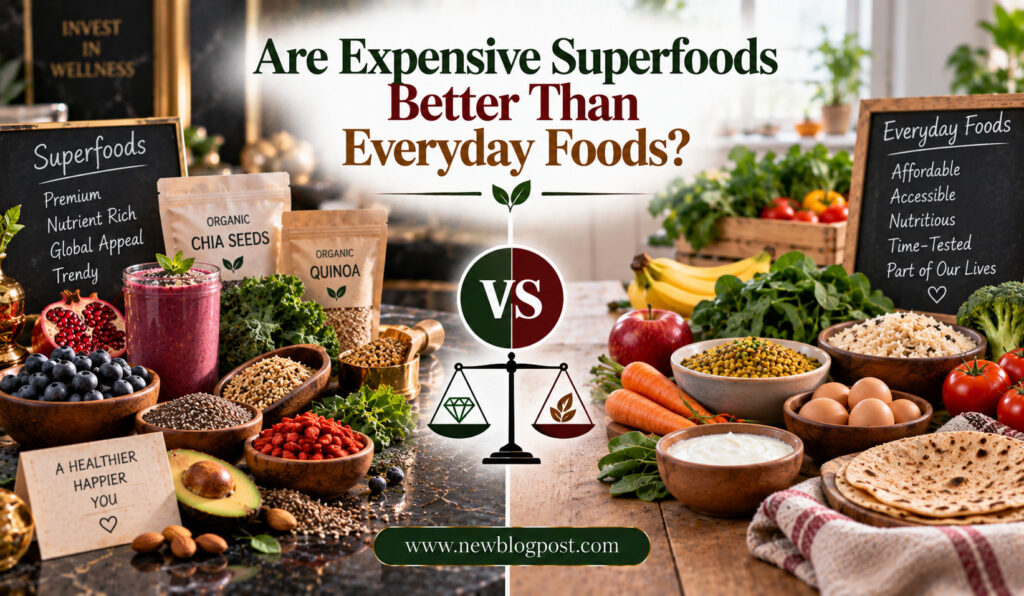

The modern health-food market has created a new category of premium ingredients that are often promoted as “superfoods.” Chia seeds, quinoa, goji berries, imported berries, specialty nuts, matcha and other products have become familiar to consumers looking for nutritious additions to their diets.
But their higher price raises an important question: are expensive superfoods actually better than everyday foods?
The answer depends on what “better” means. Some premium ingredients offer specific nutrients or plant compounds in useful amounts, but that does not automatically make them more nutritious overall than affordable foods already available in local markets.
As consumers become more careful about grocery spending and increasingly interested in practical nutrition, attention is shifting from food trends to the actual nutritional value of everyday meals.
What Makes a Food a “Superfood”?
“Superfood” is not a formal scientific category. The word is generally used in marketing and popular media to describe foods that contain notable amounts of certain nutrients or naturally occurring compounds.
The problem is that the term can create the impression that a particular food has extraordinary health benefits. In reality, no single food provides everything the body needs.
A balanced diet usually depends on variety. Fruits, vegetables, whole grains, pulses, nuts, seeds and other foods each contribute different nutrients. The overall eating pattern is therefore more important than whether an ingredient carries a fashionable label.
This is where everyday foods can compete with premium superfoods.
Everyday Foods Can Offer Strong Nutritional Value
Many affordable foods contain nutrients that are essential for a balanced diet. Lentils, chickpeas, beans, peanuts, seasonal fruits, vegetables, eggs, whole grains and dairy products can all contribute important nutrients depending on individual dietary needs.
In India, traditional foods such as dal, curd, millets, vegetables and peanuts are widely available and can be incorporated into meals without requiring specialty shopping.
For example, lentils provide protein, fiber and minerals. Peanuts provide protein and fats. Seasonal fruits contribute vitamins, minerals, fiber and plant compounds.
These foods may not have the same marketing visibility as imported wellness ingredients, but their nutritional contribution can be significant.
Price Does Not Automatically Indicate Nutrition
One of the biggest misconceptions in the premium food market is that a higher price means higher nutritional quality.
Food prices are influenced by many factors beyond nutrition. Imported products may cost more because of transportation, storage, packaging, distribution and currency differences. Specialty products can also carry higher prices because of branding and limited supply.
A locally produced food can therefore be highly nutritious while remaining relatively inexpensive.
| Premium food trend | Everyday alternative | Similar nutritional role |
| Chia seeds | Flaxseed or other local seeds | Fiber and plant-based fats |
| Quinoa | Millets or whole grains | Carbohydrates, fiber and minerals |
| Goji berries | Local berries or seasonal fruits | Fiber and plant compounds |
| Almonds | Peanuts | Protein, fats and minerals |
| Imported berries | Seasonal local fruits | Vitamins, fiber and plant compounds |
| Specialty greens | Local leafy vegetables | Vitamins, minerals and fiber |
This does not mean the foods in each row are nutritionally identical. Their nutrient profiles differ, but the comparison illustrates that expensive ingredients are not the only way to obtain valuable nutrients.
Local Foods Often Have a Practical Advantage
Everyday foods can be easier to integrate into established eating habits. A bowl of dal, a serving of vegetables or a seasonal fruit requires little explanation for most households.
Local foods may also be more readily available. Consumers can purchase them from neighborhood markets, supermarkets or local producers without searching for specialty stores.
Seasonality can provide another advantage. When fruits and vegetables are abundant, prices may become more accessible, giving families opportunities to increase their intake of fresh produce.
This does not mean imported foods are necessarily inferior. Rather, consumers can often achieve nutritional variety without depending heavily on premium products.
The Superfood Marketing Effect
Marketing has played a major role in turning certain ingredients into wellness trends. Packaging may highlight antioxidants, omega-3 fatty acids, protein, minerals or other nutritional characteristics.
These statements can be factually based while still giving consumers an incomplete picture. A food containing a particular nutrient is not necessarily the best or only source of that nutrient.
The word “superfood” can also make consumers focus on individual ingredients rather than meals. Someone might spend significantly more on a specialty seed or powder while overlooking affordable vegetables, pulses and whole grains.
Nutrition is more complicated than a single ingredient.
Are Expensive Superfoods Ever Worth Buying?
Premium foods can still have a place in a balanced diet. Consumers may enjoy their flavor, texture, convenience or culinary uses.
Some ingredients also provide nutrients that consumers specifically want to include. For example, someone may choose chia seeds because they enjoy adding them to breakfast or because they want a convenient source of fiber and plant-based omega-3 fatty acids.
The important point is that the purchase should be based on actual needs rather than the assumption that expensive automatically means healthier.
Four useful questions to ask before buying a premium superfood are:
- What nutrients does it actually provide?
- Can a locally available food provide a similar nutritional role?
- Does the product contain added sugar, salt or other ingredients?
- Will it realistically become part of the regular diet?
These questions can help consumers make more informed grocery decisions.
Everyday Foods Can Build Complete Meals
One advantage of traditional everyday foods is that they are often consumed as part of complete meals rather than isolated ingredients.
Consider a traditional Indian meal containing dal, vegetables, roti or rice, curd and seasonal produce. Different components contribute different nutrients.
A superfood ingredient can be added to such a meal, but it does not necessarily make the meal dramatically healthier simply because it has a premium reputation.
This broader approach is especially important for families. Building meals around affordable staples can make healthy eating more practical over the long term.
Imported Does Not Mean Better
The global food market has made ingredients from distant regions more accessible than ever. This has introduced consumers to new flavors and nutritional options.
However, the origin of a food does not determine its nutritional superiority.
A food imported from another country may have valuable nutrients, but a similar nutrient can often be found in locally grown foods. For example, different seeds, legumes, grains and fruits can provide overlapping nutritional benefits even though their exact nutrient profiles differ.
Consumers can therefore explore international foods without assuming that they are automatically healthier than local alternatives.
Processing Matters Too
The form in which a food is sold can be just as important as the ingredient itself.
A plain nut, seed or grain may have a relatively simple nutritional profile, while a packaged snack made with the same ingredient can contain added sugar, salt, oils or flavorings.
The same principle applies to beverages. A fruit may be nutritious in its whole form, while a sweetened fruit drink can provide a very different nutritional experience.
Consumers should therefore look beyond the front of the package and check the ingredient list and nutrition information.
Four Ways to Get More Nutrition Without Overspending
Eating a nutritious diet does not require filling the kitchen with expensive specialty ingredients. Simple strategies can make everyday foods work harder.
- Buy seasonal fruits and vegetables when supply is high.
- Include pulses, beans and other affordable protein sources regularly.
- Choose whole or minimally processed grains where appropriate.
- Compare nutrition labels instead of choosing products based only on health-focused marketing.
These habits can provide variety without turning grocery shopping into a search for premium products.
The Role of Variety
One area where both everyday foods and superfoods can contribute is dietary variety. Trying different grains, fruits, vegetables, seeds and legumes can expand the range of nutrients and flavors in a diet.
Consumers do not have to choose between traditional foods and modern superfoods. A person can enjoy quinoa occasionally while continuing to eat rice, dal and millets.
Similarly, chia seeds can be added to breakfast without replacing other nutritious seeds or whole foods.
The goal is not to identify one winning ingredient but to create an eating pattern that is varied and sustainable.
What Nutrition Experts Generally Emphasize
Mainstream nutrition guidance generally focuses on overall dietary patterns rather than individual “superfoods.” Eating a variety of nutrient-dense foods and limiting excessive amounts of added sugars, sodium and highly processed foods are recurring themes in healthy-eating guidance.
This perspective changes the question from “Which superfood should I buy?” to “What is missing from my overall diet?”
If a person’s diet lacks fiber, adding more vegetables, fruits, legumes and whole grains may be more useful than purchasing an expensive specialty ingredient simply because it is marketed as a superfood.
Conclusion
Expensive superfoods can be nutritious, but a higher price does not automatically make them better than everyday foods. Many affordable ingredients already provide important nutrients and can form the foundation of balanced meals.
The growing interest in superfoods has introduced consumers to new ingredients, but it has also highlighted the importance of looking beyond marketing language. Nutrition depends on the complete diet, preparation methods, portions and individual needs.
For many households, everyday foods such as pulses, vegetables, fruits, whole grains, nuts and seeds can provide an affordable and practical foundation for healthy eating.
The modern food market does not have to be a choice between traditional staples and fashionable superfoods. Both can have a place. The more useful approach is to focus on variety, nutritional value, affordability and foods that can realistically become part of everyday eating habits.
FAQs
Are expensive superfoods healthier than regular foods?
Not necessarily. Some premium foods contain useful nutrients, but price is not a reliable measure of nutritional quality.
What are affordable alternatives to superfoods?
Depending on the nutrient and food, options can include lentils, chickpeas, peanuts, seasonal fruits, vegetables, whole grains, millets and locally available seeds.
Is quinoa healthier than rice?
They have different nutritional profiles, and neither should automatically be considered universally healthier. The choice can depend on the type of rice, portion size and overall diet.
Are imported fruits more nutritious?
Not automatically. Imported and local fruits can both provide valuable nutrients. Variety and overall fruit intake are more important than simply choosing imported produce.
Should I stop buying superfoods?
There is generally no need to avoid them simply because they are marketed as superfoods. If you enjoy them and they fit your budget and dietary needs, they can be part of a varied diet.