
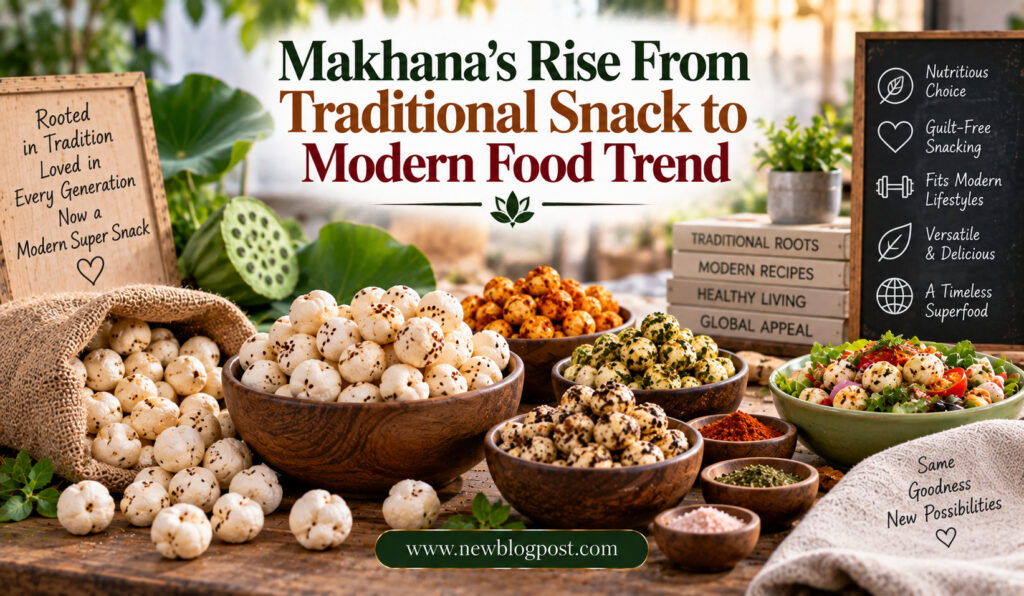

Makhana, once known mainly as a traditional snack in parts of India, is rapidly becoming a familiar name in modern food markets. Also known as fox nuts or lotus seeds, makhana has moved beyond its traditional role and is now appearing on supermarket shelves, online grocery platforms, health-focused menus and packaged snack aisles.
The change reflects a wider shift in consumer preferences. People are increasingly looking for snacks that are convenient, crunchy and made from recognizable ingredients. At the same time, interest in traditional Indian foods is growing, giving products such as makhana an opportunity to reach new audiences.
From simple roasted makhana prepared at home to flavored, packaged and premium versions, the ingredient is now being presented in formats designed for contemporary consumers. Its journey demonstrates how a traditional food can gain a new identity without losing its cultural connection.
What Is Makhana?
Makhana is the edible seed of the prickly water lily, commonly associated with the plant Euryale ferox. The seeds are processed and popped to create the familiar white, lightweight pieces commonly sold as makhana.
The ingredient has a long history in Indian food traditions. It has been used in various regional preparations and is also associated with fasting and religious food practices.
For generations, households have roasted makhana and prepared it with simple seasonings. Today, the same ingredient is being transformed into packaged snacks featuring flavors such as salt and pepper, peri-peri, cheese, herbs and spices.
This combination of tradition and modern food processing has helped makhana move into a much wider consumer market.
From Home Kitchens to Supermarket Shelves
Makhana’s transformation is closely connected with the changing Indian snack market. Consumers who once prepared it primarily at home can now find ready-to-eat versions in supermarkets and online stores.
Packaging has played a major role. Modern brands are presenting makhana in attractive pouches, resealable packs and smaller portions suitable for office desks, travel and quick snacking.
The emphasis is often on convenience. Instead of buying raw or unprocessed seeds and preparing them at home, consumers can open a packet and eat roasted makhana immediately.
This shift mirrors what has happened with several other traditional foods. Familiar ingredients are being repackaged into convenient products that fit modern lifestyles.
Health-Conscious Consumers Are Driving Interest
The growing focus on healthier snacking has created another opportunity for makhana. Many consumers are trying to reduce their dependence on heavily fried snacks and are looking for alternatives that can fit into their everyday eating patterns.
Makhana naturally contains carbohydrates, some protein, fiber and minerals. It is also relatively low in fat in its plain, unroasted form. However, the nutritional profile of a packaged makhana snack depends on how it is processed and seasoned.
For example, products prepared with substantial amounts of oil, salt, sugar or flavoring ingredients may differ significantly from plain roasted makhana.
This is why consumers should consider the complete nutrition label rather than relying solely on marketing descriptions.
The Appeal of Crunchy Snacking
Texture is an important part of makhana’s popularity. When roasted properly, it becomes light and crunchy, giving consumers the satisfying texture associated with traditional snack foods.
This makes it suitable for different occasions. It can be eaten while watching television, added to lunch boxes or carried as a snack during travel.
Its neutral flavor also gives food companies plenty of room for experimentation. A basic roasted product can be transformed with different seasonings without changing the underlying ingredient.
Four common ways consumers use makhana include:
- Dry roasting it with simple spices.
- Adding it to homemade snack mixes.
- Using flavored packaged versions for quick snacking.
- Including it in selected traditional recipes and fasting foods.
The flexibility of the ingredient is one of the reasons it has adapted so easily to modern food culture.
Makhana and India’s Agricultural Economy
The rise of makhana is also connected with agricultural communities, particularly in eastern India. Bihar has long been recognized as a major center of makhana cultivation and processing.
The crop is closely connected with water bodies and specialized cultivation practices. Processing the seeds into the white popped product requires additional work, creating opportunities beyond farming itself.
As consumer demand increases, attention is also turning toward the supply chain. Farmers, processors, traders, distributors and food brands all play roles in bringing makhana from cultivation areas to consumers.
This creates opportunities for value addition. Instead of selling raw agricultural produce, businesses can develop roasted, flavored and packaged products that reach higher-value retail segments.
Traditional Food Meets Modern Branding
One of the most interesting aspects of makhana’s rise is the transformation of its image. Traditional snacks are sometimes associated with older generations, but modern branding is helping makhana reach younger buyers.
Brands use contemporary packaging, digital advertising and social media campaigns to position the ingredient as a convenient everyday snack.
Food influencers have also introduced makhana through recipes and snack recommendations. Short videos showing roasting techniques or flavored makhana recipes have helped increase its visibility among urban consumers.
The result is a product that can simultaneously be presented as traditional and modern.
A Growing Range of Flavors
Plain roasted makhana remains popular, but flavored varieties have become an important part of the commercial market.
Companies are experimenting with Indian spices as well as international-inspired flavors. This allows brands to target consumers with different taste preferences.
| Makhana format | Typical consumer appeal |
| Plain roasted | Simple everyday snacking |
| Salted | Familiar savory taste |
| Masala | Indian spice-based flavor |
| Peri-peri | Spicy modern snack profile |
| Herb-seasoned | Lighter, contemporary flavor |
| Sweet versions | Alternative dessert-style snacking |
The variety also helps the product compete with established packaged snacks.
Makhana Is Becoming Part of the Premium Snack Market
As the ingredient gains popularity, some products are being positioned at premium price points. Attractive packaging, specialty flavors, ingredient combinations and branding can increase the retail price compared with basic roasted makhana.
This reflects a wider trend in the Indian food industry, where traditional ingredients are being converted into premium consumer products.
However, premium packaging does not necessarily mean superior nutrition. Consumers still need to compare ingredients, serving sizes and nutritional information.
The premiumization of makhana nevertheless demonstrates how traditional agricultural products can gain additional commercial value through processing and branding.
Why Makhana Fits Modern Lifestyles
Busy lifestyles have changed how people approach snacking. Office workers, students and families often want food that requires little preparation and can be stored easily.
Makhana fits this requirement particularly well when sold as a ready-to-eat product. It is lightweight, portable and relatively easy to portion.
Its connection with Indian food traditions also gives it a familiar identity. Consumers may be more willing to try a traditional ingredient presented in a modern format because it does not feel entirely unfamiliar.
This balance between familiarity and convenience has helped makhana gain traction.
Four Factors Behind Makhana’s Growing Popularity
Several developments are supporting the ingredient’s transition into the mainstream:
- Growing demand for convenient snack options.
- Rising interest in traditional Indian ingredients.
- Expansion of organized packaged-food brands.
- Increased consumer attention toward ingredient labels and nutrition.
Together, these factors are creating new opportunities for makhana producers and food companies.
Challenges Behind the Growth
Despite its rising popularity, the makhana industry faces challenges. Cultivation and harvesting can be labor-intensive, while processing requires specialized knowledge and equipment.
Quality consistency is another concern. Size, color, moisture and popping quality can affect the final product.
As demand grows, maintaining reliable supply while ensuring fair returns for farmers and processors will become increasingly important.
There is also growing competition in the healthy-snack category. Nuts, seeds, roasted legumes and other products are competing for the same consumers.
Makhana’s long-term success will therefore depend not only on its nutritional image but also on price, quality, taste and product innovation.
Is Makhana Really a “Healthy Snack”?
Makhana can be part of a balanced diet, particularly when prepared simply. But the word “healthy” should not be applied automatically to every makhana product.
Plain or lightly seasoned roasted makhana can have a different nutritional profile from heavily flavored products containing added oils or high levels of sodium.
Consumers should therefore check the nutrition panel and serving size. The ingredient can be a useful snack, but it should complement rather than replace a varied diet.
Conclusion
Makhana’s journey from a traditional Indian snack to a modern packaged-food trend highlights the changing relationship between consumers and familiar ingredients. Its cultural history has provided a strong foundation, while modern packaging, flavor innovation and digital marketing have introduced it to a much broader audience.
The trend also demonstrates the commercial potential of traditional agricultural products. With growing demand for convenient snacks, makhana is finding new roles in offices, homes, travel bags and supermarket aisles.
Its future will depend on more than its health-focused image. Consistent quality, reasonable pricing, responsible sourcing, appealing flavors and convenient formats will all influence how the category develops.
For consumers, makhana offers another option in the increasingly diverse snack market. Whether enjoyed as simple roasted seeds or purchased in a modern flavored package, its growing popularity shows that traditional foods can successfully adapt to changing tastes without losing their connection to their origins.
FAQs
What is makhana?
Makhana is the edible seed of the prickly water lily, Euryale ferox. The seeds are processed and popped to create the white, crunchy food commonly called fox nuts or makhana.
Why is makhana becoming popular?
Its popularity is being supported by interest in traditional Indian foods, convenient snacking and foods perceived as lighter alternatives to some conventional packaged snacks.
Is makhana healthy?
Plain roasted makhana can provide carbohydrates, some protein, fiber and minerals. However, nutritional value varies depending on preparation, flavoring and added ingredients.
Where is makhana mainly produced in India?
Bihar is particularly well known for makhana cultivation and processing, although the crop and its supply chain extend beyond a single region.
Can makhana be eaten every day?
It can be included in a varied diet, but portion size and preparation matter. Products with high amounts of added salt, oil or other ingredients should be considered accordingly.