
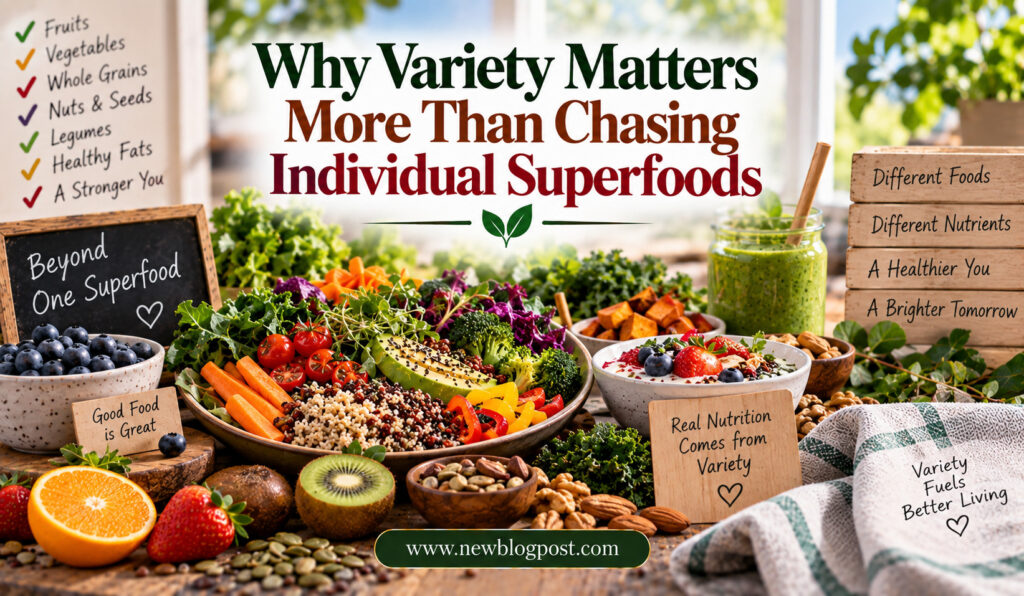

The modern health-food market has made “superfoods” a familiar term for shoppers looking to improve their diets. From berries and seeds to leafy greens, ancient grains and exotic fruits, individual foods are often promoted for their impressive nutritional qualities. Social media has further accelerated this trend, with one ingredient frequently becoming popular because of its connection to a particular health benefit.
However, nutrition experts and food researchers increasingly emphasize a broader idea: no single food needs to carry the responsibility of making a diet healthy. Instead, eating a wide variety of foods may offer a more practical approach to getting different nutrients. Variety allows people to combine different vitamins, minerals, fiber, proteins, healthy fats and other naturally occurring compounds across meals.
This shift does not mean that popular superfoods have no nutritional value. Many of them can certainly be useful additions to a balanced diet. The bigger question is whether consumers need to spend more money searching for one special ingredient when ordinary foods already provide many of the nutrients the body requires.
The Problem With the Superfood Mindset
The word “superfood” is largely a marketing term rather than a formal nutritional category. Foods described this way can be nutritious, but their popularity can sometimes create the impression that they are significantly more important than other foods.
A person may start adding chia seeds to breakfast, blueberries to smoothies or imported nuts to snacks while overlooking the importance of the overall diet. If meals remain low in vegetables, fruits, whole grains, legumes or adequate protein, adding one fashionable ingredient does not automatically create a balanced eating pattern.
This is where dietary variety becomes important. Different foods have different nutritional profiles. While one food may be particularly rich in a certain nutrient, another may provide something else. Combining them allows the diet to become broader rather than depending heavily on a single ingredient.
Variety Creates a Broader Nutritional Pattern
Every food brings its own combination of nutrients and naturally occurring compounds. Vegetables can provide different vitamins, minerals and plant compounds, while fruits contribute carbohydrates, fiber and various micronutrients. Pulses and beans can provide protein and fiber, and nuts and seeds contribute healthy fats along with minerals.
Eating the same “healthy” food every day may still leave gaps if the rest of the diet lacks diversity. Variety encourages consumers to rotate ingredients and experiment with different food groups.
For example, someone does not need to rely exclusively on quinoa because it has become associated with healthy eating. Rice, wheat, oats, millets and other grains can also be part of a varied diet. Similarly, lentils, chickpeas, beans and other pulses can provide useful alternatives for people looking to include plant-based protein.
The goal is therefore not to identify one perfect food. It is to build meals from a range of nutritious ingredients.
Everyday Foods Can Compete With Trendy Ingredients
One reason superfoods attract attention is their presentation as something unusual or premium. Yet many everyday foods are naturally nutrient-rich and have been part of traditional diets for generations.
In India, for example, foods such as dal, chickpeas, green vegetables, seasonal fruits, curd, peanuts, sesame seeds and various grains can contribute to a diverse diet. These foods are also generally easier to find and incorporate into familiar meals.
The growing interest in traditional ingredients has highlighted this point. Consumers are increasingly looking at regional foods not simply as cultural staples but as practical components of modern eating patterns.
This does not mean traditional foods should automatically be considered healthier than modern products. Instead, it demonstrates that nutritious choices do not always need expensive packaging, international branding or social-media popularity.
Why Eating Different Foods Matters
Dietary variety can make healthy eating easier to maintain over the long term. People are more likely to enjoy meals when they have different textures, flavors and ingredients available.
A varied diet can also prevent meals from becoming repetitive. Instead of having the same fruit every morning, consumers can rotate seasonal options. Instead of relying on one grain, they can use different grains across meals. Vegetables can also change depending on availability and preference.
Some simple ways to introduce variety include:
- Rotate fruits and vegetables instead of buying the same ones every week.
- Include different sources of protein such as pulses, dairy, eggs, nuts or other preferred options.
- Try different whole grains and traditional staples rather than depending on one fashionable grain.
- Change cooking methods and recipes to make familiar foods more appealing.
The objective is not to make eating complicated. Small changes across the week can create a much broader food pattern.
Superfoods Still Have a Place
Moving away from superfood hype does not mean abandoning foods that have strong nutritional profiles. Chia seeds, berries, nuts, seeds, leafy greens, legumes and other commonly promoted foods can still be useful.
The important distinction is between adding nutritious food and treating that food as a nutritional solution by itself.
For instance, adding seeds to an otherwise balanced breakfast can increase variety. Including berries as one of several fruit choices can add different plant compounds. Similarly, eating leafy greens alongside other vegetables creates more dietary diversity than relying on one vegetable every day.
Superfoods can therefore become part of the diet rather than the center of it.
Variety Can Also Make Healthy Eating More Affordable
The price of some superfoods has become an important consideration for consumers. Imported berries, specialty seeds and premium health products can cost substantially more than locally available alternatives.
A variety-based approach can make it easier to work with a household budget. Consumers can choose foods based on season, availability and local prices rather than feeling pressured to purchase expensive ingredients.
| Food Category | Examples | Why Variety Helps |
| Fruits | Apple, banana, guava, orange, papaya | Different fruits provide different nutrient profiles |
| Vegetables | Spinach, carrot, tomato, beans, pumpkin | Encourages a wider range of vegetables |
| Grains | Rice, wheat, oats, millets | Adds flexibility to meals |
| Protein foods | Dal, chickpeas, beans, eggs, curd | Provides different protein options |
| Nuts & seeds | Peanuts, sesame, almonds, flaxseed | Adds different fats and minerals |
Local and seasonal foods can be particularly useful because they are often easier to find and can provide greater variety without turning healthy eating into an expensive project.
Social Media Is Changing How People Think About Food
Social media has played a major role in the rise of individual superfoods. A particular ingredient can become popular quickly after influencers, fitness personalities or food creators highlight it.
The problem is not social media itself. The challenge comes when short-form content reduces complicated nutrition topics to a single ingredient or simple promise.
A food may be nutritious without being essential. Similarly, an ingredient can be useful without producing dramatic results on its own. Consumers increasingly need to look beyond viral claims and consider how individual foods fit into their overall eating pattern.
This may explain why broader nutrition conversations are gaining attention. Instead of asking, “Which superfood should I eat?” consumers are beginning to ask, “How can I make my overall diet more varied?”
Variety Is More Sustainable Than Food Fads
Food trends change quickly. One year, a particular seed may dominate wellness conversations; the next year, a different fruit, powder or grain may become fashionable.
Building eating habits around variety can protect consumers from constantly changing food trends. People do not have to replace their entire diet every time a new ingredient becomes popular.
This approach can also encourage greater appreciation for seasonal and regional foods. Farmers produce a wide range of crops, and choosing different foods throughout the year can help consumers make better use of what is naturally available.
A Balanced Diet Does Not Need to Be Complicated
The idea of dietary variety can sound complicated when nutrition is discussed in technical terms. In everyday life, however, it can be quite simple.
A varied plate might contain a grain or other carbohydrate source, a protein-rich food, vegetables and a suitable fruit or dairy option. Across the week, those individual choices can change.
The focus should be on the overall pattern rather than achieving nutritional perfection at every meal. One breakfast does not determine the quality of an entire diet, just as one superfood cannot transform it.
Conclusion
The growing fascination with superfoods has encouraged many people to pay closer attention to nutrition, but it can also make healthy eating seem more complicated than it needs to be. A nutritious diet does not depend on discovering one exceptional ingredient.
Variety offers a simpler and more flexible approach. Different fruits, vegetables, grains, pulses, protein sources, nuts and seeds can contribute different nutrients and flavors to meals. It also allows consumer
FAQs
Is eating one superfood every day enough for a healthy diet?
No single food can provide every nutrient the body needs. A varied eating pattern that includes different food groups is generally more useful than depending heavily on one ingredient.
Are expensive superfoods healthier than normal foods?
Not necessarily. Many affordable everyday foods can provide important nutrients. Nutritional value should be considered in the context of the whole diet rather than the price or popularity of a product.
How can I add more variety to my diet?
Start with simple changes. Rotate fruits and vegetables, use different grains, include several protein sources and experiment with different recipes during the week.
Does dietary variety mean eating something different at every meal?
No. Variety does not require constant change. Repeating nutritious meals is perfectly practical. The broader goal is to include different foods and food groups over time.
Should I stop eating superfoods?
There is generally no need to eliminate nutritious foods simply because they are marketed as superfoods. The key is to treat them as part of a balanced diet rather than as replacements for dietary diversity.