
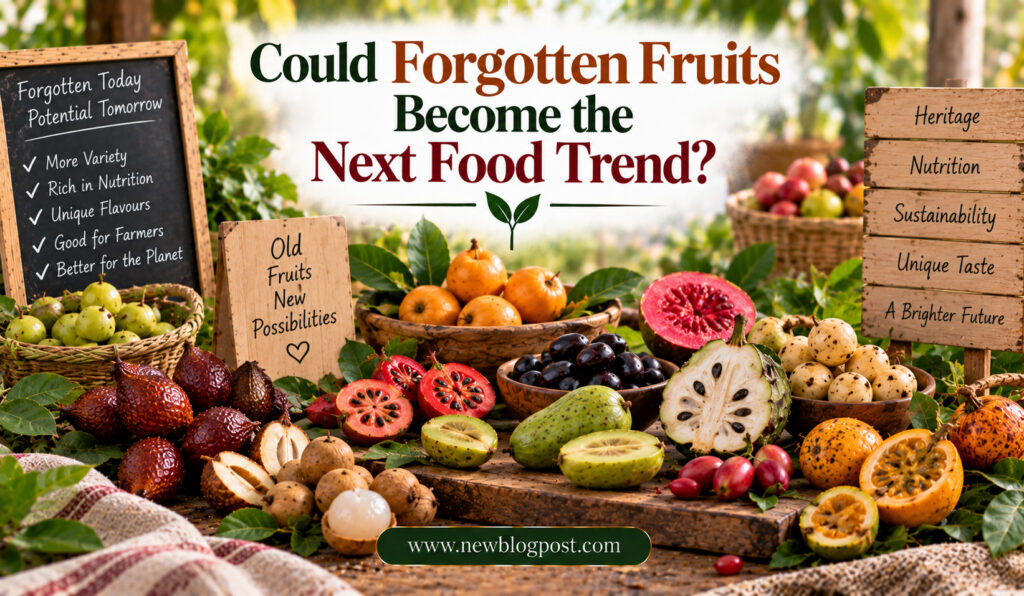

For years, the global food industry has focused on a relatively small group of fruits. Avocados, blueberries, strawberries, kiwis and pomegranates have become familiar names in supermarkets, cafés and health-focused recipes. At the same time, hundreds of lesser-known fruits continue to grow in different regions, often consumed locally but rarely seen in mainstream markets.
That situation could be changing. Growing interest in traditional foods, biodiversity, sustainable agriculture and regional ingredients is encouraging consumers to rediscover fruits that were once common but have gradually disappeared from everyday diets. These “forgotten fruits” are attracting attention from food researchers, farmers, chefs and consumers interested in discovering alternatives to familiar produce.
The trend is still developing, but it raises an interesting question: could forgotten fruits become the next major food trend?
What Are Forgotten Fruits?
The term “forgotten fruits” generally refers to traditional, heritage or lesser-known fruits that have declined in popularity or are largely limited to specific regions. They may not be commercially significant enough to appear regularly in large supermarkets, even though local communities have cultivated or consumed them for generations.
Some are native varieties that lost ground as commercial agriculture favored fruits with predictable yields, longer shelf life and easier transportation. Others remained regional because their production never developed on a large industrial scale.
Examples can vary considerably by country and region. In India, consumers may encounter fruits such as karonda, wood apple, bael, kokum, jamun and ber in traditional markets or seasonal settings. In other parts of the world, different heritage fruits occupy a similar position.
Their renewed popularity is not necessarily about replacing mainstream fruits. Instead, it is about expanding the number of fruits available to consumers.
Why Are People Rediscovering Traditional Fruits?
One major factor behind the renewed interest is a growing curiosity about food heritage. Consumers increasingly want to understand where their food comes from and how it was eaten before modern supermarket culture became dominant.
Traditional fruits often have strong connections to local cuisines. They may appear in homemade drinks, preserves, chutneys, desserts, pickles or regional dishes. As younger consumers explore traditional recipes, the ingredients used in those recipes are also receiving new attention.
Social media has added another layer to this movement. A visually interesting fruit or an unusual traditional recipe can quickly attract attention online. Food creators and chefs can introduce regional ingredients to audiences who may never have encountered them before.
This creates a pathway from local food culture to broader consumer awareness.
Biodiversity Is Becoming Part of the Food Conversation
The renewed interest in forgotten fruits also connects with discussions around agricultural biodiversity. Modern food systems often depend heavily on a limited number of widely cultivated crops and varieties.
Traditional fruit varieties can contribute to a more diverse agricultural landscape. However, their potential role depends on factors such as cultivation practices, local ecosystems, market demand and farmer economics.
Preserving these fruits is therefore not simply about putting unusual products on supermarket shelves. It can also involve maintaining knowledge about how they are grown, harvested, stored and prepared.
For some communities, traditional fruits represent agricultural heritage as much as food.
Health Interest Could Give Forgotten Fruits More Attention
Nutrition is another reason these fruits could attract modern consumers. Many fruits naturally contain fiber, vitamins, minerals and plant compounds, although their nutritional profiles differ from one fruit to another.
The important point is that an unfamiliar fruit should not automatically be considered a “superfood.” Marketing sometimes turns unusual ingredients into exaggerated health claims. A forgotten fruit can be nutritious without being a miracle ingredient.
Consumers are increasingly looking for variety in their diets, and this may create an opportunity for lesser-known fruits. Rather than concentrating on a handful of fashionable fruits, people may become more interested in trying different seasonal options.
Some traditional fruits also offer culinary characteristics that are difficult to reproduce with mainstream varieties, including distinctive sourness, aroma, texture or bitterness.
Forgotten Fruits and the Premium Food Market
The commercial potential of forgotten fruits is already linked to the growing market for specialty and regional foods. Restaurants and food brands often look for distinctive ingredients that can help create new products and experiences.
A fruit that is ordinary in one region can appear exotic somewhere else. This can create opportunities for farmers and food businesses, although turning a local crop into a sustainable commercial product requires more than consumer curiosity.
Packaging, storage, transportation and consistent supply can all become challenges. Some fruits are highly seasonal or delicate, making them difficult to distribute over long distances.
This means the most successful forgotten-fruit products may not necessarily be fresh fruit. Processed formats could provide another route to market.
From Fresh Fruit to Modern Food Products
Food manufacturers have several ways to introduce lesser-known fruits to consumers. Traditional ingredients can be incorporated into products that fit modern eating habits while retaining their regional identity.
Potential formats include:
- Fruit beverages and concentrates
- Jams, spreads and preserves
- Dried fruit and snack products
- Sauces, chutneys and dessert ingredients
These products can extend the commercial season of fruits that are otherwise available for only a short period. They may also make unfamiliar ingredients easier for first-time consumers to try.
However, processing changes the nutritional and sensory characteristics of food. Products with added sugar or other ingredients should not automatically be treated as equivalent to whole fruit.
Indian Fruits Could Have Strong Potential
India has an especially large pool of regional fruits that could benefit from greater consumer awareness. Different climatic zones and agricultural traditions have produced a wide range of fruit varieties across the country.
Fruits such as jamun, ber, bael, karonda and kokum already have established cultural and culinary uses. Their familiarity within particular regions could provide a foundation for wider recognition.
For example, kokum has long been associated with western Indian cuisine and beverages, while bael has traditional uses in drinks and food preparations. Jamun is familiar in many parts of India but is still less commercially dominant than fruits such as apples, bananas or oranges.
The challenge is turning regional familiarity into reliable modern-market demand without losing the cultural identity of these foods.
What Could Make a Forgotten Fruit Go Mainstream?
Several factors could influence whether a lesser-known fruit becomes a major food trend.
| Factor | Potential Impact |
| Consumer curiosity | Encourages people to try unfamiliar fruits |
| Social media | Gives regional foods wider visibility |
| Chef innovation | Introduces fruits through modern dishes |
| Better packaging | Makes seasonal products easier to sell |
| Farmer support | Can encourage continued cultivation |
| Food processing | Creates products beyond the short harvest season |
| Sustainability interest | Connects food choices with agricultural diversity |
None of these factors guarantees commercial success. A fruit can become popular online but still struggle with supply, pricing or consumer retention. Long-term success depends on whether demand develops beyond short-lived social-media attention.
The Role of Restaurants and Chefs
Restaurants can play an important role in introducing forgotten fruits to new audiences. Chefs are often willing to experiment with ingredients that are not yet common in mainstream cuisine.
A traditional fruit can be incorporated into a dessert, sauce, beverage or contemporary interpretation of a regional dish. This allows customers to experience an unfamiliar ingredient without needing to purchase and prepare it themselves.
Once consumers become familiar with a flavor in restaurants, some may begin looking for the ingredient in stores or online. This creates a possible pathway from culinary experimentation to retail demand.
Sustainability and Local Food Systems
Interest in forgotten fruits also fits into the broader movement toward local and seasonal food. When consumers purchase regional produce during its natural growing season, they can support local agricultural systems and reduce reliance on highly standardized food choices.
However, sustainability claims should be considered carefully. A traditional fruit is not automatically environmentally superior in every situation. Farming methods, water requirements, transportation, packaging and processing all influence the environmental impact of food.
The strongest opportunity may therefore come from combining traditional crop diversity with responsible farming and efficient local supply chains.
Why the Trend May Take Time
Despite growing interest, forgotten fruits face significant barriers. Consumers may not know how to eat them, their names may vary by region, and availability can be inconsistent.
Some fruits also have short shelf lives or require specialized handling. Farmers may hesitate to increase production if they are uncertain about future demand.
Education will therefore be important. Recipes, cooking demonstrations, restaurant menus and informative packaging could help consumers understand how these fruits can fit into everyday diets.
Could They Really Become the Next Food Trend?
The answer depends on what is meant by a food trend. Some forgotten fruits may gain attention temporarily through social media or specialty food markets. Others could develop into lasting regional or premium products.
It is unlikely that every traditional fruit will suddenly become a global supermarket staple. Commercial agriculture and consumer habits create strong advantages for established fruits.
But forgotten fruits do not necessarily need to compete directly with bananas, apples or oranges. Their opportunity may lie in occupying smaller but valuable markets focused on regional foods, culinary experiences, specialty products and food biodiversity.
The biggest change could be cultural rather than commercial. Consumers may become more willing to explore fruits beyond the familiar supermarket selection.
Conclusion
Forgotten fruits may not replace today’s most popular fruits, but they could become an increasingly visible part of the food market. Their appeal comes from more than novelty. They connect food with regional culture, agricultural diversity, traditional knowledge and changing consumer interests.
As shoppers look for new flavors and more diverse food choices, lesser-known fruits have an opportunity to move beyond local markets. Restaurants, food brands, farmers and social-media creators can all play a role in introducing them to wider audiences.
The future of forgotten fruits will ultimately depend on practical factors such as availability, affordability, farming economics, quality and consumer demand. But as the food industry continues searching for new stories and ingredients, fruits that were once overlooked could find themselves back in the spotlight.
FAQs
What are forgotten fruits?
Forgotten fruits are generally traditional, heritage or lesser-known fruits that have declined in popularity or remain primarily associated with particular regions.
Why are forgotten fruits becoming popular again?
Interest in traditional food, regional cuisine, agricultural biodiversity, sustainability and unique ingredients is encouraging consumers to rediscover lesser-known fruits.
Are forgotten fruits healthier than common fruits?
Not necessarily. Nutritional value varies from fruit to fruit. An unfamiliar fruit should not automatically be considered healthier simply because it is traditional or unusual.
Can forgotten fruits become commercial products?
Yes. Depending on supply and consumer demand, they can be used in beverages, preserves, dried snacks, sauces and other processed foods in addition to being sold fresh.
Which Indian fruits are considered lesser-known or traditional?
Examples can include karonda, bael, kokum, ber and jamun, although awareness and availability vary significantly across different parts of India.