
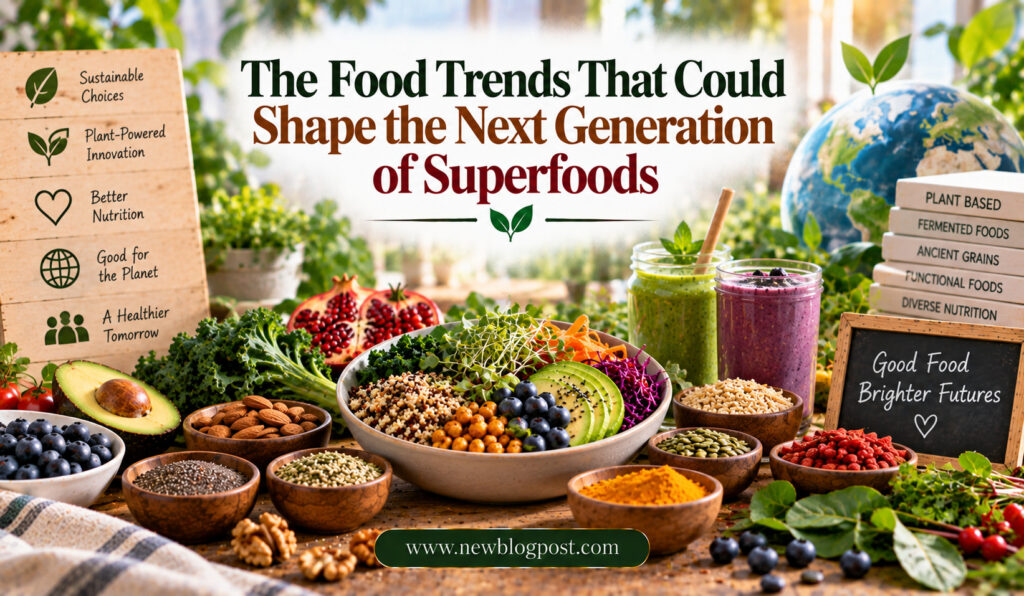

The idea of a “superfood” has changed significantly over the past decade. Foods once considered niche ingredients can quickly become mainstream after gaining attention from nutrition professionals, food companies, restaurants and social media. Chia seeds, quinoa, berries, avocado and other ingredients have all benefited from growing consumer interest in nutrition and wellness.
Now, the food industry is entering another stage of change. Consumers are not simply searching for foods associated with individual health benefits. They are also becoming interested in sustainability, plant-based nutrition, traditional ingredients, food diversity, convenience and new sources of protein.
These changing priorities could shape what becomes known as a superfood in the years ahead. Instead of one unusual ingredient dominating the conversation, the next generation of superfoods may include a much wider range of everyday and emerging foods.
Superfoods Are Moving Beyond Marketing Hype
The word superfood has no universally accepted scientific definition. It is commonly used by marketers and food brands to describe foods with notable nutritional characteristics. While many foods promoted under this label can be nutritious, the term can sometimes oversimplify how healthy diets actually work.
A food containing fiber, protein, vitamins, minerals or plant compounds can contribute to a balanced diet without needing to be called a superfood. Increasingly, consumers are beginning to recognize that overall dietary patterns matter more than one ingredient.
This change could influence future food trends. Rather than asking which single food is the healthiest, shoppers may become more interested in foods that combine nutrition, affordability, convenience and sustainability.
Plant-Based Foods Could Remain at the Center
Plant-based eating continues to influence food innovation. While not every consumer is moving toward a completely plant-based diet, interest in plant-derived ingredients has created demand for new products.
Legumes, seeds, whole grains, vegetables and fruits are receiving renewed attention because they can fit into many different eating patterns. At the same time, food companies are experimenting with ingredients derived from plants to create snacks, beverages and protein-rich products.
The next generation of superfoods may therefore include ingredients that have been used for generations but are being presented in new ways. Lentils, chickpeas, peas, beans and seeds are examples of foods that can move between traditional cooking and modern packaged-food categories.
Ancient and Traditional Foods Could Return
One of the most interesting developments in the food industry is the renewed interest in traditional ingredients. Consumers are increasingly curious about foods that were common before modern food trends made certain imported or highly marketed ingredients popular.
Millets, regional grains, traditional legumes, fermented foods and lesser-known fruits are examples of ingredients receiving greater attention.
This movement is particularly relevant in countries with diverse culinary traditions. India, for example, has a long history of using ingredients such as millets, pulses, sesame, amaranth and a wide variety of regional fruits and vegetables.
The future superfood market could therefore be less about discovering completely new foods and more about rediscovering foods that already exist.
Fermented Foods Are Gaining Attention
Fermentation is another food trend that could influence future superfood categories. Fermented foods have been part of traditional diets in many parts of the world for centuries.
Foods such as yogurt, fermented vegetables and traditional grain-based preparations are attracting interest as consumers learn more about the relationship between food and the digestive system.
Modern food companies are also developing new fermented products, including beverages and plant-based alternatives. However, consumers should distinguish between naturally fermented foods and highly processed products that simply use “fermented” as a marketing term.
The broader appeal of fermentation comes from its combination of tradition, flavor and food-processing innovation.
Seeds Could Become Even More Popular
Seeds have already become a familiar feature of health-focused diets, but the category has room to expand. Chia, flax, sunflower, pumpkin and sesame seeds are used in everything from breakfast bowls to snack bars.
Their popularity comes partly from their nutritional versatility. Many seeds provide combinations of fats, protein, fiber and minerals, although their nutritional profiles differ.
Future food products may use a wider mixture of seeds rather than relying on one fashionable ingredient. Seed-based crackers, spreads, cereals, bakery products and snack foods could become more visible as manufacturers look for plant-based ingredients with functional qualities.
Alternative Protein Sources Are Expanding
Protein is likely to remain one of the biggest themes in food innovation. Population growth, changing diets and interest in plant-based eating have encouraged companies to explore alternatives to conventional protein sources.
Legumes remain particularly important because they are already familiar, versatile and widely used in many cuisines. Other innovations include products made from peas, soy and other plant ingredients, as well as emerging categories such as algae and fermentation-derived proteins.
The term “alternative protein” covers a wide range of products, so consumers should look at the complete ingredient and nutrition profile rather than assuming that every alternative product is automatically healthier.
Forgotten Fruits Could Find a New Audience
Lesser-known fruits are also gaining attention as consumers search for new flavors and regional ingredients. Fruits that were previously limited to local markets can sometimes reach wider audiences through restaurants, food brands and online shopping.
This trend fits with growing interest in biodiversity and food heritage. A fruit does not need to become a global bestseller to have value. It can find a smaller market among consumers interested in traditional foods and unique ingredients.
Possible future categories include:
- Traditional and heritage fruits
- Regional berries and lesser-known varieties
- Fruit-based beverages and concentrates
- Dried and minimally processed fruit snacks
The challenge will be maintaining reliable supply while preserving quality and supporting the farmers who grow these crops.
Sustainable Foods Could Redefine the Superfood
Nutrition is no longer the only factor influencing consumer interest. Environmental considerations are increasingly part of food purchasing decisions.
Consumers may become more interested in foods that require fewer resources, create less waste or can be grown effectively in particular environments. However, sustainability is complex, and no ingredient should be considered environmentally perfect without examining its production and supply chain.
This could encourage a broader definition of superfoods—one that considers not only nutritional characteristics but also agricultural resilience and resource use.
Upcycled Foods May Enter the Conversation
Food waste is another area where innovation could create new categories. Food companies are increasingly exploring ways to use parts of agricultural products that might otherwise be discarded.
Fruit peels, seeds, pulp and other by-products can sometimes be transformed into ingredients for beverages, snacks, powders or baking products. These applications can create additional value from existing food production.
The concept of upcycling may become more important as manufacturers look for ways to improve resource efficiency. Consumer acceptance, food safety, taste and economics will determine which products remain commercially viable.
Sea Vegetables and Algae Are Emerging
Algae and sea vegetables are attracting interest because they offer unusual nutritional and culinary characteristics. Seaweed is already a traditional ingredient in several cuisines, while newer food products are exploring algae-based ingredients.
These foods may become more visible in snacks, seasonings, protein products and alternative ingredients. However, their nutritional composition can vary significantly depending on the species and production method.
For consumers, the growth of this category is another reminder that emerging superfoods should be evaluated based on evidence and actual dietary needs rather than novelty alone.
Personalized Nutrition Could Change the Market
Another trend shaping the future of food is personalization. Advances in nutrition research and digital technology are encouraging consumers to think about food choices in relation to individual needs and preferences.
Instead of one food being promoted as beneficial for everyone, future products may increasingly focus on specific nutritional characteristics, dietary preferences or lifestyle requirements.
This could make the superfood market more diverse. A food may become popular not because it is universally marketed as a miracle ingredient, but because it fits a particular dietary pattern.
Convenience Will Still Matter
Even highly nutritious ingredients need to fit into modern lifestyles. Consumers with busy schedules often look for foods that are easy to prepare, carry and store.
This is why future superfoods may appear in convenient formats such as ready-to-eat snacks, breakfast products, beverages and frozen foods.
The challenge for food companies will be balancing convenience with nutritional quality. A product made from a nutritious ingredient can still contain excessive sugar, sodium or other additives depending on how it is formulated.
| Emerging Food Trend | Possible Future Role |
| Traditional grains | Affordable and versatile staple foods |
| Seeds | Snacks, bakery products and breakfast foods |
| Fermented foods | Traditional and modern functional food categories |
| Alternative proteins | New protein-rich food products |
| Forgotten fruits | Regional and specialty food markets |
| Algae and sea vegetables | Seasonings, snacks and emerging ingredients |
| Upcycled ingredients | Products focused on reducing food waste |
What Consumers Should Watch For
As new foods become popular, consumers may encounter increasingly sophisticated marketing claims. The popularity of an ingredient does not necessarily prove that it is essential to a healthy diet.
A practical approach is to look at the whole product or food pattern. Consumers can consider whether a food provides useful nutrients, whether it fits their normal diet, how processed it is and whether the price makes sense for their needs.
Three simple questions can help when evaluating a new superfood:
- What nutrients does it actually provide?
- How does it fit into the rest of the diet?
- Is the product’s marketing claim supported by credible evidence?
This approach can help separate genuine nutritional value from temporary food hype.
The Future May Be About Diversity, Not One Superfood
The next generation of superfoods may not produce one universally dominant ingredient. Instead, the market could become more diverse as consumers discover traditional foods, alternative proteins, forgotten fruits, fermented products, seeds and sustainable ingredients.
This would represent a shift from the traditional superfood model. Rather than searching for a single ingredient with extraordinary promises, consumers could increasingly focus on variety and the overall quality of their diets.
Food companies are likely to respond by combining old ingredients with new technologies and convenient formats. Restaurants and chefs may also help introduce unfamiliar foods to wider audiences.
Conclusion
The future of superfoods may be shaped less by one extraordinary ingredient and more by a collection of broader food trends. Traditional grains, seeds, fermented foods, plant-based proteins, forgotten fruits, algae and upcycled ingredients are all potential areas of growth.
What connects these categories is not simply their nutritional appeal. They also reflect changing consumer priorities around food diversity, convenience, sustainability, heritage and innovation.
As the food industry continues to evolve, the next superfood may not necessarily be something completely unfamiliar. It could be an old ingredient presented in a new way, a regional food reaching a wider audience or a familiar crop becoming part of a modern food product.
The biggest opportunity may ultimately be a more diverse understanding of what makes a food valuable. Instead of chasing one fashionable ingredient at a time, consumers may increasingly look for foods that contribute meaningfully to varied, practical and balanced eating patterns.
FAQs
What will the next generation of superfoods look like?
They could include traditional grains, seeds, legumes, fermented foods, lesser-known fruits, algae-based ingredients and other foods that combine nutritional interest with convenience or sustainability.
Are traditional foods likely to become future superfoods?
Some may gain wider popularity as consumers rediscover regional ingredients. Their future success will depend on availability, consumer demand, evidence and commercial practicality.
Are all emerging superfoods automatically healthy?
No. The label “superfood” does not guarantee that a product is healthier. Nutritional value depends on the food itself, portion size and the overall dietary pattern.
Why are forgotten fruits becoming more popular?
Interest in food heritage, regional cuisine, biodiversity and new flavors is encouraging consumers and food businesses to explore lesser-known fruits.
Will plant-based foods remain a major trend?
Plant-based ingredients are likely to remain important in food innovation, particularly in areas such as protein, snacks, beverages and convenient meals.