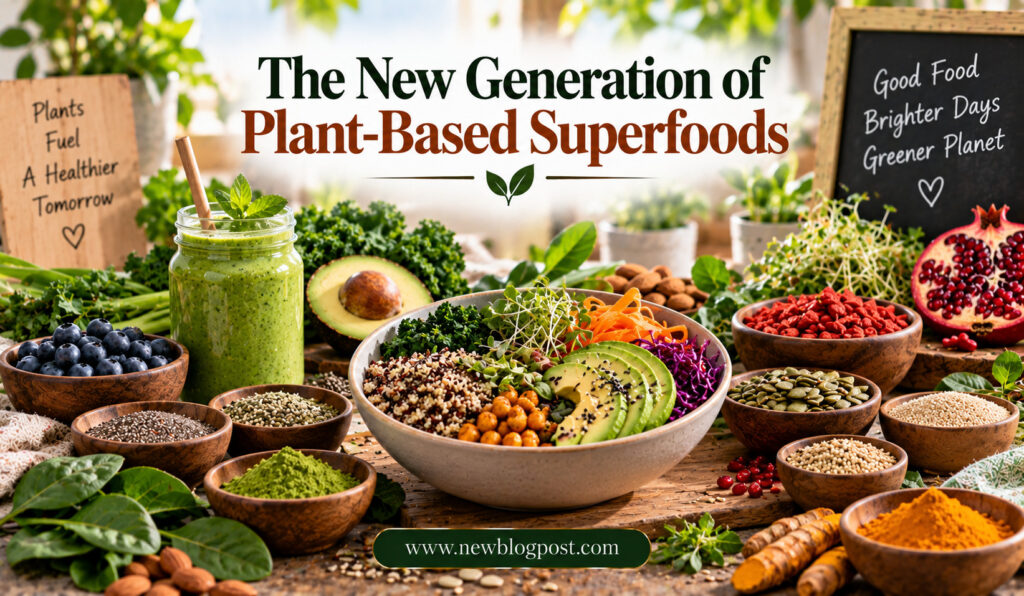

The plant-based food movement is entering a new phase as consumers look beyond familiar ingredients and explore a wider range of nutrient-rich foods. Chia seeds, quinoa, kale and avocados helped establish the modern superfood category, but a new generation of plant-based ingredients is now attracting attention.
From sea vegetables and ancient grains to legumes, seeds and lesser-known fruits, these emerging foods are appearing in supermarkets, restaurant menus and health-focused recipes. Their popularity is being driven by several factors, including interest in plant-based diets, sustainable agriculture, nutritional variety and more adventurous eating habits.
The term “superfood” is largely a marketing expression rather than a formal scientific category. Still, many foods described this way can provide useful nutrients and naturally occurring plant compounds. The latest trend is therefore less about discovering a single miracle ingredient and more about expanding the range of nutritious plant foods people include in their diets.
A Broader Definition of Plant-Based Nutrition
Plant-based eating has become more diverse in recent years. Earlier conversations often focused on replacing meat and dairy, but today’s consumers are also interested in the nutritional quality and variety of the plants they eat.
This has opened the door for ingredients that were previously unfamiliar to mainstream shoppers. Foods such as hemp seeds, moringa, amaranth, buckwheat, seaweed and pulses are being introduced through modern recipes and packaged products.
Many of these foods have actually been consumed for centuries in different parts of the world. Their “new” status often comes from increased global awareness rather than recent discovery.
This is an important distinction. The latest plant-based superfood trend is bringing traditional ingredients into new markets rather than creating entirely new foods.
Seeds Are Becoming a Major Part of the Trend
Seeds continue to attract attention because they can be added to meals without significant preparation. Chia and flax seeds are already familiar to many consumers, while hemp, pumpkin and sesame seeds are being used in increasingly creative ways.
Seeds can provide combinations of protein, fiber, healthy fats, vitamins and minerals, although their nutritional profiles vary considerably.
Hemp seeds, for example, are valued for their protein and fat content, while flaxseed is known for providing alpha-linolenic acid, a plant-based omega-3 fatty acid. Pumpkin seeds are a source of minerals and protein.
Their versatility also helps explain their popularity. Seeds can be added to breakfast bowls, salads, smoothies, breads and homemade snacks.
Ancient Grains Are Returning to Modern Kitchens
Another major development is the renewed interest in ancient and traditional grains. Amaranth, buckwheat, millet, sorghum and teff are gaining visibility as consumers search for alternatives to familiar refined grains.
These grains offer different textures and nutritional characteristics. Some are naturally gluten-free, although consumers with celiac disease or gluten sensitivity should consider the possibility of cross-contact during processing.
Millets have received particular attention in India and international markets. Ragi, bajra and jowar have traditionally been used in Indian cooking and are now appearing in contemporary products such as breakfast mixes, breads, snacks and ready-to-cook foods.
This trend combines traditional food knowledge with modern convenience.
Sea Vegetables Are Entering the Mainstream
Seaweed and other edible marine plants represent another emerging category. Long used in Asian cuisines, sea vegetables are now appearing in snacks, seasonings and restaurant dishes around the world.
Seaweed can provide minerals, fiber and various plant compounds, but its nutritional composition can vary significantly between species and products. Some varieties can also contain substantial amounts of iodine, making moderation relevant for certain consumers.
The growing interest in sea vegetables is partly connected to curiosity about sustainable food sources. Marine crops can be cultivated without using traditional farmland, although their environmental benefits depend on cultivation methods and local conditions.
As consumers become more interested in alternative food systems, sea vegetables are receiving more attention.
Moringa and Other Leafy Ingredients Gain Visibility
Moringa has become increasingly visible in wellness products, powders and beverages. The leaves contain various nutrients and plant compounds, and moringa has a long history of use in South Asian and African food traditions.
Its popularity illustrates how traditional ingredients are being repackaged for modern consumers. Moringa powder can be added to smoothies, soups and other foods, making it convenient for people who may not have access to fresh leaves.
However, concentrated powders should not automatically be considered nutritionally superior to whole foods. Consumers should examine product labels and use them as part of an overall varied diet.
Legumes Are Getting a New Identity
Beans, lentils, chickpeas and other legumes have always been important sources of plant-based nutrition. They are now gaining additional attention as demand grows for affordable protein sources.
Legumes provide protein, fiber and several micronutrients. They can also be used in a wide range of dishes, from soups and curries to salads, spreads and snacks.
Food companies are increasingly using legumes as ingredients in modern products. Chickpea-based snacks, lentil pasta and bean-based foods are examples of how traditional staples are being adapted for contemporary consumers.
| Plant-based food | Common nutritional qualities | Popular uses |
| Chia seeds | Fiber, fats, minerals | Smoothies, oats, puddings |
| Hemp seeds | Protein, fats | Salads, bowls, snacks |
| Amaranth | Protein, minerals, carbohydrates | Porridge, flour, grain dishes |
| Moringa | Vitamins, minerals, plant compounds | Powders, soups, beverages |
| Lentils | Protein, fiber, minerals | Curries, soups, salads |
| Seaweed | Minerals, fiber, iodine in varying amounts | Snacks, seasoning, salads |
Plant-Based Superfoods Are Moving Beyond Smoothies
Smoothies helped popularize many wellness ingredients, but the new generation is appearing in a much broader range of foods.
Consumers can now find plant-based ingredients in breakfast cereals, energy bars, crackers, pasta, bakery products, beverages and ready-to-eat meals.
This expansion is important because it makes unfamiliar foods easier to incorporate into everyday diets. A person does not necessarily need to prepare a specialized wellness recipe to try a new ingredient.
Food manufacturers are also experimenting with combinations. Seeds may be paired with grains, legumes with vegetables and traditional ingredients with modern flavor profiles.
The result is a plant-based food category that is becoming increasingly diverse.
Sustainability Is Influencing Consumer Interest
Environmental concerns are another factor behind the popularity of plant-based foods. Consumers are increasingly interested in how food is produced and whether ingredients can contribute to more diverse agricultural systems.
Plant-based foods can have different environmental footprints depending on farming practices, processing, transportation, packaging and water requirements. Therefore, simply labeling an ingredient “plant-based” does not automatically make it environmentally sustainable.
However, interest in diverse crops can encourage consumers to explore ingredients that are well adapted to particular climates and regions.
Ancient grains and legumes, in particular, are receiving attention because they can broaden agricultural diversity while providing useful food products.
Technology Is Helping Traditional Ingredients Find New Markets
Food technology is changing the way traditional plant ingredients are processed and sold. Ingredients that were once available mainly in local markets can now be dried, powdered, packaged and distributed internationally.
This has made products such as moringa powder, seed blends, millet flour and seaweed snacks easier to find.
At the same time, modern processing can create new challenges. Highly processed products may contain added sugars, sodium, oils or other ingredients that change their nutritional profile.
Consumers therefore need to distinguish between a nutritious whole ingredient and a highly processed product that happens to contain it.
Four Trends Shaping the New Plant-Based Superfood Market
The emerging category is being shaped by several consumer preferences:
- Greater interest in plant-based protein and fiber.
- Curiosity about traditional and lesser-known ingredients.
- Demand for convenient foods with recognizable ingredients.
- Growing attention to sustainable and diverse food systems.
These trends are likely to continue influencing product development as food companies compete for consumers interested in nutrition and convenience.
Consumers Are Becoming More Careful About Health Claims
The growing popularity of plant-based superfoods has also increased scrutiny of health marketing. Some products make broad claims about immunity, weight management, detoxification or disease prevention.
Scientific evidence varies significantly between ingredients and specific health outcomes. A food can be nutritious without being a treatment or cure for a medical condition.
For consumers, the most useful approach is to focus on the food’s actual nutritional qualities and how it fits into the wider diet.
Whole or minimally processed ingredients are often easier to evaluate because consumers can see what they are purchasing. Packaged products require closer attention to nutrition and ingredient labels.
The Role of Traditional Food Knowledge
Many of today’s emerging superfoods are not actually new. They have long histories in regional cuisines.
Moringa has been used in South Asian and African food traditions. Amaranth has historical importance in parts of the Americas. Millet has been cultivated across Africa and Asia for generations, while seaweed has played an important role in several coastal cuisines.
The modern trend is bringing these ingredients to consumers who may have previously been unfamiliar with them.
This creates an opportunity to combine traditional culinary knowledge with modern nutrition research without turning cultural foods into exaggerated wellness products.
Conclusion
The new generation of plant-based superfoods is expanding the conversation around nutrition. Instead of focusing only on a handful of globally recognized ingredients, consumers are discovering traditional grains, seeds, legumes, leafy plants and sea vegetables.
The appeal comes from more than nutrition alone. Convenience, culinary versatility, curiosity about traditional foods and interest in sustainable food systems are all contributing to the trend.
As these ingredients become more accessible, the definition of a modern plant-based diet is likely to become broader. The future may not belong to one particular “superfood,” but to a more diverse approach that combines familiar staples with traditional and emerging plant ingredients.
For consumers, the most practical takeaway is simple: variety matters. Adding different whole plant foods to everyday meals can provide a wider range of nutrients and flavors without depending on the latest wellness label.
FAQs
What are plant-based superfoods?
“Superfood” is not a formal scientific category. The term is generally used to describe plant foods that contain notable amounts of nutrients or beneficial plant compounds.
Which plant-based foods are gaining popularity?
Emerging options include hemp seeds, moringa, amaranth, millet, seaweed, buckwheat, lentils and other legumes. Availability varies by region.
Are plant-based superfoods healthier than other foods?
Not necessarily. Different foods provide different nutrients. Overall dietary variety and balance are more important than relying on a small group of foods labeled as superfoods.
Are ancient grains actually new?
Many ancient grains are not new at all. They have been cultivated and eaten for generations but are gaining renewed attention in modern global food markets.
Can plant-based superfoods provide enough protein?
Many plant foods provide protein, particularly legumes, seeds and some grains. People following a fully plant-based diet can obtain protein from a variety of foods, but overall dietary planning matters.