
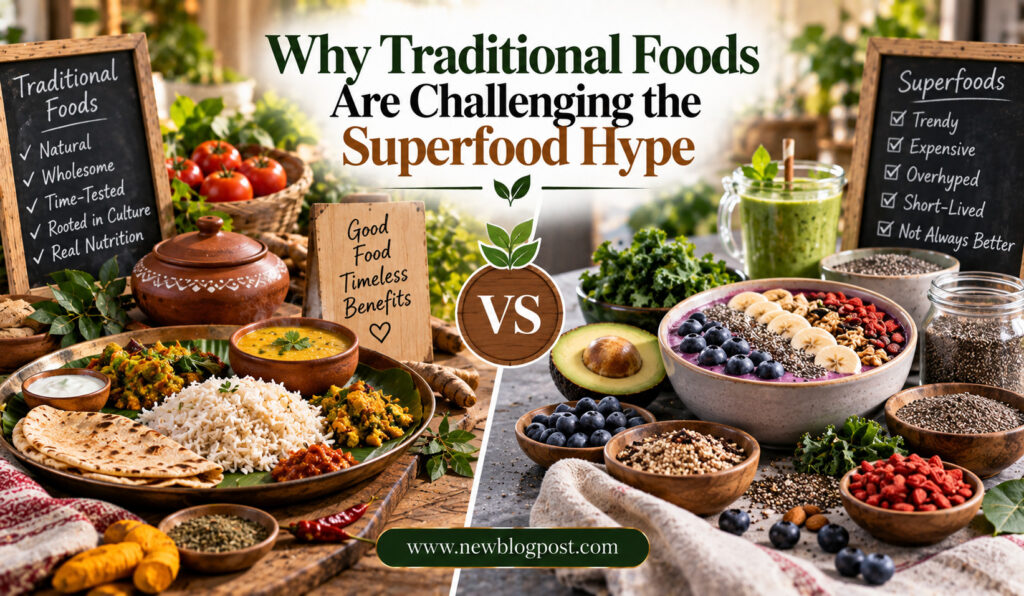

For years, the food and wellness industry has placed a spotlight on so-called superfoods. Ingredients such as chia seeds, quinoa, blueberries, kale and exotic berries have become closely associated with healthy eating, often appearing in social media recipes, wellness programs and premium grocery aisles.
But a different food trend is gaining momentum. Traditional foods that have been part of regional diets for generations are receiving renewed attention from consumers who want nutritious meals without relying on expensive or unfamiliar ingredients.
This shift is not necessarily a rejection of superfoods. Instead, it reflects a broader understanding of nutrition. People are increasingly recognizing that a healthy diet can be built around ordinary foods that are locally available, culturally familiar and prepared in balanced ways.
From millets and pulses to fermented foods, seasonal vegetables and traditional grains, these everyday ingredients are challenging the idea that nutritional value has to come with a premium price tag or a fashionable label.
The Changing Meaning of a “Superfood”
The term “superfood” is widely used in marketing, media and popular nutrition discussions, but it does not have a standardized scientific definition. It is generally used to describe foods considered especially rich in certain nutrients or beneficial compounds.
The problem is that the label can sometimes make individual foods appear more important than the overall diet. Eating one highly promoted ingredient does not compensate for an otherwise unbalanced eating pattern.
Nutrition experts have long emphasized dietary variety and overall food quality. Traditional cuisines naturally reflect this principle by combining grains, legumes, vegetables, fruits, spices, nuts, seeds and other ingredients across meals.
This is one reason traditional foods are attracting attention again. Consumers are beginning to view health through the lens of complete eating patterns rather than individual fashionable ingredients.
Traditional Foods Already Have a Nutritional Foundation
Many traditional foods provide nutrients that are important for everyday diets. Pulses and beans can provide plant-based protein and fiber, whole grains contribute carbohydrates and other nutrients, while vegetables and fruits supply vitamins, minerals and various plant compounds.
In India, traditional diets have historically included foods such as lentils, chickpeas, millets, rice, vegetables, curd, spices and regional grains. Different communities have developed their own combinations based on local agriculture, climate and cultural practices.
These foods may not always receive the same international attention as newly marketed wellness ingredients, but their nutritional contribution can be significant when included as part of a balanced diet.
The renewed interest is therefore less about discovering something completely new and more about recognizing the value of foods that have been present for generations.
Affordability Is Changing Consumer Choices
Price is an important reason traditional foods are gaining attention. Some popular imported or heavily marketed health foods can be relatively expensive, particularly when they are sold as specialty products.
Traditional staples are often produced locally and have established supply chains. Lentils, beans, grains, seasonal vegetables and locally available fruits can provide practical choices for households managing food budgets.
This does not mean every traditional ingredient is inexpensive or that every superfood is expensive. Prices vary by location, season, brand and availability. However, the broader trend reflects growing consumer interest in affordable nutrition.
For many households, a healthy diet needs to be sustainable financially as well as nutritionally. Familiar staples can make that easier.
Local Ingredients Are Getting a Second Look
The renewed popularity of traditional foods is also connected with interest in local agriculture. Consumers are increasingly asking where ingredients come from and whether they can find comparable alternatives closer to home.
This has helped regional grains, traditional vegetables and indigenous food products gain visibility.
Millets provide a useful example. Once viewed in many urban markets as an old-fashioned grain, varieties such as ragi, jowar and bajra have received renewed attention because of their culinary versatility and nutritional characteristics.
Traditional grains can now appear in modern products such as breakfast mixes, snacks, breads and ready-to-cook foods. This combination of traditional ingredients and contemporary packaging is helping introduce them to younger consumers.
Traditional Foods vs Superfood Trends
The comparison is not necessarily about deciding which category is healthier. Both traditional foods and commonly marketed superfoods can contribute nutrients to a balanced diet.
| Traditional foods | Popular superfood trends |
| Often culturally familiar | Often introduced through global wellness trends |
| Frequently locally available | May depend on imports or specialty supply chains |
| Can be relatively affordable | Some products can carry premium prices |
| Connected to regional cooking | Often promoted in modern recipes |
| Usually part of established meal patterns | Sometimes marketed as individual health ingredients |
The more important question is how food fits into the overall diet. A traditional meal containing several nutritious ingredients can be more meaningful nutritionally than adding one fashionable ingredient to an otherwise poor-quality diet.
Fermented Foods Are Returning to the Spotlight
Fermentation is another traditional practice receiving renewed interest. Foods such as idli, dosa batter, kanji, fermented vegetables and certain regional preparations demonstrate how fermentation has long been used in food cultures around the world.
Fermentation can change the flavor, texture and characteristics of foods. Some fermented foods may also contain live microorganisms, depending on the food and processing method.
However, not every fermented product contains probiotics or provides the same potential benefits. Processing, cooking and storage can influence the final product.
The renewed interest in fermentation nevertheless shows how traditional food preparation techniques are being reconsidered in modern kitchens.
Spices Are Also Getting More Attention
Indian and other traditional cuisines use spices not only for flavor but also as part of long-established culinary practices. Turmeric, cumin, ginger, garlic, cinnamon and many other spices have become familiar ingredients in global wellness discussions.
Modern marketing sometimes presents individual spices as powerful health solutions. Scientific research has examined various compounds found in spices, but health claims need to be considered carefully.
Using spices in everyday cooking is different from taking concentrated supplements. A traditional meal uses spices primarily as culinary ingredients, contributing flavor and variety without requiring consumers to treat them as medicines.
This distinction is becoming increasingly important as shoppers become more cautious about exaggerated wellness claims.
Social Media Is Rebranding Traditional Food
Social media has played a surprising role in bringing traditional foods back into the mainstream. Recipes that were once associated mainly with home kitchens are now being presented through short videos, food photography and modern cooking tutorials.
Millet bowls, homemade pickles, traditional breakfasts, fermented recipes and regional snacks are being adapted for contemporary audiences.
Younger consumers who may not have grown up preparing these foods themselves can now discover them through digital platforms. Food creators are also experimenting with traditional ingredients in modern formats.
This does not mean traditional recipes need to be changed to become valuable. Rather, social media is providing a new channel through which existing food traditions can be shared.
Convenience Remains a Challenge
One challenge for traditional foods is convenience. Modern consumers often have limited time for soaking, grinding, fermenting or preparing ingredients from scratch.
Superfoods and packaged wellness products can sometimes appear attractive because they are marketed as quick additions to smoothies or meals.
Food companies are responding by developing ready-to-cook versions of traditional ingredients. Pre-cleaned grains, instant mixes, packaged pulses and frozen traditional foods can reduce preparation time.
The key issue is to maintain nutritional quality while making traditional foods easier to use. Ingredient labels and processing methods therefore remain important considerations.
Sustainability Is Part of the Conversation
Traditional foods are also being discussed in the context of sustainable eating. Local crops that are suited to regional climates may have advantages in certain agricultural systems, although sustainability depends on farming practices, water use, transportation, land management and many other factors.
Millets, for example, have attracted attention because several varieties can grow in relatively challenging conditions. But consumers should avoid assuming that every traditional food is automatically more sustainable.
The more useful approach is to understand the complete production system. Supporting diverse crops and local food traditions can contribute to a more varied food system while preserving culinary knowledge.
Four Traditional Food Habits Worth Rediscovering
The renewed interest does not require people to completely abandon modern foods. Small changes can help bring traditional ingredients back into everyday meals.
- Replace some refined grains with traditional whole grains where appropriate.
- Include pulses or beans regularly as part of balanced meals.
- Explore seasonal and locally available vegetables and fruits.
- Experiment with traditional fermented foods while checking preparation and storage practices.
These habits focus on variety rather than turning one ingredient into a miracle food.
Conclusion
Traditional foods are challenging the superfood hype by offering a different perspective on healthy eating. Instead of focusing on a handful of fashionable ingredients, consumers are rediscovering the nutritional value, affordability and cultural importance of foods that have been part of regional diets for generations.
The shift also reflects a more practical approach to nutrition. Healthy eating does not have to depend on expensive products or constantly changing wellness trends. Pulses, whole grains, seasonal produce, fermented foods and traditional spices can all contribute to varied meals when used appropriately.
Superfoods are unlikely to disappear, but their role is changing as consumers become more informed. The future of healthy eating may ultimately be less about finding one extraordinary ingredient and more about building balanced diets from a wide range of foods—both traditional and modern.
FAQs
What is a traditional food?
A traditional food is generally an ingredient or dish that has been prepared and consumed within a particular culture or region over generations. Examples vary widely between countries and communities.
Are traditional foods healthier than superfoods?
There is no universal answer. Both categories include foods with different nutritional profiles. Overall dietary variety, preparation methods and portion sizes are more important than a marketing label.
Are superfoods scientifically recognized?
“Superfood” is not a standardized scientific category. It is commonly used in popular media and marketing to describe foods believed to have notable nutritional qualities.
Why are millets becoming popular again?
Millets such as ragi, jowar and bajra have attracted attention because they are traditional grains with useful nutritional characteristics and culinary versatility. Interest in local and diverse grains has also supported their revival.
Can traditional foods be convenient?
Yes. Ready-to-cook grains, packaged pulses, frozen foods and modern preparation methods can make traditional ingredients easier to include in busy lifestyles.