
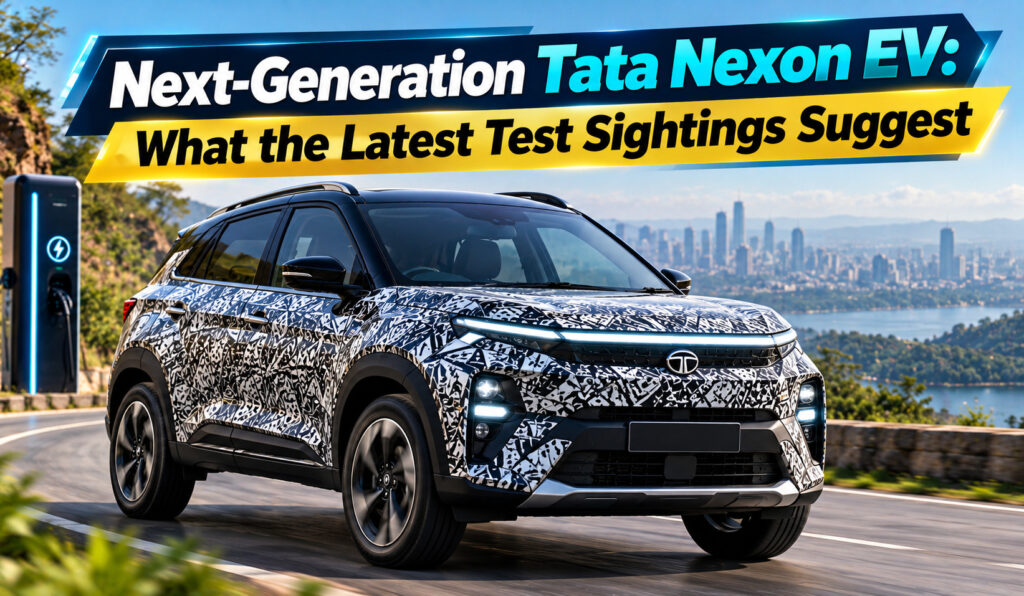

The Tata Nexon EV has established itself as an important model in India’s electric passenger vehicle market. With its compact SUV proportions, practical cabin and multiple battery options, it appeals to buyers looking to move from petrol or diesel vehicles to electric mobility. Now, Tata Motors appears to be preparing a new-generation version that could bring significant changes to the popular electric SUV.
The next-generation Tata Nexon has been spotted testing several times in 2026, with the latest reported sighting offering an important clue about the electric version. A heavily camouflaged prototype was photographed on a flatbed truck, exposing parts of its underbody, including a battery enclosure and orange high-voltage cables.
These sightings suggest that Tata is developing the next Nexon EV alongside the conventional petrol and diesel versions. However, the company has not officially announced its complete specifications, battery capacity, range or launch date. Here’s what the available test sightings indicate about the upcoming electric SUV.
Next-Generation Tata Nexon EV: What the Latest Spy Shots Reveal
The most interesting development came in October 2026, when a camouflaged Nexon-family prototype was spotted being transported on a flatbed. Its elevated position offered a clearer view of the underbody than ordinary road-testing photographs.
The visible battery-like enclosure beneath the passenger compartment and orange high-voltage cables are important clues suggesting that the prototype is associated with an electric powertrain. This is particularly relevant because earlier sightings had mainly focused on the next-generation conventional Nexon.
The October sighting does not reveal the final battery design or its capacity. It also cannot confirm the production vehicle’s motor configuration, charging technology or performance. Development prototypes often use temporary components, so the final showroom model may look different.
Nevertheless, the appearance of an EV-related test mule indicates that the next-generation Nexon EV is part of Tata’s broader vehicle development programme.
Expected Exterior Design and Styling Changes
The next-generation Nexon is expected to receive more substantial exterior changes than a routine facelift. Earlier test sightings indicate a slightly boxier and more upright profile compared with the current model.
The front section appears to have a revised shape, while the A-pillar and roofline look different in some spy images. The rear windscreen and tailgate also appear more upright, potentially giving the SUV a more traditional compact SUV appearance.
Other expected changes include redesigned LED lighting, updated bumpers, fresh alloy wheel designs and revised body panels. Some test vehicles have also been seen with different wheel patterns, although it is too early to confirm the final wheel sizes or designs.
The more upright rear section could potentially improve headroom and luggage-area practicality. However, these benefits cannot be confirmed from exterior photographs alone.
Tata may also bring its latest design language to the electric version, with EV-specific front-end detailing and aerodynamic improvements. The final styling differences between the electric and internal-combustion versions should become clearer as more production-ready prototypes appear.
Cabin and Expected Technology Upgrades
The next-generation Nexon is expected to receive interior improvements alongside its exterior redesign. Earlier photographs of a development vehicle offered a limited look at the dashboard and cabin layout.
The prototype appeared to retain some familiar controls while showing changes to the centre console and climate-control arrangement. An electronic parking brake was also observed in the reported interior images. However, development vehicles may not represent the final production specification.
Tata could introduce a redesigned dashboard, improved material quality and updated digital displays. A larger infotainment screen, revised instrument cluster, connected car technology and wireless smartphone connectivity are among the features buyers may expect in a new-generation model.
Higher variants could also receive improved seat comfort, a panoramic sunroof, a 360-degree camera and additional driver-assistance technology. Some reports have mentioned Level 2 ADAS, but its availability in the production Nexon EV remains unconfirmed.
The key objective will be to improve the overall cabin experience while retaining the practicality that has helped the current Nexon attract family buyers.
Battery Capacity and Expected Driving Range
Battery technology will be one of the most important areas to watch in the next-generation Tata Nexon EV. The current model is available with 30kWh and 45kWh battery options, giving buyers a choice between a more affordable configuration and a longer-range version.
The existing 30kWh variant has a claimed range of approximately 325km, while the 45kWh version offers a claimed range of up to 489km. These figures provide a useful reference point for understanding what buyers may expect from the next-generation model.
Tata could explore improved battery packaging, higher energy density or better overall powertrain efficiency. A revised platform or underbody structure could also create opportunities to optimise battery integration.
However, the latest spy images do not establish whether the new Nexon EV will receive a larger battery pack. No confirmed battery capacity or certified driving-range figure has been announced for the next-generation version.
If Tata improves battery efficiency and energy management, the upcoming model could offer a more competitive driving range without necessarily requiring a significantly larger battery. Its actual performance will depend on the final engineering and battery configuration.
Charging Technology and Electric Powertrain Expectations
Charging performance is another area where buyers will expect improvements. The current Nexon EV supports AC home charging and DC fast charging, providing flexibility for daily use and longer journeys.
The next-generation version could receive updated charging hardware and battery thermal management technology. These improvements may help deliver more consistent charging performance, particularly during longer trips.
There is also potential for improvements in motor efficiency, regenerative braking and power delivery. Tata could refine the driving modes and energy-management systems to make the vehicle more efficient in city traffic.
However, no official information confirms a higher DC charging rate, a particular charging time or a new motor output for the upcoming model. Buyers should wait for Tata Motors to publish the final technical specifications instead of relying on predictions based on the spy images.
Safety and Driver Assistance Features
Safety is likely to remain an important consideration in the next-generation Nexon EV. The current Nexon range already offers several safety and convenience technologies, with equipment varying by variant.
The upcoming model could receive an updated electronic safety package, improved camera systems and additional driver-assistance functions. Level 2 ADAS has been discussed in reports covering the next-generation Nexon, but its inclusion in the electric variant has not been confirmed.
Other potential upgrades include improved parking assistance, a 360-degree camera, enhanced collision warnings and additional active safety functions.
Tata may also revise the body structure and passive safety equipment as part of the generational update. However, no official crash-test rating or final safety specification is available for the upcoming Nexon EV.
Expected Launch Timeline and Price in India
The next-generation Tata Nexon is widely expected to arrive in 2027, although Tata Motors has not confirmed an official launch date for the electric version.
The final price will depend on battery capacity, variant equipment, motor configuration and any platform-related changes. The current Nexon EV provides a reference point, with prices reported from approximately ₹12.49 lakh to ₹17.89 lakh ex-showroom.
The new-generation model could command a higher price if it receives significant battery, technology and cabin upgrades. However, an exact price estimate would be speculative until Tata announces the product and its variants.
The electric SUV will continue to compete in a segment that includes the Mahindra XUV 3XO EV, MG Windsor EV, Hyundai Creta Electric and other compact electric SUVs, depending on their respective price and size categories.
Should Buyers Wait for the New Tata Nexon EV?
The latest test sightings make the next-generation Nexon EV an interesting upcoming product. The visible underbody hardware provides a stronger indication of electric development than earlier exterior-only photographs. At the same time, the revised body proportions suggest that the new model could bring meaningful design and packaging changes.
Buyers who need an electric SUV immediately can evaluate the existing Nexon EV based on its current price, range, charging access and available features. Those who can wait may prefer to follow the development of the next-generation model, particularly for official battery and range announcements.
For now, the most important details remain unconfirmed. Tata Motors still needs to reveal the production design, battery specifications, charging performance, variant features and launch schedule.
Overall, the next-generation Tata Nexon EV could become an important update in India’s compact electric SUV segment. Its success will depend on whether Tata can deliver meaningful improvements in real-world range, charging convenience, cabin quality and ownership value.