
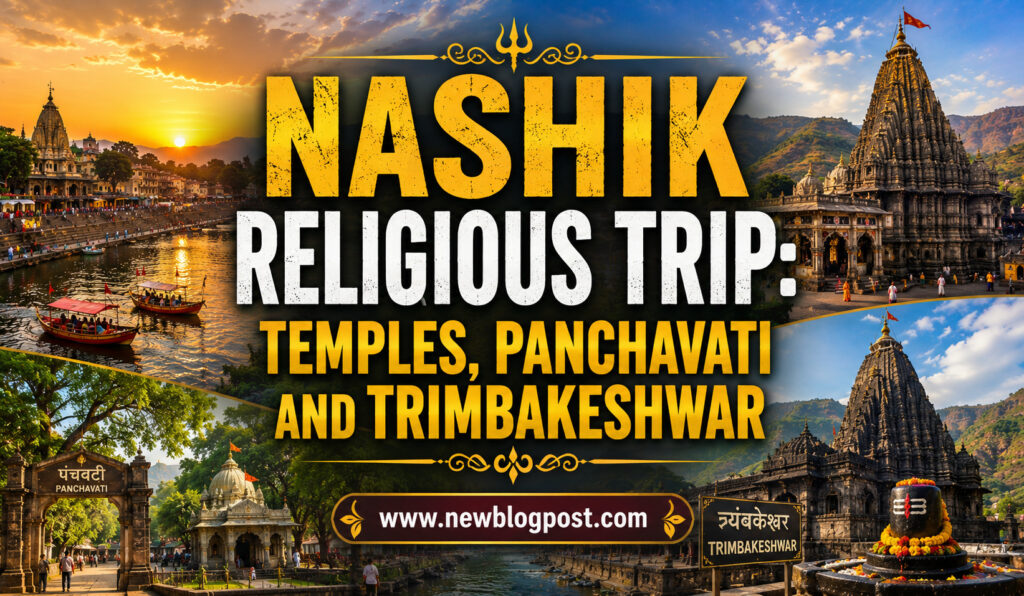

Nashik is one of Maharashtra’s most important religious destinations and a popular pilgrimage city for travellers seeking a combination of spirituality, history and culture. Located on the banks of the Godavari River, the city attracts devotees throughout the year because of its ancient temples, sacred river ghats and strong connection with Hindu mythology.
A Nashik religious trip is not limited to visiting one temple. The city and its surrounding areas offer a complete spiritual journey, with Panchavati, Ram Kund, Kalaram Temple, Sita Gufa and Trimbakeshwar forming some of its most significant attractions. The region is also closely associated with the Kumbh Mela, which has helped establish Nashik as one of India’s major pilgrimage centres.
For first-time visitors, Nashik provides an interesting mix of old religious neighbourhoods and a modern city. Travellers can spend time exploring temples and ghats in the morning, visit Trimbakeshwar during the day and experience local food and culture in the evening. With good road and rail connectivity, the city is also relatively convenient for a short religious getaway.
Why Nashik Is an Important Religious Destination
Nashik occupies an important position in Hindu religious tradition. The Godavari River, which originates near Trimbakeshwar in the Nashik district, is regarded as one of India’s sacred rivers. Several locations around Nashik are connected with stories from the Ramayana, making the city especially significant for devotees.
Panchavati is at the centre of this religious landscape. According to tradition, Lord Rama, Sita and Lakshmana spent part of their exile in this region. Several places in and around Panchavati are associated with their stay, although these connections belong to religious tradition and mythology rather than established historical records.
Trimbakeshwar, located around 30 kilometres from Nashik city, adds another major dimension to the pilgrimage. The Trimbakeshwar Jyotirlinga Temple is one of the twelve Jyotirlingas dedicated to Lord Shiva and attracts devotees from across India.
The combination of Panchavati and Trimbakeshwar makes Nashik particularly attractive for travellers planning a spiritual circuit rather than a single temple visit.
Panchavati: The Spiritual Heart of Nashik
Panchavati is one of the most visited religious areas in Nashik. The name refers to the traditional belief that five banyan trees once stood in the area. Today, the neighbourhood contains several important temples, ghats and sites associated with Hindu mythology.
The area around the Godavari River is especially active during religious festivals. Pilgrims visit the ghats to perform rituals, take holy baths and offer prayers. Ram Kund is considered one of the most important locations in Panchavati and is closely associated with Lord Rama.
Walking through Panchavati offers a different experience from visiting a modern temple complex. Narrow lanes, old buildings, flower sellers, small shrines and traditional shops create an atmosphere that reflects the area’s long religious history.
Travellers should ideally visit Panchavati early in the morning. The weather is generally more comfortable, and the ghats and temples can be explored at a relaxed pace before the area becomes crowded.
Ram Kund and the Godavari Ghats
Ram Kund is among the most prominent religious landmarks in Nashik. Located along the Godavari River, it is an important pilgrimage spot where devotees perform various religious rituals.
The surrounding ghats provide a peaceful setting when crowds are limited. During major festivals, however, the area can become extremely busy. Nashik’s association with the Kumbh Mela means that the riverfront can attract enormous numbers of pilgrims during the event.
The Godavari’s importance extends beyond Nashik because the river is considered sacred in Hindu tradition. Its source near Trimbakeshwar further strengthens the spiritual connection between the city and the surrounding region.
Visitors should be respectful while photographing the ghats, particularly when religious ceremonies or personal rituals are taking place.
Kalaram Temple: A Historic Religious Landmark
The Kalaram Temple is one of Panchavati’s best-known temples. Dedicated to Lord Rama, the temple gets its name from the black-coloured idol of Rama installed in the sanctum. Images of Sita and Lakshmana are also worshipped here.
The temple’s stone architecture gives it a distinctive appearance. Its historical and religious importance has made it an important stop for visitors exploring Panchavati.
The temple is also connected with the social reform history of Maharashtra. Dr. B. R. Ambedkar led the Kalaram Temple entry movement in 1930, making the site significant beyond its religious history. The movement became an important episode in the wider struggle against caste-based discrimination.
For travellers interested in both religion and modern Indian history, Kalaram Temple provides an opportunity to understand how places of worship can also become part of important social movements.
Sita Gufa and Other Panchavati Attractions
Sita Gufa, or Sita Cave, is another popular stop in Panchavati. Religious tradition associates the location with Sita during the period of Rama’s exile. The site includes a narrow cave and small shrines that attract devotees.
Because the cave is relatively confined, visitors may need to wait during busy periods. Elderly travellers and people uncomfortable with narrow spaces should take this into account.
Other attractions around Panchavati include Kapaleshwar Temple and nearby religious sites. Kapaleshwar is traditionally associated with Lord Shiva and has an unusual feature: unlike many Shiva temples, it does not have a Nandi idol directly in front of the shrine.
A visit to Panchavati therefore feels less like a checklist of temples and more like a walk through a historic religious neighbourhood.
Trimbakeshwar Temple: The Main Pilgrimage Stop
The journey to Trimbakeshwar is an essential part of a Nashik religious trip. The temple is situated at the foothills of the Brahmagiri mountain range and is one of the twelve Jyotirlingas.
The temple’s architecture and religious traditions attract devotees from Maharashtra and other parts of India. The shrine is particularly significant because the Godavari River is traditionally believed to originate in the Trimbakeshwar region.
The sanctum houses a distinctive Jyotirlinga representation associated with the Hindu trinity of Brahma, Vishnu and Shiva. This feature makes Trimbakeshwar different from many other Shiva temples.
Visitors should check the latest temple timings, darshan arrangements and puja rules before travelling. Special rituals and queues can operate differently on festival days or during periods of heavy pilgrimage.
Brahmagiri Hill and the Godavari Connection
Brahmagiri Hill is closely associated with the religious identity of Trimbakeshwar. According to Hindu tradition, the Godavari originates from this sacred region.
The surrounding landscape also makes Trimbakeshwar different from the urban environment of Nashik city. Green hills, valleys and seasonal streams create a more peaceful setting, particularly outside peak pilgrimage periods.
Travellers who want to explore beyond the temple can consider the Brahmagiri area, but walking routes should be approached according to weather, physical ability and local guidance. During monsoon and periods of heavy rainfall, mountain paths can become slippery.
The connection between the hill, the river and the temple is one of the most interesting aspects of the region because geography and religious tradition are closely linked.
Best Time for a Nashik Religious Trip
Nashik can be visited throughout much of the year, but the experience changes significantly according to the season. Winter is generally comfortable for temple visits and sightseeing, making it a popular period for travellers.
The monsoon transforms the landscape around Trimbakeshwar. The hills become greener and waterfalls may appear in the surrounding region. However, heavy rainfall can affect roads and walking routes.
Summer can be warm, especially during the afternoon. Travellers visiting temples during this period may prefer early morning and evening schedules.
Festival periods bring a different atmosphere altogether. Religious celebrations can attract large crowds, so travellers should expect longer queues and heavier traffic.
| Season | Travel experience |
| Winter | Comfortable weather for temple visits and sightseeing |
| Summer | Hot afternoons; early morning visits are preferable |
| Monsoon | Green landscapes and pleasant surroundings, but heavy rain may affect travel |
| Festival periods | Strong religious atmosphere but significantly larger crowds |
How to Reach Nashik and Trimbakeshwar
Nashik is well connected with major cities in Maharashtra and neighbouring states. The city can be reached by road, rail and air.
Nashik Road railway station is the principal rail connection for travellers arriving by train. Several trains connect the city with Mumbai, Pune, Delhi and other major destinations.
For air travellers, Nashik has an airport at Ozar, although flight availability can vary. Mumbai is another major airport option for travellers who do not find a suitable direct flight to Nashik.
Trimbakeshwar can be reached from Nashik city by road. Taxis, buses and private vehicles are commonly used for the journey.
A typical route can include:
- Nashik city and Panchavati.
- Ram Kund, Kalaram Temple and nearby religious sites.
- Trimbakeshwar Temple and surrounding areas.
- Return to Nashik or continue towards nearby destinations.
Because the distance between attractions is manageable, travellers can create either a one-day temple circuit or a more relaxed two-day religious itinerary.
What to Eat During a Nashik Trip
Food is another part of the Nashik travel experience. Visitors can find traditional Maharashtrian dishes as well as snacks and everyday Indian meals around the city.
Misal pav is one of the most popular local-style dishes to try. Sabudana vada, poha, thalipeeth and puran poli are other familiar Maharashtrian options.
Near busy pilgrimage areas, travellers will also find simple vegetarian restaurants and eateries serving meals suitable for pilgrims.
During religious travel, it is generally sensible to choose clean and busy establishments, particularly during hot weather.
Travel Tips for a Comfortable Pilgrimage
A religious trip becomes much easier when the schedule is planned around temple timings rather than trying to cover every attraction in a few hours. Starting early can help visitors avoid both heat and crowds.
Comfortable footwear is particularly useful because temple visits often involve walking and standing for extended periods. Travellers should also carry water, especially during summer.
A few practical points can make the trip smoother:
- Check temple timings and special darshan arrangements before leaving.
- Keep modest and comfortable clothing suitable for religious places.
- Carry some cash along with digital payment options.
- Avoid carrying unnecessary valuables into crowded pilgrimage areas.
Travellers should also remember that rules concerning photography, footwear and entry can vary from one religious site to another. Following instructions from temple authorities helps maintain a respectful atmosphere.
A Two-Day Nashik Religious Itinerary
A two-day plan is enough to explore the major religious attractions without making the journey unnecessarily rushed.
The first day can focus on Panchavati. Travellers can begin at Ram Kund and then explore Kalaram Temple, Sita Gufa, Kapaleshwar Temple and other nearby sites. The evening can be spent along the Godavari River or exploring local markets.
The second day can be dedicated to Trimbakeshwar. Starting early allows visitors to reach the temple before the crowds become heavier. After darshan, travellers can explore the surrounding area and Brahmagiri region, depending on weather and available time.
Those who have an additional day can explore other attractions around Nashik, including historical sites, vineyards and natural locations. This creates a broader trip that combines spirituality with the city’s cultural and geographical attractions.
Nashik and the Kumbh Mela
Nashik has a unique place in India’s pilgrimage calendar because it is one of the four cities associated with the Kumbh Mela. The event is traditionally linked to the sacred Godavari River and takes place at the Nashik-Trimbakeshwar region during its designated cycle.
During major Kumbh events, the city experiences an enormous increase in pilgrims and visitors. Roads, accommodation, transportation and public spaces can become extremely crowded.
Travellers planning to visit Nashik during such periods should make arrangements well in advance and follow official crowd-management and travel advisories. The experience can be spiritually significant, but it requires considerably more preparation than an ordinary Nashik temple trip.
Responsible Religious Tourism
Nashik’s religious sites attract large numbers of visitors, making responsible tourism important. The Godavari River and surrounding areas need particular care because waste generated by visitors can affect the local environment.
Travellers should avoid throwing plastic, food packaging or other waste near the river and temples. Reusable water bottles can help reduce single-use plastic.
Respect for local residents and devotees is equally important. Religious rituals should not be interrupted for photographs, and visitors should follow instructions regarding temple entry and dress.
Responsible behaviour ensures that Nashik remains welcoming for future pilgrims while protecting its cultural and natural heritage.
Why Nashik Is Worth Visiting
Nashik stands out because it brings together several layers of India’s religious and cultural history within a relatively compact region. Panchavati connects the city with the Ramayana tradition, Ram Kund highlights the spiritual importance of the Godavari, Kalaram Temple represents both religious and social history, and Trimbakeshwar adds one of India’s most important Shiva pilgrimage sites.
The journey can also be adapted according to different travel styles. A devotee may focus almost entirely on temples and rituals, while a traveller interested in history can explore architecture and heritage. Nature lovers can extend the trip towards the hills and landscapes around Trimbakeshwar.
This flexibility is one of the reasons Nashik continues to attract visitors from Maharashtra and beyond.
Conclusion
A Nashik religious trip offers much more than a collection of temple visits. It is a journey through mythology, spirituality, history and the natural landscape of northern Maharashtra. From the sacred atmosphere of Panchavati and the Godavari ghats to the ancient traditions of Trimbakeshwar, the region provides a meaningful experience for pilgrims and curious travellers alike.
For the best experience, visitors should plan around temple timings, allow enough time between destinations and check current travel information before departure. Early mornings are particularly useful for avoiding intense heat and large crowds.
Whether it is a short weekend pilgrimage or part of a longer Maharashtra journey, Nashik provides an opportunity to explore some of India’s most enduring religious traditions while experiencing the culture and landscapes that surround them.
Frequently Asked Questions
1. Why is Nashik famous for religious tourism?
Nashik is famous for its connection with the Ramayana tradition, the sacred Godavari River, Panchavati, several historic temples and the Trimbakeshwar Jyotirlinga. It is also one of the major Kumbh Mela locations.
2. What are the main religious places in Nashik?
Panchavati, Ram Kund, Kalaram Temple, Sita Gufa, Kapaleshwar Temple and Trimbakeshwar Temple are among the most important religious attractions in and around Nashik.
3. How far is Trimbakeshwar from Nashik?
Trimbakeshwar is roughly 30 kilometres from central Nashik, although the actual travel time depends on traffic and road conditions.
4. How many days are enough for a Nashik religious trip?
Two days are generally sufficient for the major attractions. One day can be devoted to Panchavati and Nashik’s temples, while another can be used for Trimbakeshwar.
5. What is the best time to visit Nashik temples?
Winter is generally comfortable for sightseeing. Monsoon can provide greener landscapes around Trimbakeshwar, while summer travellers may prefer early mornings and evenings.