
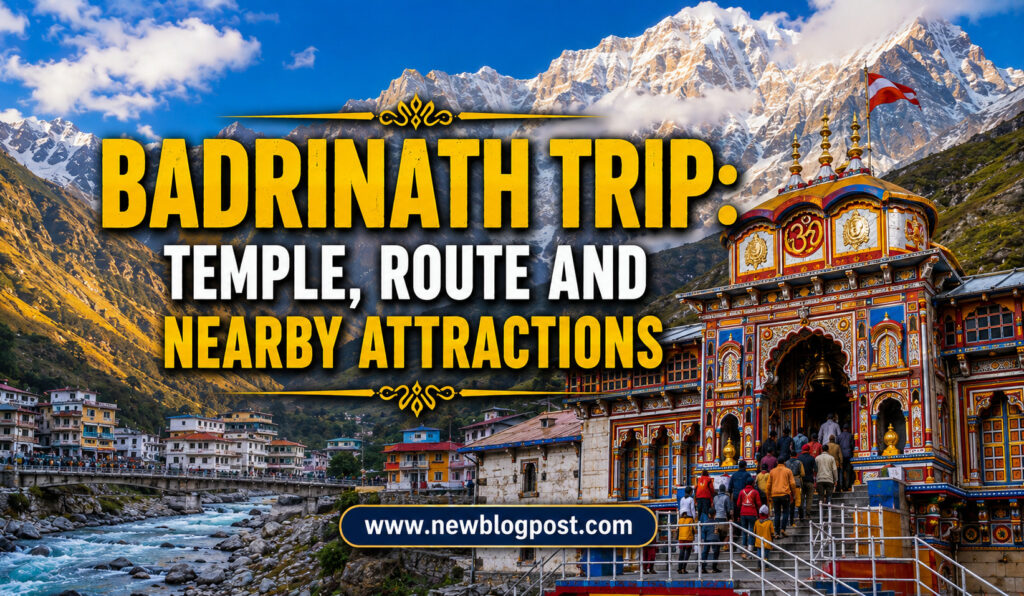

Badrinath is one of the most important pilgrimage destinations in India and a major attraction for travellers exploring the Himalayan region of Uttarakhand. Located in the Chamoli district along the Alaknanda River, the sacred town is known primarily for the Badrinath Temple, one of the most revered shrines dedicated to Lord Vishnu. Surrounded by high Himalayan peaks and dramatic landscapes, Badrinath offers a travel experience that combines spirituality, history, culture and nature.
A Badrinath trip is not simply a temple visit. The journey through the mountains, the changing landscapes, traditional villages and nearby spiritual attractions make the destination memorable. The town is also one of the four major Char Dham pilgrimage sites in India and forms part of Uttarakhand’s Char Dham circuit along with Kedarnath, Gangotri and Yamunotri.
For travellers planning a visit, understanding the route, temple arrangements, best season and nearby attractions can make the journey more comfortable. Since weather and road conditions in the Himalayas can change quickly, checking official travel updates before departure is equally important.
Why Badrinath Is Important
Badrinath holds a special position in Hindu religious tradition. The main temple is dedicated to Lord Vishnu, worshipped here in the form of Badrinarayan. According to tradition, the site has been associated with Lord Vishnu and centuries of pilgrimage.
The temple stands beside the Alaknanda River, with the Nar and Narayan mountain ranges forming an impressive backdrop. The combination of the colourful temple structure, river valley and snow-covered Himalayan landscape gives Badrinath a distinctive character.
The shrine is also connected with Adi Shankaracharya, who is traditionally credited with establishing or reviving several important pilgrimage centres across India. Badrinath is therefore significant not only for devotees but also for people interested in India’s religious history.
Unlike many conventional tourist destinations, Badrinath is strongly seasonal. Heavy snowfall makes the region difficult to access during winter, and the temple closes for a substantial part of the year. The opening and closing dates are announced according to the traditional religious calendar.
Badrinath Temple: The Heart of the Journey
The Badrinath Temple is the centre of the town and the primary reason millions of pilgrims travel into the Himalayan region. The present temple has undergone repairs and restoration at different points in history, reflecting the challenges of maintaining a structure in a high-altitude environment.
The temple’s colourful facade makes it instantly recognisable. Inside the sanctum is the black stone image of Lord Badrinarayan, regarded as a sacred form of Lord Vishnu. Other deities and religious figures are also worshipped within the temple complex.
Before planning darshan, visitors should check the latest official information regarding opening dates, timings, registration requirements and crowd-management arrangements. The Shri Badrinath-Kedarnath Temple Committee provides official information and online services for pilgrims.
The temple’s location also contributes to its appeal. Standing near the Alaknanda River with mountains rising behind it, the shrine offers a setting that is very different from temples located in India’s plains and urban centres.
How to Reach Badrinath
Badrinath is connected to several major towns in Uttarakhand by road. Most travellers use Rishikesh, Haridwar, Dehradun or nearby Himalayan towns as starting points for the road journey.
The nearest airport generally used by travellers is Jolly Grant Airport near Dehradun. Rishikesh is an important railway point for the journey, after which travellers continue by road. The final approach takes visitors through winding mountain roads, river valleys and settlements spread across the Garhwal Himalayas.
The route itself is an important part of the experience. As the journey moves deeper into the mountains, the landscape changes from the relatively broad valleys around Rishikesh to steep cliffs, forests and high-altitude terrain.
| Travel option | Main connection | Important point |
| Flight | Jolly Grant Airport, Dehradun | Road travel is required after reaching the airport |
| Train | Rishikesh | Continue by road towards Badrinath |
| Road | Rishikesh, Haridwar, Dehradun and other Uttarakhand towns | Mountain roads and weather can affect travel time |
| Local travel | Taxi and bus services | Availability may vary according to season and conditions |
Travellers should avoid assuming that a journey will take the same amount of time as suggested by online maps. Mountain traffic, road repairs, landslides and weather can significantly change travel schedules.
The Scenic Route to Badrinath
The road to Badrinath passes through some of Uttarakhand’s most spectacular mountain landscapes. Depending on the chosen route and travel plan, visitors encounter important places such as Devprayag, Srinagar, Rudraprayag, Karnaprayag, Nandprayag and Joshimath.
One of the highlights is the series of river confluences known as the Prayags. At Devprayag, the Alaknanda and Bhagirathi rivers meet to form the Ganga. Further upstream, the Alaknanda meets other rivers at Rudraprayag, Karnaprayag, Nandprayag and Vishnuprayag.
These places give travellers an opportunity to understand the geography and culture of the Himalayan river system rather than simply passing through the region.
The road journey can be long, so travellers planning Badrinath should ideally avoid creating an extremely tight schedule. Staying overnight at an intermediate destination can make the trip less tiring and allows visitors to experience the mountain towns along the route.
Best Time to Visit Badrinath
Badrinath is primarily a seasonal destination. The temple generally opens during the spring or early summer and closes before the arrival of severe winter conditions. The exact opening and closing dates vary each year according to traditional calculations and official announcements.
The months around May and June are among the busiest because many pilgrims prefer to visit during the early pilgrimage season. The weather can be comparatively favourable, but crowds and traffic can also be significant.
The post-monsoon period can provide another opportunity to visit, although travellers must carefully monitor weather conditions. The Himalayan monsoon can bring heavy rainfall, landslides and road disruptions, while winter brings extremely cold conditions and snowfall.
For a smoother trip, travellers should check the latest road, weather and temple information shortly before departure rather than depending entirely on information from previous years.
Nearby Attractions Around Badrinath
A Badrinath trip can easily become more than a temple visit because several important spiritual and natural attractions are located nearby.
Mana Village is one of the most popular places to visit. Located close to the international border region, the village has traditionally been associated with local Himalayan culture and mythology. Visitors can explore the settlement, interact with local residents and enjoy views of the surrounding mountains.
Vasudhara Falls is another well-known attraction. The waterfall is located beyond Mana and requires a trek, making it more suitable for travellers who are physically prepared for high-altitude walking.
Tapt Kund, located near Badrinath Temple, is famous for its naturally heated water. Pilgrims traditionally consider the kund spiritually significant before entering the temple.
Charan Paduka is another popular destination associated with religious tradition and mountain views. The route involves uphill walking and should be approached according to weather and local conditions.
Mana Village: A Himalayan Cultural Experience
Mana is often described as one of India’s last villages before the international border. Its location gives visitors a glimpse into life in a high-altitude Himalayan settlement.
The village is closely connected with several stories from Hindu mythology. According to local tradition, the Pandavas are believed to have passed through the area during their final journey. Places around Mana are associated with these legends, including the Saraswati River and Bhim Pul.
The village has also become increasingly popular among tourists because of its traditional architecture, mountain scenery and local products. However, visitors should remember that Mana is a living community rather than simply a tourist attraction. Respecting local customs and avoiding litter are important.
Panch Badri and Other Spiritual Sites
The Badrinath region is connected with several temples and sacred locations collectively associated with the wider Badri tradition. These sites provide travellers with an opportunity to explore the religious landscape beyond the main temple.
Yogadhyan Badri at Pandukeshwar is particularly significant and is traditionally linked with the Pandavas. Bhavishya Badri is another important shrine located in the region, although reaching it requires additional travel and trekking.
For travellers interested in religious history, visiting these locations can add depth to the Badrinath journey. Instead of rushing from one attraction to another, visitors can spend time understanding the stories, traditions and local significance associated with each site.
Travel Preparation for Badrinath
Because Badrinath is situated at a high altitude, travellers should prepare differently from those taking an ordinary holiday. Temperatures can drop quickly, especially in the early morning and evening. Rain can also arrive unexpectedly during the travel season.
A practical travel bag should generally include:
- Warm layered clothing, a rain jacket and comfortable walking shoes.
- Essential medicines, personal documents and basic first-aid supplies.
- Sunglasses, sunscreen, a reusable water bottle and necessary toiletries.
- Some dry snacks and sufficient cash for situations where digital payment connectivity may be limited.
Travellers should keep luggage manageable because frequent movement between mountain destinations can make carrying heavy bags inconvenient.
Health and Safety at High Altitude
Badrinath’s altitude means visitors may experience discomfort if they are not accustomed to mountain environments. Headaches, tiredness and breathlessness can occur, particularly after rapid travel to higher elevations.
The best approach is to avoid overexertion during the first part of the journey. Travellers should drink enough water, get adequate sleep and take breaks when necessary. People with existing medical concerns should consider medical advice before travelling to a high-altitude destination.
Weather should also influence daily plans. If local authorities issue warnings about heavy rain, landslides or road closures, travellers should prioritise safety rather than trying to follow a fixed itinerary.
Badrinath Trip Cost and Duration
The cost of a Badrinath trip varies considerably depending on the starting city, type of accommodation, transportation and number of days. A budget road journey can be considerably cheaper than a private taxi-based trip, while premium accommodation and customised tours will increase expenses.
A comfortable itinerary usually allows several days for the journey instead of attempting to reach Badrinath and return immediately. Travellers coming from outside Uttarakhand should also account for possible delays caused by mountain traffic or weather.
| Trip component | What affects the cost |
| Transportation | Bus, shared vehicle, private taxi or tour package |
| Accommodation | Budget hotels, guesthouses or premium properties |
| Food | Local restaurants, hotel meals and packaged food |
| Sightseeing | Local transport and optional excursions |
| Duration | Longer stays increase accommodation and food expenses |
Instead of choosing the cheapest possible option, travellers should consider reliability and flexibility, particularly when travelling with elderly family members.
A Suggested Badrinath Travel Plan
A practical Badrinath journey can begin from Rishikesh or Haridwar, followed by an overnight stop in the Himalayan region. The next day can be used for continuing towards Badrinath while visiting important points along the route.
After reaching Badrinath, travellers can dedicate the following morning to temple darshan and then explore nearby attractions such as Tapt Kund and Mana, depending on weather and local conditions.
The return journey can include another overnight stop rather than attempting a long mountain drive and plains journey on the same day. Travellers who want to explore more of Uttarakhand can extend the itinerary to include Auli, Joshimath and other destinations.
Responsible Tourism in the Himalayas
The rising popularity of Badrinath has increased pressure on the fragile Himalayan environment. Large numbers of visitors generate waste and increase demand for water, transportation and accommodation.
Responsible travel is therefore essential. Visitors should carry reusable bottles, avoid throwing plastic or food waste along roads and trekking paths, and use designated waste-disposal facilities. Local traditions and religious spaces should also be treated respectfully.
The mountains are not simply a backdrop for photographs. They are a sensitive ecosystem supporting communities, forests, rivers and wildlife. A responsible visitor can enjoy the destination while leaving a smaller environmental footprint.
Why a Badrinath Trip Is Worth Taking
Badrinath offers a rare combination of spiritual importance and Himalayan scenery. The journey through river valleys and mountain settlements creates an experience that begins long before reaching the temple.
For pilgrims, the destination represents devotion and tradition. For nature lovers, it provides access to spectacular Himalayan landscapes. For travellers interested in culture, the route introduces ancient pilgrimage traditions, local communities and stories that have been passed down for generations.
The most rewarding Badrinath trip is one that leaves enough time to appreciate all of these elements rather than treating the temple as a quick stop on a crowded itinerary.
Conclusion
A Badrinath trip is a journey through faith, mountains and history. From the winding roads of Uttarakhand to the sacred Badrinath Temple and the nearby villages, waterfalls and spiritual sites, every stage offers something different.
Planning remains important because the Himalayan environment can change quickly. Temple schedules, road conditions, weather advisories and travel regulations should always be checked through official sources before departure.
Whether travelling as part of the Char Dham Yatra, planning a Do Dham pilgrimage with Kedarnath or simply exploring the Himalayan region, Badrinath can offer an unforgettable experience. The destination’s greatest attraction is not just the ancient shrine, but the complete journey that connects spirituality with the extraordinary landscape of the Himalayas.
Frequently Asked Questions
1. Where is Badrinath located?
Badrinath is located in Chamoli district of Uttarakhand, in the Garhwal Himalayas, beside the Alaknanda River.
2. Why is Badrinath Temple famous?
Badrinath Temple is one of India’s most important Vishnu temples and is one of the four major Char Dham pilgrimage destinations. It is dedicated to Lord Vishnu in the form of Badrinarayan.
3. How can I reach Badrinath?
Badrinath can be reached primarily by road. Travellers commonly travel from Rishikesh, Haridwar or Dehradun towards the Himalayan region. Jolly Grant Airport near Dehradun is the nearest major airport generally used for the journey, while Rishikesh is an important railway connection.
4. What are the best places to visit near Badrinath?
Mana Village, Tapt Kund, Vasudhara Falls, Charan Paduka and nearby spiritual sites are among the popular attractions. Some locations require trekking and should only be visited when weather and local conditions are suitable.
5. Is Badrinath suitable for senior citizens?
Senior citizens can visit Badrinath, but the altitude, long road journey and changing weather should be considered carefully. Comfortable accommodation, sufficient rest and appropriate medical preparation can make the journey easier.