
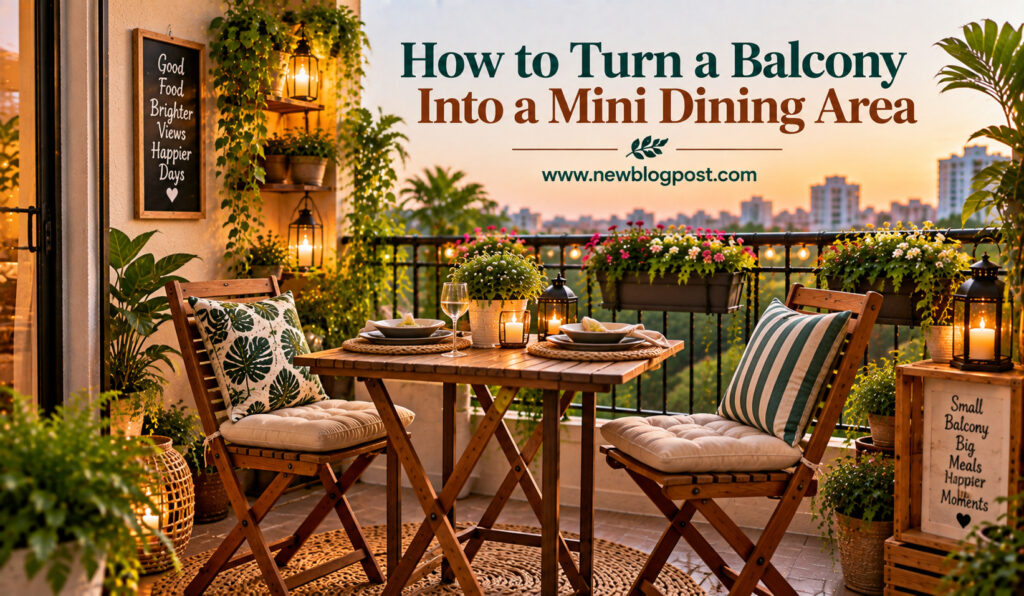

A balcony can be much more than a place for plants, laundry, or occasional storage. With the right furniture and layout, even a compact balcony can become a charming mini dining area where you can enjoy breakfast, evening tea, weekend meals, or intimate dinners. You do not need a large outdoor space or an expensive renovation. The key is to use every available inch thoughtfully while keeping the area comfortable and uncluttered.
A well-designed balcony dining space should feel like a natural extension of your home. Compact furniture, practical materials, attractive lighting, and a few decorative touches can create an inviting setting without making the balcony feel crowded. Whether you have a narrow apartment balcony or a slightly larger open terrace, these ideas can help you create a functional dining corner.
Start by Measuring Your Balcony
Before purchasing furniture, measure the usable area of your balcony. Consider the width, length, door opening, railing position, and any permanent features such as pillars or storage cabinets. Measurements help you understand how much space is genuinely available for a table and chairs.
Avoid choosing furniture simply because it looks compact in a photograph. A dining chair also needs room for someone to sit comfortably and move around it. The table should leave enough open space for entering and exiting the balcony.
If the balcony is particularly narrow, consider positioning the dining arrangement along one side rather than placing it in the center. This creates a clearer passage and makes the entire area feel more spacious.
Think About How You Will Use the Space
The ideal dining setup depends on your lifestyle. If the balcony will mainly be used for morning coffee and snacks, a tiny café-style table may be enough. If you want to enjoy complete meals with a partner, choose a slightly larger tabletop with comfortable seating.
For a small balcony, decide whether dining is going to be the primary function. Trying to combine a dining table, lounge chair, large garden, storage unit, and work desk can quickly make the area uncomfortable.
Choose a Compact Dining Table
The dining table is the centerpiece of your balcony dining area, so its size and shape deserve careful consideration. A small round table can work beautifully for two people because it has no corners and creates a softer visual appearance. A narrow rectangular table may be better for a long balcony because it can sit close to a wall or railing.
Foldable tables are particularly useful when floor space is limited. You can open the table during meals and fold it away when you need more room. Wall-mounted drop-leaf tables provide another practical solution for very compact balconies.
Select the Right Table Shape
Round tables create an intimate café-like atmosphere and are easy to arrange around. Square tables can work well when you want a straightforward two-person dining setup. Rectangular tables are useful when the balcony is long and narrow.
The best choice is not necessarily the smallest table available. Choose a tabletop that can comfortably accommodate the things you normally use during a meal without forcing plates, glasses, and serving dishes into a cramped arrangement.
Pick Space-Saving Dining Chairs
Once you have selected the table, choose chairs that complement its proportions. Bulky dining chairs can make a balcony appear crowded, even when the table itself is small. Slim-profile chairs, folding chairs, stackable seating, or lightweight outdoor chairs can make better use of limited space.
Chairs that tuck neatly underneath the table are especially helpful. When the chairs are pushed in, the dining area takes up less visual and physical space.
Some useful seating options include:
- Folding dining chairs
- Stackable outdoor chairs
- Slim metal or wooden chairs
- Compact stools or benches
A small bench can also be an excellent choice. It can accommodate two people while staying close to a wall when not in use. If you choose a bench with hidden storage, it can also provide a convenient place for cushions and dining accessories.
Create a Café-Style Balcony
If you want your balcony dining area to have a stylish and relaxed appearance, take inspiration from a small outdoor café. A compact round table, two comfortable chairs, a few plants, and warm lighting can create a cozy atmosphere without requiring much space.
Choose a simple color palette to keep the design visually organized. Neutral furniture can be combined with green plants and colorful cushions, while darker furniture can create a modern urban look.
A small centerpiece can add character to the table. Instead of large decorations, consider a tiny planter, a vase with fresh flowers, or a simple candle holder.
Make Use of Foldable and Multifunctional Furniture
Multifunctional furniture is one of the most useful solutions for a small balcony. A foldable table can function as a dining surface during meals and disappear when the balcony needs to be used for another purpose.
A storage bench can provide seating while hiding cushions, table linens, or gardening accessories. A narrow console-style table can sometimes work as both a dining surface and a serving station.
Keep the Floor Flexible
Try to avoid filling the entire balcony with permanent furniture. Leaving some open floor area makes cleaning easier and gives you flexibility when you want to rearrange the space.
If you frequently host guests indoors but only occasionally dine outside, folding or movable furniture is a particularly practical choice. You can create a dining area when needed without permanently sacrificing the balcony’s usable space.
Add Comfortable Outdoor Textiles
Comfort can turn a basic dining arrangement into a space where you actually want to spend time. Outdoor seat cushions can make compact chairs more comfortable while adding color and texture.
Choose fabrics designed for outdoor conditions, particularly if your balcony receives sunlight, humidity, or rain. Removable covers are convenient because they can be cleaned separately.
Avoid using too many cushions or decorative throws. On a small balcony, a few carefully selected textiles are usually enough to make the dining area feel welcoming.
Use Plants to Frame the Dining Area
Plants can make a balcony dining space feel fresh and connected to nature. Instead of covering the entire floor with pots, use vertical planters, railing planters, or a few strategically positioned containers.
A small herb garden can be particularly suitable for a dining balcony. Herbs such as basil, mint, coriander, or rosemary can add greenery while being useful in the kitchen.
Keep Greenery Away From the Dining Surface
Plants should enhance the dining experience rather than interfere with it. Avoid placing large pots where they block chairs or reduce the available walking space.
You can create a green backdrop behind the dining table or position a few planters along the railing. This creates a sense of privacy while keeping the central dining area open.
Improve the Ambience With Lighting
Lighting can completely change the mood of a balcony dining area after sunset. Soft illumination creates a more relaxed environment than a single harsh overhead light.
String lights can be arranged along a wall or railing, while outdoor lanterns can be placed on a side surface. Small battery-operated or suitable outdoor LED lights can also provide flexibility.
For a cozy dining atmosphere, consider:
- Warm string lights
- Outdoor lanterns
- Small table lights
- Wall-mounted outdoor lighting
Make sure electrical fixtures and connections are appropriate for the conditions of your balcony, especially if the area is exposed to rain.
Add Privacy Without Blocking the View
Privacy can make outdoor dining more enjoyable, particularly in apartment buildings where balconies are close to one another. A bamboo-style screen, outdoor curtain, vertical greenery, or decorative privacy panel can create separation without making the space feel enclosed.
Choose a privacy solution that works with your balcony’s layout. A full-height screen may feel excessive in a small area, while a partial screen around the dining side can provide enough privacy while preserving airflow and natural light.
Choose Weather-Resistant Materials
Balcony furniture is exposed to outdoor conditions, so material selection matters. Look for furniture designed for outdoor use and choose finishes appropriate for the level of rain and sunlight your balcony receives.
Aluminium, powder-coated metal, treated outdoor wood, synthetic wicker, and other weather-resistant materials can work well when properly maintained. For exposed balconies, avoid relying on delicate indoor furniture that is not designed to handle moisture or temperature changes.
If your balcony experiences heavy rain, consider furniture that can be moved under cover. Protective covers can also help when the dining area is not being used for extended periods.
Design the Balcony Around Easy Maintenance
A beautiful dining balcony should also be easy to maintain. Choose furniture that can be wiped clean and fabrics that can be removed for washing. Avoid excessive décor that creates additional cleaning work.
Keep the dining table away from drainage outlets and make sure furniture does not interfere with water flow. Regularly clean leaves, dust, and debris, especially if you have several plants.
An outdoor rug can add warmth and visually define the dining area, but it should be suitable for outdoor use and easy to remove when the balcony needs cleaning.
Make the Dining Area Feel Bigger
You can use simple visual tricks to make a compact balcony appear more spacious. Light-colored furniture, open chair designs, reflective surfaces, and uncluttered walls can create an airy feeling.
Mounting décor vertically also helps preserve floor space. Instead of placing several decorative objects around the table, use a wall planter, hanging light, or vertical artwork to draw the eye upward.
Keeping furniture proportional is equally important. One well-sized dining table and two suitable chairs can look far more elegant than several oversized pieces squeezed into the same area.
Create a Flexible Dining Setup
Your balcony dining area does not have to be limited to meals. During the day, the table can become a coffee station, reading surface, or workspace. In the evening, it can turn into a setting for dinner and conversation.
A serving trolley can also be useful if you have enough space. It can carry dishes from the kitchen and then be moved aside when the meal is finished.
The most successful small balcony designs are usually flexible rather than overloaded. Choose pieces that serve more than one purpose and can be moved when necessary.
Final Thoughts
Turning a balcony into a mini dining area is all about smart space planning. You do not need a large table, numerous accessories, or a complete renovation to create an enjoyable outdoor dining experience. A compact table, comfortable seating, practical lighting, greenery, and thoughtful organization can completely change the way you use your balcony.
Start by measuring the available space and deciding how many people you want to accommodate. From there, choose furniture that fits naturally into the layout and leave enough room to move comfortably. Add personality through plants, textiles, lighting, and a few decorative details.
With the right approach, even a small balcony can become a delightful place for breakfast, evening tea, casual meals, and memorable conversations.
Frequently Asked Questions
1. Can a small balcony be converted into a dining area?
Yes. Even a compact balcony can accommodate a dining setup if you choose appropriately sized furniture. A small round table, folding table, wall-mounted table, or narrow rectangular table can work well depending on the layout.
2. What type of table is best for a small balcony?
A round or compact rectangular table is often a practical choice. For very narrow balconies, a wall-mounted or foldable table can provide dining space without permanently occupying valuable floor area.
3. How many chairs should I put on a small balcony?
For most compact balconies, two chairs are sufficient. If you occasionally need additional seating, choose folding or stackable chairs that can be stored elsewhere when they are not being used.
4. How can I make a balcony dining area look cozy?
Add comfortable outdoor cushions, warm lighting, a few plants, and a small centerpiece. Keeping the design uncluttered and using a coordinated color palette can make the dining space feel more inviting.
5. How do I protect my balcony dining furniture from weather?
Choose furniture specifically designed for outdoor use and select materials suited to your balcony’s exposure. During heavy rain or extreme weather, move portable furniture to a covered location or use suitable protective covers.