
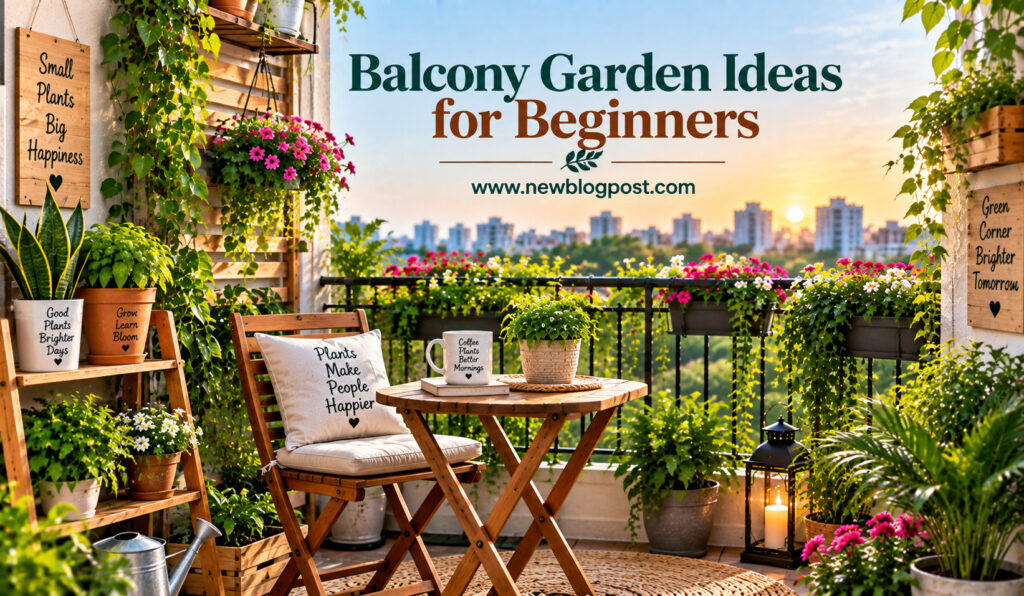

Creating a balcony garden is a wonderful way to bring greenery into your home, even when you do not have a traditional backyard. A balcony can become a refreshing little garden filled with plants, flowers, herbs, and decorative greenery with the right planning. You do not need extensive gardening experience or a large outdoor area to get started.
For beginners, the most important thing is to keep the garden manageable. Choosing suitable plants, understanding the amount of sunlight available, selecting the right containers, and developing a simple watering routine can make balcony gardening much easier.
Whether your balcony is large, narrow, sunny, or partly shaded, there are plenty of ways to create a beautiful garden. The key is to work with the space you have rather than trying to recreate a full-sized garden.
Start by Understanding Your Balcony
Before buying plants and pots, spend some time observing your balcony. Notice how much sunlight it receives during the day and whether the area is exposed to strong wind or heavy rain.
Sunlight is particularly important because different plants have different light requirements. Some plants thrive in bright direct sunlight, while others prefer filtered or partial shade.
Also consider how much space you have available. A small balcony may be better suited to vertical planters and compact pots, while a larger balcony can accommodate raised planters, plant stands, and a wider variety of greenery.
Check the Available Sunlight
Try to observe the balcony at different times of the day. A space that looks sunny in the morning may become shaded later.
Understanding your balcony’s light conditions will help you avoid buying plants that are unlikely to thrive. It is usually easier to choose plants according to the conditions you already have than to constantly adjust the environment for unsuitable varieties.
Choose Easy Plants for Beginners
Beginners should start with plants that are relatively easy to care for. Low-maintenance varieties can help you develop confidence and understand basic plant care without becoming overwhelmed.
Consider starting with a small selection of:
- Herbs such as mint, basil, or coriander
- Hardy flowering plants
- Compact leafy plants
- Easy-care ornamental greenery
Do not fill the entire balcony with plants immediately. Start with a few varieties and observe how they respond to the available sunlight, watering schedule, and weather.
As you become more comfortable, you can gradually expand your collection.
Use Containers That Suit Your Space
Container gardening is one of the easiest ways to create a balcony garden. Pots and planters allow you to grow plants without needing a traditional garden bed.
Choose containers according to the plant’s mature size. A small pot may work initially, but a fast-growing plant can quickly become restricted if the container is too small.
Think About Drainage
Good drainage is essential for healthy container plants. Pots should have suitable drainage holes that allow excess water to escape.
Place saucers underneath containers where appropriate to help protect the balcony floor. However, do not allow water to remain trapped around the roots for long periods.
Lightweight planters can also be useful on balconies because they are easier to move when cleaning or rearranging the space.
Make the Most of Vertical Space
Vertical gardening is especially useful for beginners with small balconies. Instead of placing every pot on the floor, use shelves, plant stands, wall-mounted planters, and hanging containers.
A vertical arrangement can also create a beautiful green backdrop. Place taller plants toward the back and smaller pots toward the front to create layers.
Create a Simple Vertical Garden
You do not need a complicated wall system to start vertical gardening. A narrow plant shelf or a few wall-mounted containers can be enough.
Vertical gardening can help you grow more plants while keeping the main walking area open. It also makes the balcony feel greener without requiring a large footprint.
When installing wall-mounted planters, make sure the surface and mounting system can safely support the weight of the containers, especially after watering.
Grow a Small Herb Garden
A balcony is an excellent place to grow herbs. Fresh herbs can add greenery while also providing something useful for your kitchen.
Start with a few herbs that match your cooking habits. There is no need to grow varieties you rarely use.
Place herb containers where they receive suitable light and keep them within easy reach. Regularly harvesting herbs can encourage fresh growth, depending on the plant.
A small herb collection can also make gardening more enjoyable because you can immediately see a practical benefit from your efforts.
Add Color With Balcony Flowers
Flowers can make a beginner’s balcony garden feel lively and cheerful. You can use flowering plants in pots, railing planters, hanging baskets, or window-style boxes.
Choose flower varieties based on your balcony’s light and local growing conditions. Mixing different heights can create a more interesting arrangement.
Combine Flowers and Greenery
A balcony garden does not need to consist entirely of flowering plants. Combining green foliage with seasonal flowers can create a balanced appearance.
Use flowering plants as accents and greenery as the foundation. This approach can make the balcony look attractive even when some plants are not blooming.
Choose containers that complement the overall color palette so the garden feels intentional rather than random.
Create a Cozy Seating Area
A balcony garden becomes more enjoyable when you have a comfortable place to sit among the plants. Even a small folding chair or compact bench can create a simple relaxation zone.
Place the seating near your favorite plants so the garden becomes part of your daily routine. You can use the area for reading, enjoying tea, or simply taking a break outdoors.
Avoid filling the balcony with too much furniture. Leave enough room to move around and care for the plants easily.
Use Plant Stands for Better Organization
Plant stands can help create height and make the garden look more layered. A simple stand can hold several small pots while keeping them off the floor.
Use stands to group plants with similar light and watering requirements. This can make routine care easier because plants with similar needs can be managed together.
Create Different Levels
A combination of floor-level plants, medium-height stands, and hanging containers can give the balcony more visual depth.
For example, tall plants can occupy the corners, medium-sized pots can sit along the wall, and smaller containers can decorate shelves or tables.
Avoid making the arrangement too dense. Plants need space for air circulation and maintenance.
Choose Practical Gardening Tools
You do not need a large collection of gardening equipment to maintain a balcony garden. Beginners can start with a few basic tools that make everyday tasks easier.
Useful items may include:
- A small watering can
- Hand gardening tools
- Gardening gloves
- A spray bottle for suitable plants
- Small pruning scissors
Keep these items in a compact storage box or dedicated container so they do not clutter the balcony.
Develop a Simple Watering Routine
Watering is one of the most important parts of balcony gardening. However, watering every plant on the same schedule is not always ideal.
Check the soil before watering rather than following a rigid routine. Some plants may need more frequent watering, while others prefer the soil to dry slightly between watering sessions.
Weather conditions also affect watering needs. Hot, dry, windy conditions may cause containers to lose moisture more quickly, while rainy or humid weather may reduce the need for additional water.
Protect Plants From Weather
Balconies can expose plants to stronger environmental conditions than ground-level gardens. Wind can dry plants quickly, while intense sunlight can stress certain varieties.
If your balcony receives strong afternoon sun, provide suitable shade for plants that prefer lower light. During severe weather, move smaller pots to a more protected area when possible.
Grouping plants together can sometimes provide additional protection, but avoid creating overcrowded conditions.
Keep the Garden Organized
A beautiful balcony garden should also be easy to maintain. Avoid placing pots randomly across the floor because this can make cleaning and watering difficult.
Group plants according to their needs and create clear pathways. Keep frequently used plants and herbs within easy reach.
Regularly remove dead leaves, clean plant containers, and check for signs of pests or plant stress. Small maintenance tasks are much easier when they are handled consistently.
Common Balcony Gardening Mistakes
Beginners often make the mistake of starting with too many plants. A large collection can quickly become difficult to water, prune, and monitor.
Other common mistakes include:
- Choosing plants without checking sunlight requirements
- Using containers without proper drainage
- Overwatering plants
- Ignoring the mature size of plants
- Placing too many pots in one area
Starting small gives you the opportunity to learn what works on your balcony before expanding the garden.
Make Your Balcony Garden Beautiful and Functional
Your balcony garden can be more than a collection of pots. Combine plants with comfortable furniture, outdoor lighting, decorative containers, and practical storage to create a complete outdoor space.
Natural materials such as wood and woven textures can complement greenery beautifully. Neutral-colored planters can create a clean modern appearance, while colorful pots can make the space feel more playful.
Keep the design connected to the rest of your home so the balcony feels like a natural extension of your living space.
Final Thoughts
Balcony gardening is an enjoyable way for beginners to introduce nature into a compact outdoor area. You do not need advanced gardening skills, expensive equipment, or a large balcony to get started.
Begin by understanding your sunlight conditions, selecting easy-care plants, choosing suitable containers, and making use of vertical space. As you gain experience, you can experiment with herbs, flowers, climbing plants, and more creative garden arrangements.
The most important thing is to create a garden that fits your lifestyle. Start with a few plants, care for them consistently, and allow your balcony garden to grow naturally over time. With patience and a little creativity, even a small balcony can become a fresh and inviting green retreat.
Frequently Asked Questions
1. What are the best balcony plants for beginners?
Easy-care herbs, hardy flowering plants, and low-maintenance ornamental greenery are good starting choices. Select plants according to the sunlight, weather exposure, and space available on your balcony.
2. How many plants should a beginner start with?
Starting with a small collection is usually easier. A few well-chosen plants allow you to learn their watering, sunlight, and maintenance requirements before expanding your garden.
3. How often should I water balcony plants?
Watering needs depend on the plant, container, weather, and soil conditions. Check the soil before watering and avoid keeping the roots constantly saturated.
4. How can I create a balcony garden in a small space?
Use vertical shelves, hanging planters, railing containers, and wall-mounted pots. These solutions allow you to add greenery without using too much floor space.
5. How do I keep a balcony garden low-maintenance?
Choose plants suited to your balcony’s conditions, use containers with good drainage, group plants according to their care needs, and establish a simple routine for watering and maintenance.