

Introduction
A full-grain handbag and a smooth leather handbag can sit side by side and look nearly identical in a store, yet age in completely different ways over the next ten years. That gap matters far more than most shoppers realize when they compare full-grain versus smooth leather luxury handbags. One keeps every natural mark from the animal hide. The other gets sanded, treated, or dyed for a cleaner finish. This guide breaks down what separates the two, so your next purchase matches how you actually plan to use it.
Two Leathers, Two Very Different Stories
Leather is not one single material. It comes from different layers of the hide, and each layer behaves differently once it becomes a bag.
Full-grain leather uses the very top layer, left mostly untouched. Smooth leather can come from several layers and is usually treated to remove imperfections and create a flatter, more uniform surface.
Neither option is automatically better. The right choice depends on whether you want raw character or a polished, consistent look.
What Full-Grain Leather Actually Is
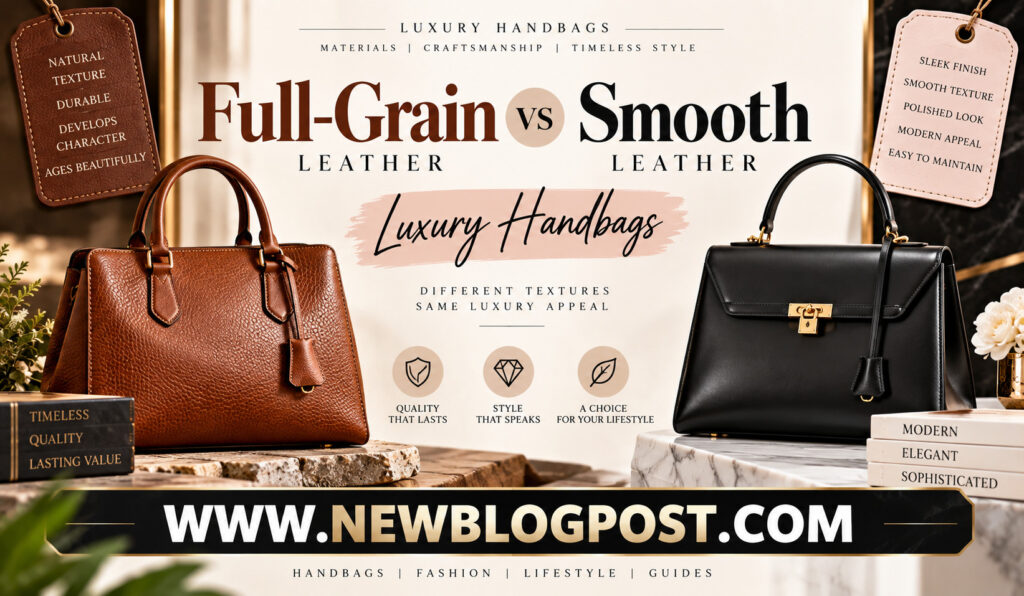
Full-grain leather is not sanded or buffed. Every natural mark, from small scars to grain variation, stays exactly where it was on the animal.
That rawness is the whole point. It is what allows the leather to develop patina, a natural sheen and color change that builds with age and handling.
Because the fibers are so densely packed, full-grain leather also tends to resist tearing better than more processed alternatives. It usually costs more, and buyers are paying for that structural strength as much as the story behind it.
What Smooth Leather Actually Is
Smooth leather, often made from calfskin, goes through chrome or vegetable tanning to create a flat, matte surface. The finish looks clean and consistent from piece to piece.
This leather can still develop a patina over time, just at a slower and more subtle pace than full-grain. It also tends to show scratches more visibly, since there is less natural texture to hide small marks.
Many buyers choose smooth leather specifically for its refined, elegant look. It reads as polished rather than rugged, which suits certain bag styles better.
Durability and Aging: The Real Difference
This is where the two materials really separate. Full-grain leather is built to last for decades, often outlasting the bag’s original hardware and stitching.
Smooth leather is still a quality material, but it generally shows wear sooner. Surface scratches and dents are more visible because the finish is flatter and more uniform.
Neither leather is fragile in absolute terms. The difference shows up mainly in how forgiving each surface is with daily use.
| Feature | Full-Grain Leather | Smooth Leather |
| Surface | Natural, unsanded, textured | Flat, treated, uniform |
| Patina Development | Strong and visible over time | Slower and more subtle |
| Scratch Visibility | Lower, texture hides marks | Higher, flat surface shows marks |
| Typical Price | Higher | Moderate to high |
| Best Look For | Rugged, heritage-style bags | Sleek, refined, formal bags |
Which One Should You Choose?
If you want a bag that ages into something more personal over the years, full-grain leather is the stronger pick. It rewards patience and regular use.
If you prefer a bag that looks consistently polished from day one, smooth leather may suit your style better. Just plan on a bit more careful handling to avoid visible marks.
Your daily habits matter as much as the material. A bag that travels with you constantly benefits from full-grain’s forgiving texture.
Key Takeaways
- Full-grain leather: Unsanded, textured, and built for long-term durability and patina.
- Smooth leather: Treated for a flat, refined finish, but shows scratches more easily.
- Aging: Full-grain develops character faster, smooth leather ages more subtly.
- Style fit: Full-grain suits rugged or heritage designs, smooth leather suits sleek, formal pieces.
- Decision factor: Choose based on how the bag will actually be used day to day.
Frequently Asked Questions
Is full-grain leather always better than smooth leather? Full-grain leather is more durable, but smooth leather can be the better choice for a sleek, formal look.
Does smooth leather develop a patina? Smooth leather can develop a subtle patina over time, though it is less pronounced than full-grain leather.
Which leather shows scratches more easily? Smooth leather tends to show scratches more easily because its flat surface has less natural texture to hide marks.
Why does full-grain leather cost more? Full-grain leather costs more because it uses the strongest, most durable layer of the hide with minimal processing.
Can both leather types last for decades? Both leather types can last for decades with proper care, though full-grain generally shows less visible wear over time.
Conclusion
Full-grain versus smooth leather luxury handbags is really a choice between raw character and polished consistency. Full-grain rewards long-term use with a rich patina and strong durability. Smooth leather offers a clean, refined look that suits more formal styles. Neither is the wrong answer, as long as the leather matches how you plan to carry and care for the bag.