

Introduction
Two handbags can use the word leather on their label and sit thousands of dollars apart in price, and the leather type is usually the biggest reason why. How different leather types affect handbag prices comes down to a few clear factors: which layer of the hide was used, how much processing it went through, and how rare the source material is. Understanding these categories helps you see exactly what you are paying for, instead of relying on the word leather alone. This guide breaks the market down tier by tier.
The Price Tag Starts With the Hide
Every leather handbag begins with an animal hide, and that hide can be split into different layers. The layer used has a direct effect on strength, appearance, and cost.
The top layer, closest to the animal’s outer skin, is the strongest and most expensive to work with. Lower layers are weaker and typically turn into cheaper materials.
This single fact, which layer of the hide was used, explains a large share of the price gap between handbags that look similar at first glance.
Full-Grain and Top-Grain: The Premium Tier
Full-grain leather sits at the top of the price range. It uses the entire top layer of the hide, left unsanded, so every natural mark stays visible.
Top-grain leather is one step down. It comes from the same top layer but gets lightly sanded and buffed for a smoother, more uniform look, which slightly lowers both cost and long-term durability.
Both types are considered premium materials, and handbags made from them typically carry the highest price tags in a brand’s lineup.
Pebbled and Embossed Leather: Style Meets Practicality
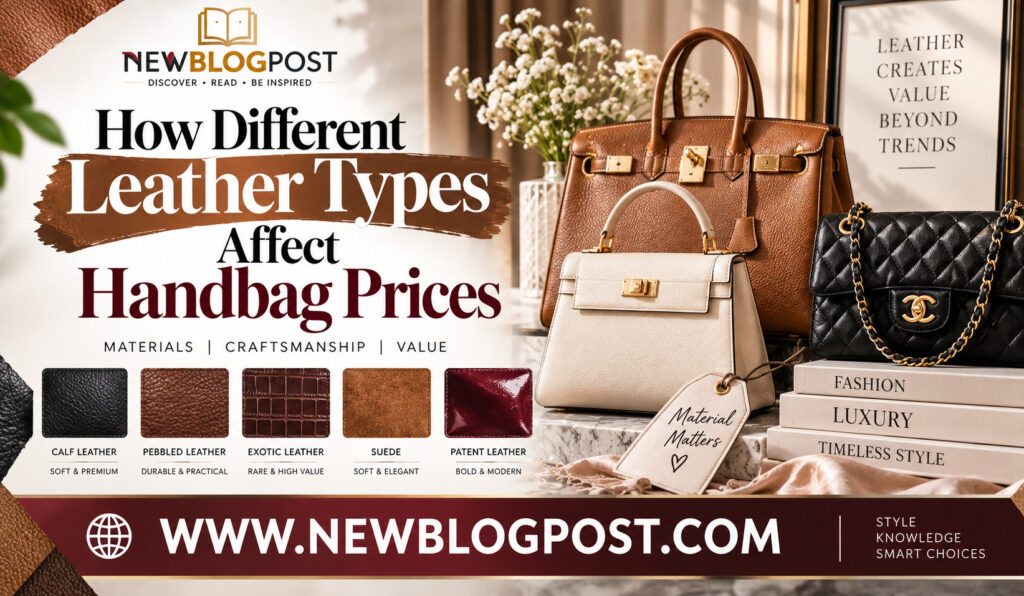
Pebbled leather goes through an embossing process that presses a textured, bumpy pattern into the surface. That texture helps hide small scuffs and everyday wear.
Embossed leathers, including patterns like saffiano, follow a similar idea. The surface treatment adds durability and a distinct look, though it usually costs a bit less than untouched full-grain leather.
These leathers sit in the mid to upper price range. They offer strong durability without the very top price point of full-grain pieces.
Genuine and Bonded Leather: Where Prices Drop
Genuine leather is a broad term that covers many different layers and treatments of animal hide. It is real leather, but the label alone does not guarantee premium quality.
Bonded leather sits even lower. It is made from leftover leather fibers pressed together with binding materials, rather than a single solid piece of hide.
Handbags using these materials are generally priced far below full-grain or top-grain options, reflecting both lower material cost and shorter expected lifespan.
| Leather Type | Hide Layer Used | Typical Price Tier | Durability |
| Full-Grain | Top layer, unsanded | Highest | Excellent |
| Top-Grain | Top layer, lightly sanded | High | Very good |
| Pebbled / Embossed | Varies, surface textured | Mid to high | Good, scuff-resistant |
| Genuine Leather | Varies by product | Moderate | Fair to good |
| Bonded Leather | Leather fibers, bound | Lowest | Weakest |
Exotic Leathers: The Outlier Category
Exotic leathers, including crocodile, alligator, ostrich, and lizard, break the usual pattern entirely. These materials are rare, harder to source, and require specialized tanning and construction skills.
Because supply is naturally limited, exotic leather handbags often sit well above even full-grain pricing. Rarity plays as large a role here as the material’s actual durability.
Buyers interested in exotic leather should expect a significant price jump compared to standard cowhide or calfskin options, regardless of brand.
Key Takeaways
- Top tier: Full-grain and top-grain leather command the highest prices due to strength and limited processing.
- Mid tier: Pebbled and embossed leathers balance durability, style, and a more moderate price point.
- Lower tier: Genuine and bonded leather cost less but generally sacrifice long-term durability.
- Outlier: Exotic leathers like crocodile and ostrich often exceed even full-grain prices due to rarity.
- Bottom line: The specific hide layer and processing method, not the word leather alone, drives most of the price difference.
Frequently Asked Questions
Why is full-grain leather more expensive than genuine leather?
Full-grain leather uses the strongest, least processed layer of the hide, which costs more to source and work with.
Is genuine leather a low quality material?
Genuine leather is real leather, but the term covers a wide range of layers and treatments, so quality can vary significantly.
Why do exotic leathers cost so much more?
Exotic leathers like crocodile and ostrich cost more mainly because of limited supply and specialized processing requirements.
Does pebbled leather cost more or less than smooth leather?
Pebbled leather pricing is generally similar to smooth leather, though the exact cost depends on the brand and finish.
What is bonded leather made from?
Bonded leather is made from leftover leather fibers pressed together with binding materials rather than a single solid hide.
Conclusion
How different leather types affect handbag prices ultimately comes down to the hide layer, the processing method, and how rare the material is. Full-grain and exotic leathers sit at the top, genuine and bonded leather sit at the bottom, and everything else falls somewhere in between. Knowing these categories makes it far easier to judge whether a price tag actually reflects the material inside the bag.