
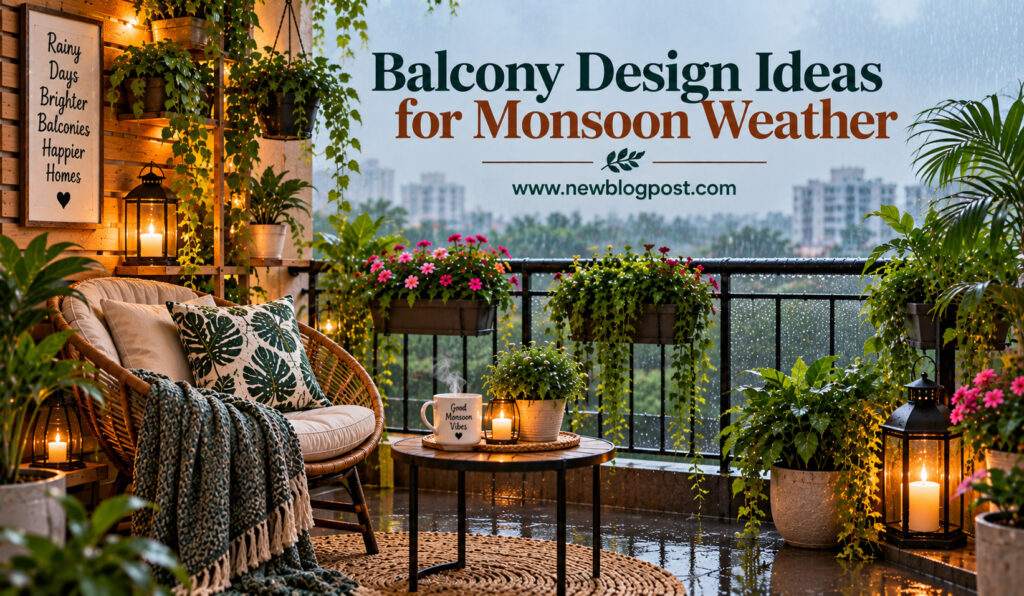

The monsoon season can transform a balcony into a refreshing and beautiful part of the home. The sound of rain, cool breeze, cloudy skies, and fresh greenery create the perfect setting for relaxing with a cup of tea or enjoying a quiet evening. However, frequent rain and humidity can also make a balcony difficult to use if it is not designed for wet weather.
With a few thoughtful changes, you can create a stylish and comfortable balcony that remains practical throughout the rainy season. From weather-resistant furniture and suitable flooring to smart storage and carefully selected plants, the right design choices can protect your balcony while making it more inviting.
Choose Weather-Resistant Furniture
Furniture is one of the first things to consider when preparing a balcony for monsoon weather. Regular indoor furniture may absorb moisture, develop mould, or become damaged when exposed to repeated rain. Instead, choose pieces designed for outdoor use.
Materials such as powder-coated metal, aluminium, synthetic rattan, and treated outdoor wood can work well when selected according to the amount of rain your balcony receives. Lightweight furniture is particularly useful because it can be moved quickly when heavy rain or strong winds arrive.
Choose Compact and Flexible Seating
A small balcony does not need bulky furniture. A compact chair, foldable table, or small outdoor bench can provide comfortable seating while leaving enough space for movement.
Foldable furniture is especially convenient during monsoon because it can be moved indoors or pushed into a sheltered corner when necessary. Cushions should also be made from moisture-resistant outdoor fabrics and stored indoors during prolonged rain.
Install Rain Protection
If rain frequently enters your balcony from the sides, consider adding a suitable rain barrier. Outdoor blinds, waterproof curtains, retractable awnings, and transparent weather screens can reduce the amount of water entering the space without completely closing it off.
Use Outdoor Blinds
Outdoor blinds can provide protection while allowing you to control how much air and light enter the balcony. Neutral-colored blinds can also blend easily with modern balcony furniture and décor.
For balconies exposed to strong wind, make sure any blind or screen is securely installed. A temporary solution should never become loose during heavy weather.
Select Monsoon-Friendly Flooring
Wet flooring can become slippery and difficult to maintain. When designing or renovating a balcony, choose flooring with a suitable outdoor finish and enough grip for wet conditions.
Textured outdoor tiles, appropriate deck tiles, and weather-resistant surfaces can help create a safer and more attractive floor. Avoid materials that become extremely slippery when wet.
A small outdoor rug can add warmth, but choose one designed to handle moisture. Avoid leaving thick indoor rugs or moisture-absorbing materials exposed to continuous rain.
Keep Drainage Clear
Good drainage is essential during monsoon. Water should be able to move toward the drain without being blocked by furniture, plant pots, rugs, or decorative items.
Before the rainy season begins, clean the balcony drain and check that water is flowing away properly. Keeping a small amount of open floor around the drainage point can make a significant difference during heavy showers.
Add Greenery for a Fresh Monsoon Look
Plants are naturally suited to a monsoon-inspired balcony. The fresh atmosphere created by rain and greenery can make the space feel cooler and more relaxing.
However, excessive rainfall can be harmful to plants that prefer dry conditions. Choose plants according to the amount of rain, sunlight, and airflow your balcony receives.
Some useful choices include:
- Money plants
- Ferns
- Snake plants
- Tulsi and suitable herbs
Do not overcrowd the balcony with pots. Arrange plants at different heights using sturdy stands, hanging containers, or wall-mounted planters.
Protect Plants From Excess Rain
Not every plant should remain directly under heavy rainfall. Delicate plants can be moved toward a covered section or placed where they receive filtered rain.
Make sure pots have drainage holes and avoid allowing containers to sit in standing water. Elevating pots slightly from the floor can improve drainage and keep the base of the containers from remaining wet.
Create a Cozy Monsoon Seating Corner
A balcony can become a wonderful place to enjoy rainy afternoons. You do not need a large seating arrangement to create a cozy atmosphere. A comfortable chair, small table, a few plants, and warm lighting can be enough.
Add removable cushions and throws that can easily be taken indoors. Choose colors that complement the natural greenery, such as earthy brown, beige, muted green, or soft grey.
Add a Small Tea or Coffee Table
A compact side table can make the balcony more functional. It provides space for a cup of tea, books, snacks, or a small plant without taking up much room.
If your balcony is narrow, consider a folding or wall-mounted table that can be stored when it is not needed.
Use Lighting That Works for Rainy Evenings
Monsoon evenings often become darker earlier, making balcony lighting especially useful. Warm string lights, weather-appropriate wall lights, and protected outdoor lanterns can create a relaxing atmosphere.
Keep electrical connections and fixtures protected from direct rain. Avoid placing exposed electrical equipment where water can collect.
Create a Warm Ambience
Lighting does not need to be excessive. A few carefully positioned lights can highlight plants, seating, or a feature wall while maintaining a calm atmosphere.
Warm lighting works particularly well with wood-look furniture, greenery, and neutral décor.
Add Smart Storage Solutions
Storage becomes more important during monsoon because cushions, rugs, gardening tools, umbrellas, and other accessories need protection from moisture.
A compact waterproof storage box can keep outdoor essentials organized. A bench with built-in storage is another useful option because it combines seating and storage in one piece.
Keep frequently used items easy to access so you can quickly move them indoors when heavy rain begins.
Useful monsoon storage items include:
- Waterproof storage boxes
- Covered baskets
- Foldable furniture
- Wall-mounted shelves
Avoid leaving cardboard boxes, untreated fabrics, or moisture-sensitive items on an exposed balcony.
Decorate With Monsoon-Friendly Accessories
Small decorative details can make a balcony feel complete without creating unnecessary clutter. Choose accessories that can handle occasional moisture or can be easily moved indoors.
Planters, weather-resistant cushions, decorative lanterns, outdoor artwork, and simple wind chimes can add personality to the space.
Use Natural Textures
Natural-looking textures can complement the rainy-season atmosphere. Wood finishes, woven materials, earthy colors, and green plants can create a warm connection with nature.
However, materials that absorb moisture should be protected or stored when heavy rain is expected.
Make a Small Balcony Feel Spacious
A compact balcony can quickly become crowded during monsoon when furniture, plant pots, and rain-protection accessories are added. Good planning is therefore important.
Keep the main walking area open and place larger items against walls or in corners. Use vertical surfaces for plants and décor instead of filling the floor with containers.
Foldable furniture and multifunctional pieces are excellent choices because they allow the balcony to change according to the weather and your needs.
Keep the Balcony Clean During Monsoon
Rain can bring dust, leaves, and debris into the balcony. Regular cleaning prevents drains from becoming blocked and keeps the area comfortable.
Check plant pots frequently for standing water and remove fallen leaves. Wipe furniture when necessary and allow wet cushions or fabrics to dry completely before storing them.
A simple routine can include:
- Clearing the drain and floor regularly
- Drying wet furniture and accessories
- Checking plant drainage
- Removing leaves and debris
Regular care makes the balcony easier to enjoy throughout the season.
Monsoon Balcony Design Mistakes to Avoid
One of the biggest mistakes is using indoor furniture and fabrics outdoors without protection. Even attractive pieces can deteriorate quickly when repeatedly exposed to rain and humidity.
Another mistake is placing too many plants or decorative objects on the floor. This can obstruct drainage and make cleaning difficult.
Avoid blocking the balcony drain with rugs, furniture, or plant trays. Also, do not leave lightweight decorations unsecured because strong winds can move or damage them.
Final Thoughts
A monsoon-ready balcony should combine comfort, safety, functionality, and style. Weather-resistant furniture, suitable flooring, effective rain protection, healthy plants, practical storage, and soft lighting can transform a wet and underused balcony into a welcoming outdoor retreat.
The key is to design according to your balcony’s exposure to rain and wind. Keep movable items easy to store, maintain clear drainage, and choose materials that can handle changing weather conditions. With these simple ideas, your balcony can remain beautiful and useful throughout the monsoon season.
FAQs
1. How can I make my balcony suitable for monsoon weather?
Use weather-resistant furniture, proper drainage, outdoor blinds or rain screens, moisture-friendly flooring, and plants that tolerate humid conditions. Keep cushions and delicate accessories stored when heavy rain is expected.
2. Which furniture is best for a monsoon balcony?
Aluminium, powder-coated metal, synthetic rattan, and suitable treated outdoor wood are practical options. Lightweight and foldable furniture is especially convenient for balconies exposed to heavy rain.
3. How can I protect balcony plants during heavy rain?
Use pots with good drainage and move sensitive plants to a covered area. Elevating containers slightly and avoiding standing water around the roots can also help protect plants.
4. What flooring is best for a rainy balcony?
Choose outdoor flooring with good water resistance and an appropriate non-slip or textured surface. Proper drainage is equally important because even good flooring can become unsafe if water accumulates.
5. How can I make my balcony cozy during the monsoon?
Create a small seating corner with comfortable weather-appropriate furniture, a compact table, greenery, warm lighting, and a few removable accessories. Keep the design uncluttered so the balcony remains easy to clean and maintain.