
Learning how to manage money can feel complicated when you are just getting started. Budgeting, saving, investing, debt, taxes, insurance, and retirement can all seem like separate subjects, and trying to understand everything at once can quickly become overwhelming. Fortunately, a good personal finance book can make these topics easier to understand and apply.
The best personal finance books for beginners do more than explain financial terms. They help readers develop better attitudes toward money, recognize unhelpful habits, and create practical systems for managing income and expenses. Some focus on budgeting and saving, while others introduce investing, financial independence, or long-term wealth building.
You do not need to become a financial expert overnight. The goal is to understand the basics, make informed decisions, and gradually become more confident with your money. The books below provide useful starting points for building that foundation.
Why Beginners Should Read Personal Finance Books
Money decisions affect almost every part of life. How you manage your income can influence where you live, how much financial stress you experience, whether you can handle an emergency, and how much freedom you have when making future choices.
Yet many people learn about personal finance through trial and error. A beginner-friendly book can provide a more organized way to learn.
Reading can also help you understand that financial progress is usually not about one dramatic decision. It comes from repeated choices such as spending less than you earn, building savings, managing debt responsibly, and investing according to your goals and circumstances.
A useful personal finance book can help you:
- Understand basic money principles.
- Build better spending and saving habits.
- Learn how investing works.
- Develop realistic long-term financial goals.
The Psychology of Money by Morgan Housel
The Psychology of Money is an excellent starting point because it focuses heavily on behavior rather than complicated financial calculations.
Morgan Housel explores how emotions, experiences, personal history, and expectations influence financial decisions. Two people can have similar incomes but completely different approaches to spending, saving, and risk.
This is an important lesson for beginners. Managing money is not purely mathematical. Your habits and beliefs can be just as important as your knowledge.
The book encourages readers to think about patience, reasonable financial goals, long-term decision-making, and the difference between looking wealthy and actually being financially secure.
Its conversational approach makes financial ideas accessible to readers who may have little previous experience with the subject.
Rich Dad Poor Dad by Robert Kiyosaki
Rich Dad Poor Dad is one of the most widely known personal finance books for beginners. It introduces readers to ideas about assets, liabilities, income, spending, and financial independence.
The book encourages readers to think differently about how money is earned and used. Rather than focusing exclusively on earning a larger salary, it asks readers to consider how their financial decisions can contribute to long-term wealth.
Some of its ideas are presented in a deliberately provocative way, so readers should treat the book as a source of financial concepts and perspectives rather than a complete financial plan.
Its greatest value for beginners is often the encouragement to become more intentional about money.
The Total Money Makeover by Dave Ramsey
The Total Money Makeover takes a structured approach to personal finance, particularly for people who want to organize their spending and tackle debt.
The book emphasizes budgeting, controlling expenses, building savings, and reducing debt through a defined sequence of steps.
Its straightforward style can appeal to beginners who feel overwhelmed and want a clear framework.
However, personal financial circumstances vary significantly. Readers should consider their own income, obligations, risk tolerance, and financial goals when deciding which ideas to apply.
The Simple Path to Wealth by JL Collins
The Simple Path to Wealth is aimed at readers who want to understand long-term investing and financial independence.
The book explains investing concepts in relatively accessible language and emphasizes simplicity, long-term thinking, and avoiding unnecessary complexity.
For a beginner, investing can seem intimidating because of unfamiliar terms, market fluctuations, and countless available products. A book that focuses on broad principles can make the subject feel less mysterious.
Readers should still remember that investment choices depend on individual circumstances, goals, taxes, risk tolerance, and local financial systems.
Your Money or Your Life by Vicki Robin and Joe Dominguez
Your Money or Your Life takes a broader view of personal finance by connecting money with time, work, values, and lifestyle.
One of its central ideas is that earning money requires time and energy. Thinking about spending in terms of the life energy required to earn that money can change how people evaluate purchases.
The book is particularly useful for readers who are not simply interested in accumulating wealth but want to understand what their money is helping them achieve.
It encourages readers to question whether their financial habits actually support the life they want.
The Millionaire Next Door by Thomas J. Stanley and William D. Danko
The Millionaire Next Door explores the habits and lifestyles associated with people who have accumulated significant wealth.
Rather than presenting wealth primarily through luxury and visible consumption, the book examines behaviors such as saving, spending discipline, and living below one’s means.
For beginners, the broader lesson is valuable: financial success is not always visible. Someone who appears wealthy may have significant expenses and debt, while someone with an ordinary lifestyle may have substantial financial resources.
This perspective can help readers focus more on financial health than appearances.
Comparing Personal Finance Books for Beginners
Different books are useful for different financial questions. Choosing one that matches your current needs can make learning easier.
| Book | Main Focus | Suitable For |
| The Psychology of Money | Financial behavior | Understanding money decisions |
| Rich Dad Poor Dad | Financial mindset | Changing how you think about wealth |
| The Total Money Makeover | Budgeting and debt | Creating financial structure |
| I Will Teach You to Be Rich | Practical money systems | Everyday financial management |
| The Simple Path to Wealth | Long-term investing | Learning investment principles |
| Your Money or Your Life | Money and lifestyle | Financial independence |
| The Millionaire Next Door | Wealth-building behavior | Understanding saving habits |
You do not need to read all of these books. One well-chosen book can give you enough information to begin improving your financial habits.
What Beginners Should Learn First
Personal finance covers a huge range of topics, but beginners do not need to master everything immediately.
A sensible starting point is understanding where your money currently goes. Tracking income and expenses can reveal patterns that are difficult to notice otherwise.
Once you understand your spending, you can begin creating a financial structure around your priorities. This might involve building emergency savings, managing expensive debt, preparing for major expenses, and learning basic investing concepts.
A useful beginner framework is:
- Understand your income and regular expenses.
- Create a realistic spending plan.
- Build an emergency savings cushion.
- Learn the basics of long-term investing.
The exact order may vary depending on individual circumstances, but the principle remains the same: understand your current position before making major financial decisions.
How to Turn Financial Knowledge Into Action
Reading a personal finance book is only the beginning. The real value appears when the ideas become part of your daily life.
After finishing a book, choose one or two concepts that are realistic for you. You might create a monthly spending plan, automate a savings transfer, review recurring subscriptions, or organize outstanding debts.
Avoid trying to implement every recommendation simultaneously. Too many changes can become difficult to maintain.
Instead, think of financial improvement as a gradual process. A small amount saved consistently can become meaningful over time. A spending habit changed today can influence financial decisions for years.
Common Money Mistakes Beginners Should Avoid
People who are new to personal finance often look for shortcuts. However, strong financial foundations are usually built through simple and consistent behaviors.
Some common mistakes include:
- Spending without knowing where the money goes.
- Taking on expensive debt for unnecessary purchases.
- Investing without understanding what is being purchased.
- Making financial decisions based entirely on trends or other people’s results.
Another mistake is comparing your financial life with someone else’s. People have different incomes, responsibilities, goals, family situations, and starting points.
The most useful comparison is often with your own previous financial position.
How to Choose the Right Finance Book
Think about your biggest financial challenge before choosing a book.
If you want to understand why you make certain money decisions, The Psychology of Money may be a good starting point. If debt and budgeting are your main concerns, a structured budgeting book may be more appropriate.
Readers interested in investing can explore books focused on long-term investment principles, while people thinking about financial independence may prefer books that connect money with lifestyle choices.
You should also consider the financial system where you live. Some books are written primarily for readers in the United States, so specific recommendations involving taxes, retirement accounts, banking products, or regulations may not directly apply elsewhere.
The underlying principles can still be useful, but local financial rules should always be considered.
Frequently Asked Questions
What is the best personal finance book for beginners?
The Psychology of Money is an accessible choice because it focuses on financial behavior and decision-making rather than complicated technical concepts. Beginners interested in practical money management may also enjoy I Will Teach You to Be Rich.
How many personal finance books should I read?
You do not need to read dozens of books. Start with one that addresses your biggest financial challenge, apply what you learn, and then choose another book when you are ready to explore a different topic.
Should beginners learn budgeting or investing first?
Understanding your income and expenses is generally a useful foundation before making significant investment decisions. Once you have a clearer picture of your finances, you can begin learning about appropriate long-term investment strategies.
Are personal finance books still useful if I have very little money?
Yes. Personal finance is not only about investing large amounts of money. Learning how to manage expenses, avoid unnecessary debt, build savings, and make thoughtful financial decisions can be valuable at almost any income level.
Can I follow financial advice from a book exactly?
It is better to treat books as educational resources rather than personalized financial instructions. Your income, goals, debts, taxes, location, and risk tolerance are unique, so adapt general ideas to your own circumstances.
Final Thoughts
Learning personal finance does not have to be intimidating. The right book can introduce important concepts in a way that makes money management easier to understand and less overwhelming.
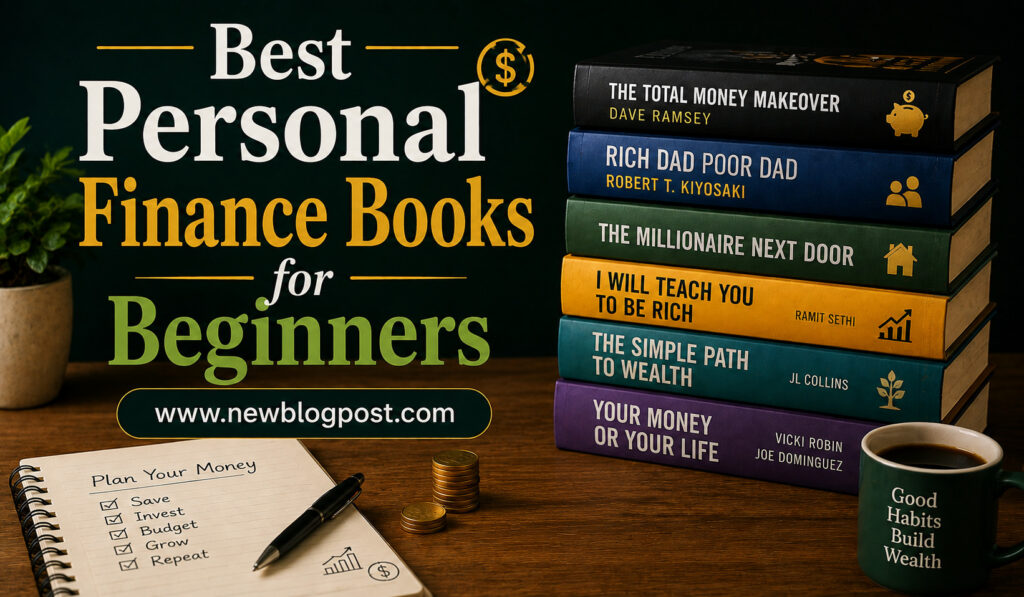
The Psychology of Money, Rich Dad Poor Dad, The Total Money Makeover, I Will Teach You to Be Rich, The Simple Path to Wealth, Your Money or Your Life, and The Millionaire Next Door each offer a different perspective on managing and thinking about money.
The most important step is not finishing an impressive reading list. It is taking one useful lesson and applying it to your financial life.
Start by understanding your current spending, build practical money habits, learn the basics of saving and investing, and gradually become more confident in your decisions. Financial knowledge becomes powerful when it changes everyday behavior—and even small improvements can create a stronger foundation for the future.