
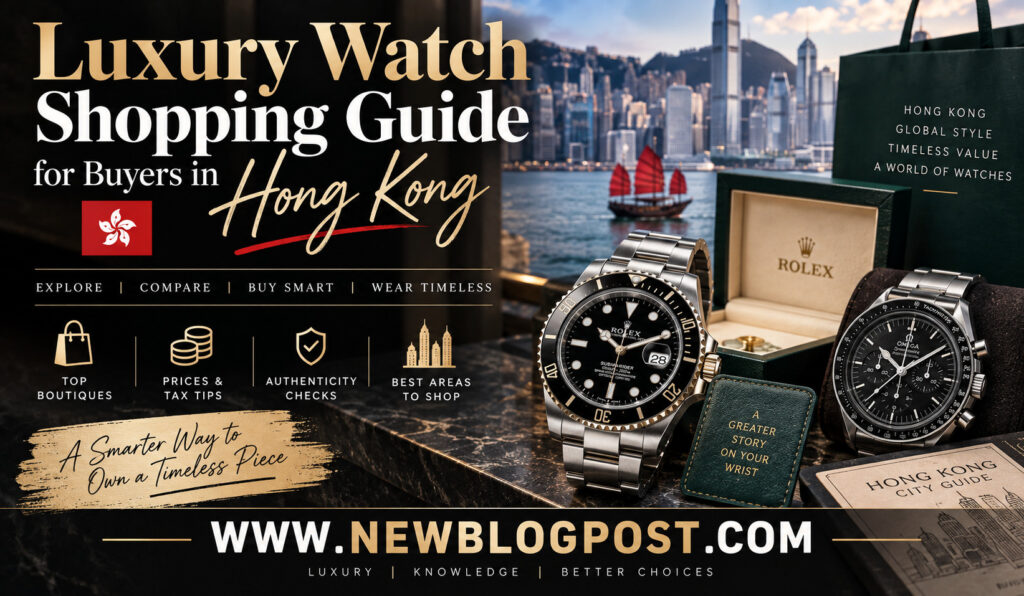

A watch that costs twenty thousand dollars in London can cost noticeably less once you fly it home from Hong Kong. That gap exists for one simple reason: no sales tax. This luxury watch shopping guide for buyers in Hong Kong walks you through where to shop, who to trust, and how to protect your money before you hand over a single dollar.
Hong Kong has built its reputation as a watch capital over decades, and the appeal has not faded. Collectors, first-time buyers, and casual tourists all end up in the same boutiques, hunting for the same steel bracelets and gold cases. Knowing the landscape before you arrive saves you time, money, and a fair amount of stress.
Why Hong Kong Attracts Luxury Watch Buyers
Hong Kong operates as a free port. Goods move in and out without a value-added tax or general sales tax attached. A handful of items carry duty, including alcohol, tobacco, and fuel, but watches are not among them.
That single fact changes the math on every purchase. A buyer from the United Kingdom who normally pays twenty percent VAT can save a meaningful sum on a single timepiece. A buyer from a US state with eight or nine percent sales tax sees smaller but still real savings.
Competition adds another layer of pressure on prices. Hundreds of dealers, both authorized and unauthorized, compete for the same customers within a few square miles. That density gives buyers real room to compare and, in many cases, negotiate.
Best Districts and Neighborhoods for Watch Shopping
Three areas handle most of the city’s watch trade, and each one has its own personality.
- Tsim Sha Tsui: Home to dense clusters of boutiques and multi-brand retailers, plus several official Rolex retail partners. Streets like Nathan Road and Peninsula-area malls draw heavy foot traffic from visitors.
- Central: The financial district hosts flagship boutiques from the biggest Swiss houses, often inside upscale malls like The Landmark. Expect polished service and higher prices to match the setting.
- Causeway Bay: A mix of malls and independent dealers that tends to feel slightly less formal than Central while still carrying serious inventory.
Weekday mornings tend to be quieter than weekends, which gives staff more time to answer questions and, sometimes, more flexibility on price. Plan your visit around that pattern if you want a calmer shopping experience.
Authorized Dealers Versus Grey Market Sellers
Every buyer eventually faces this choice, so understand it before you walk into a shop.
Authorized dealers buy directly from the brand or an official distributor. They follow the brand’s pricing and inventory rules, and every watch they sell comes with a full manufacturer warranty. Staff usually receive brand training, which tends to mean better product knowledge and smoother after-sales support.
Grey market sellers operate outside that official network. Their stock is typically genuine, sourced from authorized dealers, distributors, or private collectors, but it does not always carry the same warranty protection. Prices are often lower, and popular models with long waiting lists at boutiques may sit ready on a grey market shelf the same day.
Neither option is automatically wrong. A grey market purchase from a well-reviewed, established dealer can be a smart move. A rushed purchase from an unfamiliar shop with no paper trail is where trouble usually starts.
How to Check a Watch Before You Buy
A little caution before you pay protects a lot of money afterward.
- Match the reference and serial numbers printed on the watch against the numbers on the box and papers. Mismatches are a warning sign.
- Inspect the bracelet closely. Steel bracelets on some models get swapped for aftermarket links, so check for consistent finishing and correct stamps.
- Bring a loupe or a small UV torch if you plan to look at several watches. It helps you examine the dial, lume, and case finishing under real light.
- Ask for the original box, papers, and receipt. A reputable seller will not hesitate to provide them.
- Confirm the warranty terms in writing before you pay, especially at a grey market shop.
Do not feel awkward asking questions. Most dealers in Hong Kong deal with skeptical buyers every day and expect a careful shopper.
Brands and Boutiques Worth Knowing
Every major Swiss house maintains a presence in Hong Kong, and several hold flagship-level boutiques that rival anything in Geneva or Paris.
- Rolex operates through a network of official retail partners across Tsim Sha Tsui and Central, alongside dedicated boutiques for viewing current collections.
- Patek Philippe, Audemars Piguet, and Vacheron Constantin run standalone boutiques aimed at collectors who already know what they want.
- Multi-brand retailers carry a wider mix, useful if you want to compare several brands in one visit without hopping between malls.
- Pre-owned specialists have grown quickly in recent years, offering curated selections of both modern and discontinued references, often authenticated in-house.
If your interest sits outside the biggest names, ask staff about independent brands. Several boutiques stock smaller houses that rarely get shelf space outside Asia.
Getting the Best Price
Price movement is possible in Hong Kong, though it depends heavily on the brand and the seller.
Research the retail price of your target model before you land. Knowing the baseline number lets you spot a genuine discount instead of a marked-up “deal.” Compare quotes from at least two or three dealers, since prices for the same reference can vary between shops.
Grey market dealers generally have more room to negotiate than authorized boutiques, since they are not bound by brand pricing rules. Ask about seasonal promotions too, since some retailers run discounts around major holidays.
Cash payment occasionally opens the door to a slightly better price, though this varies by shop and should never come at the expense of getting a proper receipt.
Key Takeaways
- Biggest advantage: No sales tax or VAT means lower final prices compared to many home markets.
- Best areas to shop: Tsim Sha Tsui, Central, and Causeway Bay each offer a different mix of boutiques and dealers.
- Authorized dealers: Best choice for full manufacturer warranty and brand-trained service.
- Grey market sellers: Can offer lower prices and shorter waits, but check the warranty terms carefully.
- Before you pay: Match serial numbers, inspect the bracelet, and request original papers.
Frequently Asked Questions
Is Hong Kong actually cheaper for luxury watches?
Yes, in most cases, because Hong Kong charges no sales tax or VAT on watch purchases.
Are grey market watches in Hong Kong fake?
No, grey market watches are typically genuine, though buyers should still verify authenticity and warranty terms before purchasing.
Do I need to pay tax when I bring the watch home?
Many countries require travelers to declare high-value purchases and pay duty above a set allowance, so check your home country’s customs rules before you travel.
Which area has the most watch boutiques?
Tsim Sha Tsui and Central both host dense concentrations of watch retailers, from flagship brand boutiques to multi-brand shops.
Should a beginner buy from an authorized dealer or the grey market?
A first-time buyer is usually safer starting with an authorized dealer for the full warranty and guided service.
Conclusion
Shopping for a luxury watch in Hong Kong rewards buyers who prepare before they arrive. The tax-free pricing is real, the boutique selection is wide, and the competition between dealers works in your favor if you compare offers and check details carefully. Whether you choose an authorized dealer for peace of mind or a trusted grey market seller for a better price, this luxury watch shopping guide for buyers in Hong Kong should leave you ready to shop with confidence rather than guesswork.