
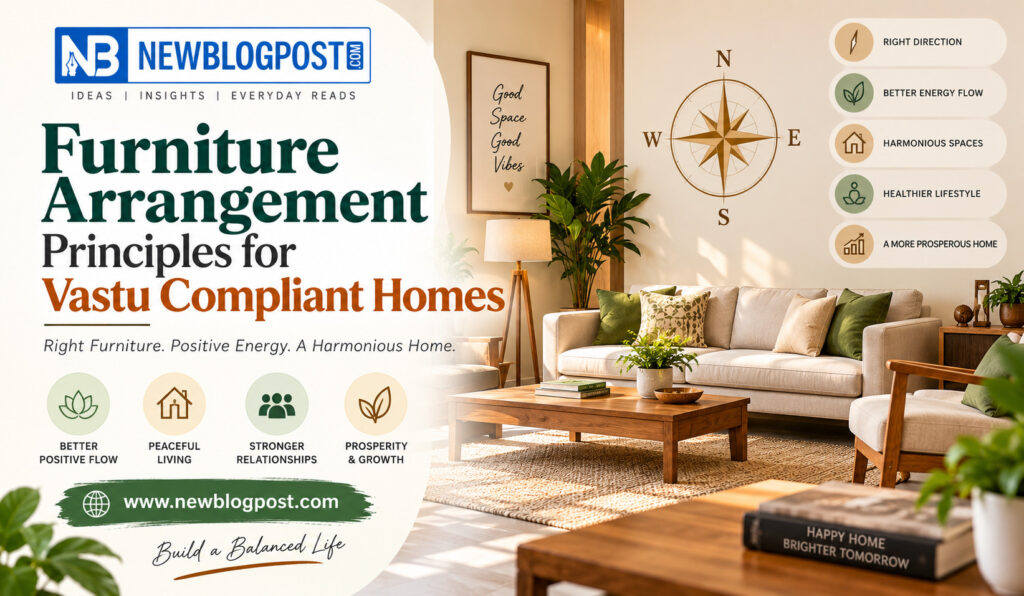

Your furniture does more than fill an empty room. The way you place your sofa, bed, dining table, wardrobe, and other pieces can influence how comfortable, spacious, and balanced your home feels. If you follow Vastu principles, furniture arrangement becomes even more important because directions, movement, weight distribution, and openness are all considered when creating a harmonious living space.
You don’t necessarily need to replace all your furniture or completely redesign your home to make it more Vastu-friendly. In many cases, small changes in placement can make a noticeable difference. By understanding a few practical Furniture Arrangement Principles for Vastu, you can create rooms that feel organized while also following traditional Vastu guidelines.
Why Furniture Placement Matters in Vastu
Vastu Shastra focuses on creating a balanced relationship between your home, its occupants, and the natural elements. Each direction is traditionally associated with particular energies and qualities, so the position of heavy and light objects can play a role in maintaining that balance.
When you arrange furniture, you should consider three things in particular: direction, weight, and movement.
Heavy furniture is generally better suited to the south, west, or southwest areas of a room, while the north and northeast are preferably kept lighter and more open. At the same time, you should avoid blocking doors, windows, and natural pathways.
The idea isn’t to make your home look rigid or overly traditional. Instead, you can use Vastu as a framework while still creating a modern and attractive interior.
1. Keep the Living Room Open and Welcoming
Your living room is usually the most social area of your home, so furniture placement here should encourage easy conversation and movement.
Try placing your main sofa or heavier seating toward the south or west side of the room. If possible, keep the northeast portion relatively open. This creates a visual sense of spaciousness and follows the traditional preference for lighter areas in the northeast.
Avoid pushing every piece of furniture against the walls simply to create more floor space in the center. Instead, arrange your seating so people can comfortably interact with one another.
A center table can be positioned between sofas and chairs, but leave enough space around it for people to walk without bumping into furniture.
If your living room has a television unit or large cabinet, you can consider placing it toward the southeast or south side, depending on your room’s layout. The exact placement should also account for electrical points and practical usability.
2. Position Your Sofa Carefully
Your sofa is often the largest piece of furniture in the living room, which makes its placement particularly important.
According to traditional Vastu preferences, a heavy sofa is better placed along the south or west wall. When you’re sitting on the main sofa, facing east or north is often considered preferable.
You should also avoid positioning the sofa directly in front of the main entrance if doing so blocks the natural flow into the room.
If your living room is small, don’t worry about following every rule literally. Prioritize comfortable movement first. A cramped room with perfectly aligned furniture isn’t necessarily better than a well-organized room where everyone can move around easily.
3. Arrange Your Bedroom for Rest and Stability
Your bedroom should feel calm and private, and furniture placement can contribute significantly to that atmosphere.
The bed is usually the most important piece to consider. A traditional Vastu approach favors placing the bed toward the south or southwest portion of the bedroom, particularly when the room is large enough to accommodate it comfortably.
Ideally, you should have a solid wall behind the headboard rather than placing the head of the bed directly under a window. Sleeping with your head toward the south is commonly recommended in Vastu, while north-facing sleeping is traditionally discouraged.
Try to leave some breathing room around the bed. If possible, avoid filling every corner with side tables, stools, storage boxes, or decorative furniture.
A clutter-free bedroom generally feels more relaxing regardless of whether you follow Vastu, so this principle works well from a practical interior-design perspective too.
4. Place Wardrobes and Heavy Storage Wisely
Wardrobes, bookshelves, cabinets, and storage units can add considerable visual and physical weight to a room.
Under Vastu principles, heavier storage is generally considered more suitable for the south, west, or southwest areas. If you have a large wardrobe, placing it along one of these walls can help maintain a lighter feel in the north and northeast.
You should also avoid creating unnecessary obstacles near windows or doors. A tall wardrobe blocking natural light can make a room feel smaller and darker.
If you have built-in storage, you may have fewer options for changing its location. In that situation, focus on keeping the surrounding space clean and ensuring that doors and windows can be used comfortably.
5. Create a Balanced Dining Area
Your dining table should be placed where you can move around it comfortably. Avoid squeezing it into a narrow corner simply because the rest of the room is occupied by furniture.
A dining area toward the west, east, or north can work well depending on your home’s layout. Traditionally, east and north are considered favorable directions for dining, although practical factors such as kitchen access, room shape, and ventilation also matter.
A rectangular or square dining table is generally easier to arrange than an unusually shaped table. Keep enough space between the table and surrounding walls or furniture so chairs can be pulled out easily.
You can also keep the dining area visually uncluttered. Too many decorative pieces, cabinets, or storage units around the table can make the space feel crowded.
6. Don’t Block Doors and Windows
One of the simplest Furniture Arrangement Principles for Vastu is also one of the easiest to follow: keep important openings clear.
Your main entrance, internal doors, and windows should not be unnecessarily obstructed by sofas, cabinets, tables, or decorative units.
Clear pathways allow you to move comfortably through the home and help natural light and ventilation reach different areas.
If a piece of furniture technically fits in front of a window but blocks most of the sunlight, consider moving it elsewhere. Your home will usually feel brighter and more pleasant as a result.
7. Keep the Northeast Area Light
The northeast direction has a particularly important place in traditional Vastu practices. It is generally recommended that this part of your home remain open, clean, and relatively light.
If you have flexibility, avoid placing your heaviest wardrobes, large cabinets, or bulky furniture in the northeast corner.
Instead, you can use lighter furniture, plants, small seating pieces, or minimal décor. Don’t overcrowd the area with unnecessary objects.
This approach also has a practical interior-design advantage: keeping one portion of the room open can create a stronger sense of visual space.
8. Be Smart About Furniture in the Kitchen
Kitchen furniture and storage require a slightly different approach because functionality is especially important.
Large cabinets and storage units can be positioned toward the south or west where the layout allows. Try not to block windows or ventilation areas with tall furniture.
Your kitchen should allow you to move easily between the cooking, washing, and storage zones. Even if you are following Vastu, don’t sacrifice basic kitchen ergonomics.
For modular kitchens, you may have limited flexibility because cabinets are usually fixed. In that case, focus on keeping the kitchen organized, maintaining clear workspaces, and avoiding unnecessary clutter.
9. Use Mirrors and Furniture Together Carefully
Mirrors can make a room look larger, but their placement should be considered alongside your furniture.
Avoid positioning a large mirror in a way that creates an uncomfortable visual reflection of your bed or makes a room feel overly busy.
If you place mirrors near wardrobes or dressing areas, check what they reflect. Ideally, you want them to enhance the room rather than reflect clutter, messy storage, or cramped corners.
From a practical perspective, always consider lighting as well. A mirror reflecting natural or soft artificial light can make your room appear brighter and more spacious.
10. Avoid Excessive Clutter
Even the best furniture arrangement can lose its impact when a room is overloaded with objects.
Too much furniture makes movement difficult and can create a heavy atmosphere. From a Vastu perspective, maintaining cleanliness and openness is important, particularly in areas that are traditionally expected to remain lighter.
Take a simple look around each room and ask yourself whether every piece is genuinely useful.
If you rarely use an extra chair, side table, storage box, or decorative cabinet, you may not need it. Removing one unnecessary item can sometimes improve the room more than adding several new décor pieces.
11. Maintain Symmetry Without Making the Room Rigid
Balance is an important concept in both Vastu and interior design.
You don’t need identical furniture on both sides of a room, but you should try to distribute visual weight sensibly. For example, placing a very large cabinet on one side and leaving the other side completely empty can make a room feel unbalanced.
You can create balance using lighting, plants, smaller tables, artwork, or chairs.
The goal is to make the room feel naturally organized rather than perfectly symmetrical.
12. Adapt Vastu to Your Actual Home
One of the biggest mistakes you can make is trying to follow every Vastu recommendation without considering the structure of your home.
Apartment layouts, rental homes, compact bedrooms, studio apartments, and modern open-plan houses don’t always give you complete freedom over furniture placement.
Instead of worrying about achieving perfection, focus on the principles that are practical for your space. Keep pathways clear, place heavier furniture toward suitable directions when possible, maintain openness in the northeast, and avoid unnecessary clutter.
You can also prioritize safety and comfort. Furniture should be stable, accessible, and positioned so that doors and windows can operate properly.
Final Thoughts
Following Furniture Arrangement Principles for Vastu doesn’t mean your home has to look old-fashioned or follow a strict interior-design formula. You can combine traditional Vastu ideas with contemporary furniture, minimalist décor, and your personal style.
Start with the largest pieces first. Position your bed, sofa, wardrobes, and dining table according to the available directions, then add smaller furniture around them. Keep the northeast relatively open, avoid blocking entrances and windows, and make sure every room has comfortable walking space.
Most importantly, don’t treat Vastu as a reason to make your home uncomfortable. Your furniture should support the way you actually live. When traditional principles, practical planning, and your personal taste work together, you can create a home that feels balanced, peaceful, and genuinely yours.