

Introduction
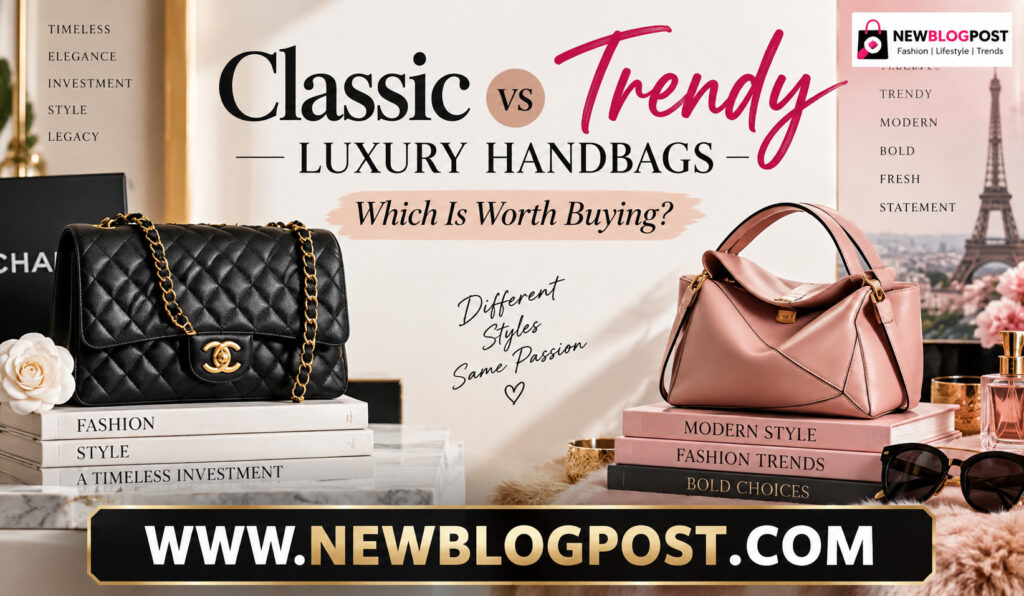
Every handbag purchase eventually comes down to one question, whether the buyer realizes it or not, and that question is how long the bag will actually stay relevant. Classic and trendy pieces answer that question in very different ways. This guide compares both approaches directly so buyers can decide which one fits their habits and budget rather than choosing based on a single impulse purchase.
Defining Classic and Trendy in Handbag Terms
Classic handbags are designs built to remain visually relevant across many years, often decades, without needing seasonal updates to stay current.
Trendy handbags, by contrast, are tied closely to a specific season or cultural moment. They often feature bold colors, unusual shapes, or design details that clearly signal a particular time period once that moment has passed.
Neither category is inherently better. They simply serve different roles inside a wardrobe, and understanding that difference is the first step toward a smarter purchase.
It also helps to recognize that a single bag can shift categories over time. A once trendy shape from a decade or two ago can settle into classic status if it survives multiple fashion cycles without losing appeal, while a design marketed as timeless at launch can still end up looking dated if the broader silhouette falls out of favor. The label matters less than how the design actually performs across several years.
The Case for Buying Classic
Classic bags offer a few clear advantages that make them a reliable long term choice.
- They remain wearable across many years without looking dated
- Neutral colors and simple shapes pair with a wide range of outfits
- Resale value tends to hold up better than trend driven pieces
- They require fewer replacement purchases over time
These advantages make classic bags a strong choice for buyers who want to invest in fewer, longer lasting pieces rather than frequently rotating their collection.
Repair and restoration also tend to be easier with classic pieces. Because these shapes stay in production for many years, replacement parts, matching leather, and hardware are usually easier to source than they are for a discontinued trendy style that a brand has no plans to bring back.
The Case for Buying Trendy
Trendy bags have their own set of benefits, particularly for buyers who enjoy frequently refreshing their style.
- They offer a way to experiment with bold colors and unusual shapes
- They often cost less than flagship classic styles from the same brand
- They can make an outfit feel current and aligned with the latest fashion cycle
- They allow buyers to test new silhouettes before committing to a long term investment piece
For buyers who treat handbags as a rotating accessory rather than a long term investment, trendy pieces can offer real enjoyment without the pressure of picking something meant to last forever.
Brands are aware of this dynamic and price accordingly. Trend driven capsule releases are often positioned below a brand’s flagship classic styles, which reflects the shorter expected lifespan of the design. That pricing gap can make trendy pieces feel like a lower risk way to buy into a brand for the first time, even for buyers who eventually plan to invest in a classic piece later.
Cost Per Wear and Long Term Value
Cost per wear is one of the most useful ways to compare classic and trendy purchases honestly.
A classic bag with a higher upfront price can end up costing less per wear if it stays in regular rotation for many years. A trendy bag, even at a lower price point, can end up costing more per wear if it falls out of favor after a single season and sits unused afterward.
This calculation does not mean trendy pieces are automatically a poor choice. It simply means the value depends heavily on how often the piece actually gets worn after the initial excitement fades.
How to Decide Based on Your Own Habits
The right choice depends more on personal habits than on any universal rule about which category is objectively better.
Helpful questions to consider include:
- How often do you replace accessories based on current trends
- Do you prefer building a smaller, consistent wardrobe or a larger rotating one
- How much are you comfortable spending on a piece meant to last many years
- Does resale value matter to your overall purchasing decision
Answering these honestly usually points clearly toward one category, even before comparing specific bags.
It can also help to look back at past purchases outside of handbags specifically. Someone who still regularly wears clothing bought five or more years ago likely leans toward the classic mindset already, while someone whose closet turns over every season or two is probably better matched to trendy pieces. Handbag habits usually mirror broader shopping habits more closely than people expect.
Classic vs Trendy Comparison
| Factor | Classic | Trendy |
| Longevity | Stays relevant for years | Tied to a specific season |
| Versatility | Works with most outfits | Often more outfit specific |
| Resale value | Generally holds better | Typically drops after trend fades |
| Upfront cost | Often higher | Frequently lower |
| Best suited for | Long term investment buyers | Frequent style refreshers |
Key Takeaways
- Classic bags offer longevity: simple, neutral designs remain wearable for years.
- Trendy bags offer variety: bold colors and shapes let buyers experiment more freely.
- Cost per wear matters: a higher priced classic bag can still be the better value long term.
- Resale value favors classic pieces: trend driven bags typically lose value faster.
- Personal habits decide the better fit: neither category is universally the smarter buy.
FAQs
Do classic handbags really hold their value better?
Yes, classic designs generally hold resale value more consistently than trend driven pieces.
Are trendy bags a poor investment?
Not necessarily, since their value depends on how often they get worn before the trend fades.
Can a trendy bag ever become a classic later?
Occasionally, though most trend pieces remain tied to their original season rather than gaining lasting status.
Is it better to own only classic bags?
Not for everyone, since many buyers enjoy a mix of classic staples and occasional trendy pieces.
What is cost per wear?
It is the total price of an item divided by how many times it gets worn, used to measure real value over time.
Can a trendy design eventually become a classic?
Yes, some once trendy shapes settle into classic status if they remain popular across several fashion cycles.
Conclusion
Choosing between classic and trendy luxury handbags depends on personal style habits rather than one option being objectively superior. Classic pieces reward buyers who want long term value and consistent wearability, while trendy pieces suit those who enjoy frequent style changes. Weighing cost per wear and honest buying habits before purchasing helps ensure either choice actually earns its place in the wardrobe.