
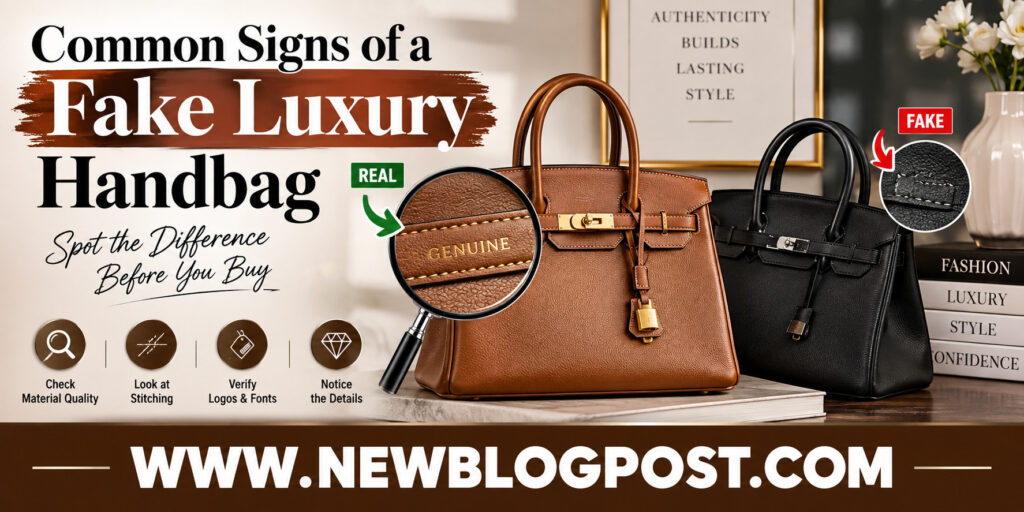

Introduction
You hold a designer bag in your hands and something feels slightly off, even before you know why. Learning to spot a fake luxury handbag starts with training your eye on a specific set of details that counterfeiters consistently get wrong.
This guide walks through the most reliable signs to check, from stitching to interior tags. Knowing these details can save buyers from an expensive and disappointing mistake.
Checking the Stitching and Overall Construction
Authentic luxury handbags are built with consistent, even stitching throughout the entire bag. Counterfeit versions often show uneven stitch lengths, loose threads, or slightly crooked seams that a genuine bag would never have.
A few construction details worth checking:
- Stitch count per inch should look consistent across every seam.
- Seams along corners and handles should lie flat without puckering.
- Loose threads or frayed edges are a strong warning sign.
Examining the Hardware Closely
Hardware, including zippers, clasps, and buckles, tends to reveal counterfeits quickly under close inspection. Genuine luxury brands use heavier, higher quality metal that feels substantial and resists tarnishing over time.
What Genuine Hardware Usually Looks Like
Authentic hardware typically carries the brand name engraved cleanly, without blurred or shallow lettering. Zippers on genuine bags glide smoothly and often bear a matching brand stamp on the pull tab itself.
Inspecting the Logo, Font, and Placement
Logo accuracy is one of the most common places counterfeiters fail, even on otherwise convincing fakes. Small differences in font weight, letter spacing, or logo positioning can reveal a fake almost instantly to a trained eye.
Details worth comparing against an authentic reference:
- Letter spacing should match official brand imagery exactly.
- Logo placement should sit in the same location as verified authentic examples.
- Embossed or stamped logos should feel crisp, not shallow or smudged.
Checking Interior Tags and Serial Numbers
Most luxury handbags include an interior tag or stamped serial number tied to a specific production batch. Counterfeits often replicate these poorly, using incorrect formats or fonts that do not match genuine examples.
A few checks to perform:
- Compare the serial number format against verified authentic examples online.
- Check that the interior tag material and stitching match the bag’s overall quality.
- Confirm the date code, where applicable, aligns with the bag’s claimed production year.
Evaluating the Smell and Material Feel
Genuine leather has a distinct, natural smell that is difficult for manufacturers to fully replicate with synthetic materials. Many counterfeit bags carry a chemical or plastic like odor instead, particularly in bags claiming to use real leather.
Material feel matters just as much as smell. Authentic leather typically feels supple and slightly cool to the touch, while lower quality synthetic materials often feel stiffer or unusually smooth.
What to Do If You Suspect a Fake
If something feels wrong about a bag, there are practical steps to confirm suspicions before completing a purchase. Acting early protects both your money and your ability to seek a refund if needed.
Recommended next steps:
- Request close up photos of the interior tag, hardware stamps, and stitching before buying.
- Compare the item against verified authentic photos from the brand’s official website.
- Consider a professional authentication service for high value purchases.
- Purchase only through authorized retailers or well reviewed resale platforms when possible.
Key Takeaways
- Stitching reveals a lot: Uneven seams or loose threads are common signs of a counterfeit.
- Hardware quality matters: Genuine bags use heavier metal with clean, precise engraving.
- Logos often fail first: Font spacing and placement errors are common counterfeit giveaways.
- Interior tags tell a story: Serial numbers and date codes should match verified authentic formats.
- Trust your senses: Smell and material feel can reveal synthetic substitutes for genuine leather.
FAQs
Can a fake handbag still have a working serial number?
Yes, some counterfeits include fabricated serial numbers, so the number alone does not guarantee authenticity.
Is stitching really a reliable way to spot a fake?
Yes, uneven or sloppy stitching is one of the most consistent signs found across many counterfeit handbags.
Do all fake handbags smell like plastic?
Not always, since higher quality counterfeits may use partial genuine leather, though many still carry a chemical smell.
Should I trust online authentication services?
Reputable, well reviewed authentication services can be a reliable option, especially for high value purchases.
Is buying from a resale platform safe for luxury handbags?
It can be, provided the platform offers authentication services and clear seller accountability.
Conclusion
Spotting a fake luxury handbag comes down to checking a consistent set of details, from stitching and hardware to interior tags and material feel. No single detail guarantees authenticity on its own, but together these checks build a clear picture. Taking a few extra minutes to inspect these signs before buying can prevent a costly and frustrating mistake.