

Introduction
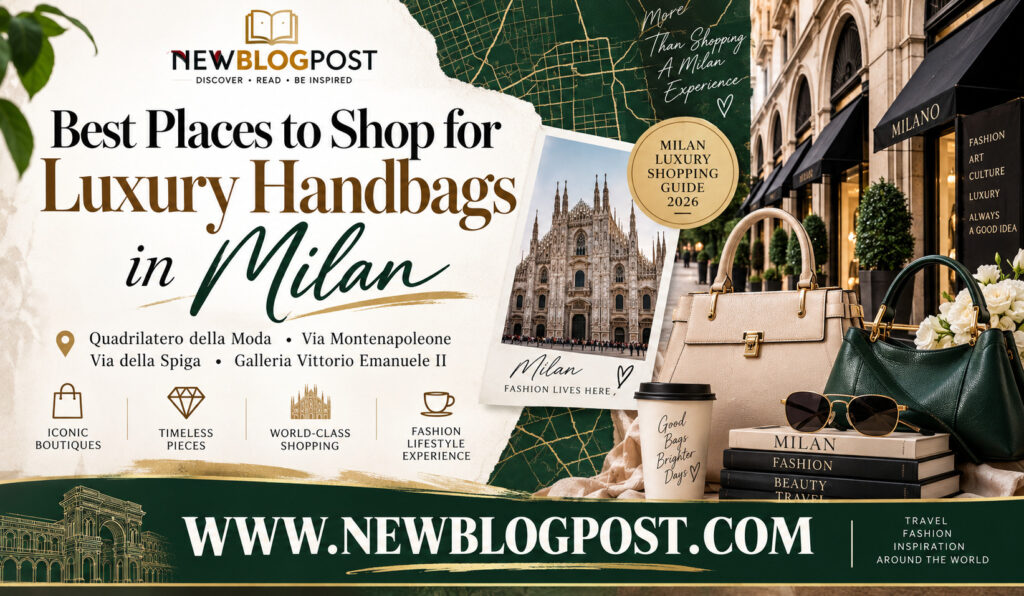
You walk four streets in central Milan and pass more flagship boutiques than most shopping trips see in a week. That density defines the Quadrilatero della Moda, Milan’s legendary luxury shopping district, and the natural starting point for anyone chasing luxury handbags.
This list breaks down five key shopping areas within and around this district. Each one offers a slightly different mix of brands, atmosphere, and shopping style.
1. Via Montenapoleone
Via Montenapoleone anchors the entire Quadrilatero della Moda and has been ranked among the most expensive retail streets in the world. It concentrates flagship boutiques from major Italian and international fashion houses along a single, compact stretch.
Key features and specs:
- Home to some of the highest profile flagship stores in Milan
- Recognized globally as one of the top luxury retail streets
- High end jewelers and shoemakers alongside handbag boutiques
- Closest metro access through the Montenapoleone station
This street works best for shoppers who want maximum brand density in minimal walking distance. A minor drawback is those famous prices, since rents and retail positioning here reflect the street’s prestige status. It suits visitors who want to experience the most iconic stretch of Milan’s fashion identity in one visit.
2. Via della Spiga
Via della Spiga sits parallel to Via Montenapoleone and offers a slightly quieter, more pedestrian friendly shopping experience. It still carries major international names while feeling somewhat less crowded than its more famous neighbor.
Key features and specs:
- Narrower, more intimate street layout than Via Montenapoleone
- Strong presence of both fashion and fine jewelry boutiques
- Elegant architecture housed in historic Milanese buildings
- Easy walking connection to the rest of the Quadrilatero
This street suits shoppers who want a calmer browsing pace without leaving the core luxury district. A minor drawback is that some boutiques here are smaller than the flagship stores found on Via Montenapoleone. It fits visitors looking for a slightly more relaxed version of the same high end shopping experience.
3. Via Manzoni
Via Manzoni forms one edge of the Quadrilatero and is particularly known for its strong Armani presence, alongside other major fashion names. The street blends retail with cultural landmarks, including nearby museums.
Key features and specs:
- Strong concentration of Armani related retail and design spaces
- Wider street layout compared to Via Montenapoleone and Via della Spiga
- Close proximity to the Poldi Pezzoli museum
- Direct access to the Montenapoleone metro stop
This street works well for shoppers who want to combine luxury handbag browsing with a bit of cultural sightseeing nearby. A minor drawback is that the brand mix leans more heavily toward a few dominant names rather than broad variety. It suits visitors interested in seeing how fashion and design intersect within one Milanese neighborhood.
4. Corso Venezia and Via Verri
Corso Venezia forms the fourth side of the Quadrilatero, while nearby Via Verri holds a dense cluster of both established and contemporary fashion names. Together these streets round out the full shopping district beyond its three main arteries.
Key features and specs:
- Wide boulevard feel along Corso Venezia itself
- Via Verri packed with brands from Burberry to Tom Ford
- More architectural variety than the tighter interior streets
- Good starting or ending point for a full district walking loop
This combination suits shoppers who want to complete a full circuit of the Quadrilatero rather than focus on just one or two streets. A minor drawback is the slightly more spread out layout, requiring a bit more walking between key boutiques. It fits visitors planning a longer, more thorough shopping day across the district.
5. Galleria Vittorio Emanuele II
The Galleria sits just outside the core Quadrilatero but remains one of Milan’s most iconic shopping locations, housed inside a stunning glass domed arcade. It blends historic architecture with a smaller, curated selection of luxury boutiques.
Key features and specs:
- Historic 19th century glass and iron arcade structure
- Central, highly walkable location near the Duomo
- Smaller boutique selection compared to the Quadrilatero streets
- A landmark shopping stop even for non shoppers
This location suits visitors who want to combine luxury handbag shopping with genuine architectural sightseeing. A minor drawback is a narrower brand selection compared to the dedicated fashion district streets nearby. It fits travelers who want an efficient stop that doubles as a Milan landmark visit.
Quick Comparison
| Location | Atmosphere | Best For |
| Via Montenapoleone | High profile, dense flagship stores | Maximum brand concentration |
| Via della Spiga | Quieter, boutique lined | Relaxed high end browsing |
| Via Manzoni | Wider, culture adjacent | Combining shopping with sightseeing |
| Corso Venezia and Via Verri | Spread out, varied architecture | A full district walking loop |
| Galleria Vittorio Emanuele II | Historic, architecturally iconic | Sightseeing paired with shopping |
Key Takeaways
- Best for flagship density: Via Montenapoleone leads with the highest concentration of major boutiques.
- Best for a calmer pace: Via della Spiga offers a quieter alternative within the same district.
- Best for combining culture and shopping: Via Manzoni sits near notable museums and design spaces.
- Best for a complete shopping loop: Corso Venezia and Via Verri round out the full Quadrilatero circuit.
- Best for sightseeing value: The Galleria Vittorio Emanuele II offers architecture alongside retail.
FAQs
What is the Quadrilatero della Moda?
It is Milan’s famous luxury fashion district, formed by four streets packed with flagship boutiques.
Is Via Montenapoleone the most expensive street in the district?
Yes, it has been ranked among the most expensive retail streets in the world in recent years.
Can I walk between all five locations easily?
Yes, all five areas sit within a compact, walkable section of central Milan.
Is the Galleria Vittorio Emanuele II worth visiting for shopping alone?
It offers a smaller selection than the Quadrilatero streets, but its architecture makes it worth visiting regardless.
When is the best time to shop in this district?
Weekday mornings tend to be quieter, while fashion week periods bring more energy but larger crowds.
Conclusion
Milan’s compact luxury district makes it possible to explore some of the world’s most iconic luxury handbag boutiques within a single, walkable area. From the flagship density of Via Montenapoleone to the architectural charm of the Galleria Vittorio Emanuele II, each location offers a distinct shopping experience. Planning a route across these five spots gives visitors a complete picture of what makes Milan a true global fashion capital.