
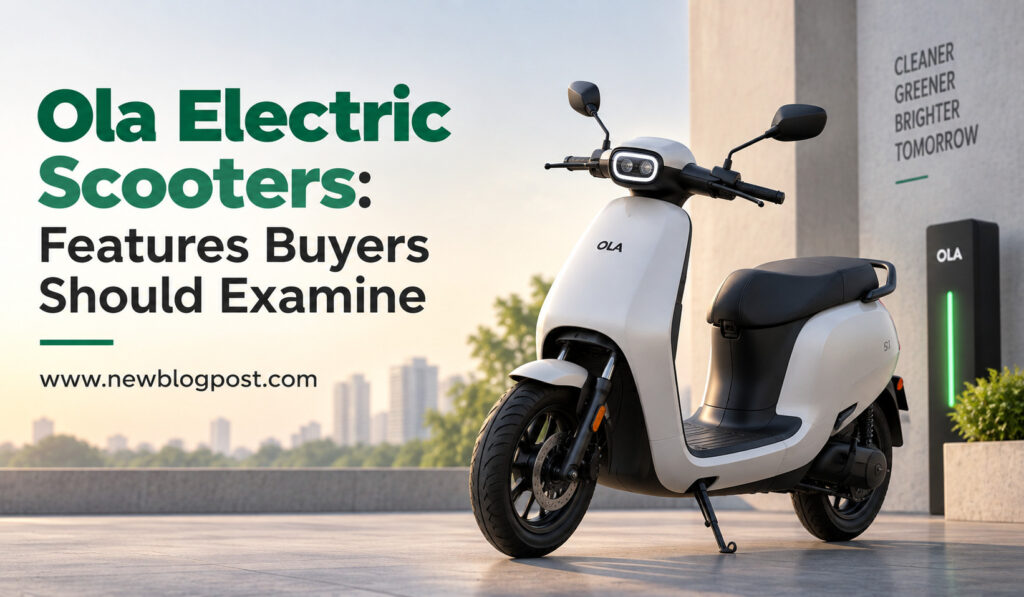

Electric scooters have become an increasingly important part of India’s two-wheeler market. For many urban riders, the combination of lower running costs, quiet operation and the convenience of home charging makes an electric scooter an attractive alternative to a conventional petrol scooter. Ola Electric is one of the companies that has played a major role in bringing connected and technology-focused electric scooters to Indian buyers.
Ola’s current scooter portfolio includes the S1 Pro+, S1 Pro, S1 X+, S1 X and S1 Z. These models are aimed at different types of customers, ranging from buyers seeking premium performance to those looking for more accessible electric transportation.
However, choosing an Ola electric scooter should involve more than comparing prices or maximum range figures. Battery capacity, charging arrangements, performance, technology, safety, comfort and after-sales support can all affect the ownership experience.
Understanding Ola Electric’s Current Scooter Range
Ola Electric’s current S1 portfolio is designed around different levels of performance and affordability.
The S1 Pro+ sits at the premium end of the scooter range, while the S1 Pro provides a performance-focused alternative at a lower price point. The S1 X+ and S1 X are positioned toward buyers seeking more accessible electric mobility.
The S1 Z is another addition to the company’s current scooter portfolio and is positioned as a more affordable electric scooter. Ola’s official website currently lists the S1 Z alongside the S1 Pro+, S1 Pro, S1 X+ and S1 X.
Because battery capacities, equipment and performance can differ between variants, buyers should examine the exact version they intend to purchase rather than assuming that every S1 model has the same specifications.
Battery Capacity Should Be Examined Carefully
The battery is arguably the most important component of an electric scooter. It determines how much energy the vehicle can store and plays a major role in determining its usable range.
Ola offers different battery configurations across its scooter portfolio. The company has also introduced its newer-generation battery technology as part of its broader electric vehicle strategy.
For buyers, the important question is not simply whether a scooter has a large battery. The more useful question is whether its battery capacity matches their daily travel requirements.
A rider travelling a relatively short distance every day may not need the largest battery option. Someone covering long distances, carrying a passenger regularly or having limited access to charging may prefer a scooter with greater energy capacity.
Battery warranty should also be examined before purchase. Ola currently states a base battery warranty of three years or 50,000 km, with extended warranty options available for eligible scooters. Buyers should check the applicable terms for their specific model and purchase.
Do Not Judge Range by the Highest Number Alone
Range is one of the most frequently discussed specifications when comparing electric scooters. Ola currently advertises up to 320 km of IDC range for its scooter portfolio, depending on the model and configuration.
However, IDC range should not be interpreted as a guaranteed distance in everyday riding.
Real-world range can change according to traffic, speed, rider weight, road conditions, weather, tyre pressure, riding mode and use of electrical features.
A rider travelling mostly through congested city streets may achieve a different result from someone riding at higher speeds on open roads.
Therefore, buyers should calculate their expected daily distance and choose a scooter that provides a comfortable range margin rather than selecting a model solely because it has the highest advertised figure.
Having additional range available can also reduce the pressure to recharge after every trip.
Performance Is an Important Difference Between Variants
Ola Electric has placed considerable emphasis on performance. The company’s premium S1 models are designed to provide stronger acceleration and a more engaging riding experience than basic low-speed electric scooters.
The S1 Pro+ is positioned as the company’s most powerful scooter and is aimed at buyers looking for premium performance. The S1 Pro also follows a performance-oriented approach while offering a different balance of price and equipment.
For everyday commuters, however, maximum acceleration may not be the most important consideration.
Smooth power delivery can be more useful in crowded traffic, while stronger performance may appeal to riders who frequently use wider roads or enjoy faster acceleration.
Buyers should therefore consider their actual riding environment before paying extra for performance that they may rarely use.
Riding Modes Can Change the Riding Experience
Riding modes are another feature buyers should understand when evaluating an Ola scooter.
Ola explains that its riding modes are designed to provide different combinations of efficiency, acceleration and performance. Eco mode prioritises efficiency, while Normal mode is intended to balance everyday usability. Sports mode focuses more strongly on acceleration, while Hyper mode provides the highest level of performance on compatible models.
This flexibility can be useful because riders do not always need maximum performance.
Eco mode can be useful when extending range is more important, while Normal mode may be suitable for routine commuting. Performance-oriented modes can be selected when stronger acceleration is desired.
The availability of individual modes can vary by model, so buyers should check the equipment list of their chosen variant.
Charging Convenience Matters for Electric Scooter Owners
Charging is one of the biggest differences between an electric scooter and a petrol-powered two-wheeler.
Ola scooters are designed for charging at home, which can be convenient for owners who have a suitable parking space and access to an electrical socket.
This means a rider can potentially charge the scooter while it is parked overnight instead of making a separate trip to a fuel station.
However, buyers living in apartments should consider their charging arrangement before purchasing. They should check whether they can park the scooter near an appropriate electrical connection and whether their housing society permits the required setup.
Charging time also varies according to the specific scooter and battery configuration. Ola’s official information states that charging duration differs by variant.
For people who frequently travel beyond their normal daily range, public charging availability can also be relevant.
Connected Technology Is a Major Ola Feature
One of Ola Electric’s distinguishing characteristics is its emphasis on software and connected technology.
The company’s MoveOS platform supports several digital functions across compatible scooters. These can include navigation, vehicle information, ride statistics, remote functions and other connected features.
Ola also highlights features such as Find My Scooter, live location sharing and Easy Park within its technology ecosystem.
Such features can make an electric scooter feel more like a connected digital product than a traditional two-wheeler.
However, buyers should remember that software features can differ between models and software versions. Some functions may also require smartphone connectivity or other conditions.
Therefore, customers should verify the features available on the exact scooter and variant they plan to purchase.
Safety Equipment Should Be Compared
Safety should remain an important part of any two-wheeler buying decision.
When comparing Ola scooters, buyers should examine the braking system, tyre specifications, lighting equipment, stability and other safety-related features offered on the selected variant.
This becomes particularly important with performance-oriented electric scooters because stronger acceleration and higher speeds require effective braking and predictable handling.
Ola also states that its scooters have an IP67 rating for key components such as the battery pack, motor and wiring, providing protection against water and dust under the applicable testing conditions.
However, an IP rating does not mean that riders should deliberately expose an electric scooter to unsafe levels of water. Responsible riding during severe weather remains important.
Comfort and Practicality Should Not Be Ignored
Technology and acceleration may attract attention in a showroom, but comfort becomes much more important after months of daily use.
Buyers should check the riding position, seat comfort, footboard space, suspension response and overall balance during a test ride.
A scooter used for commuting should be easy to manoeuvre through traffic and convenient to park.
Passenger comfort should also be considered if two people regularly travel together.
Storage space is another practical consideration. Buyers should determine whether the available storage is sufficient for their helmet, charging accessories and other everyday items.
These details may not look as impressive as a large touchscreen or high claimed range, but they can have a much greater effect on daily satisfaction.
Maintenance and Battery Ownership
Electric scooters generally have fewer conventional mechanical components than petrol scooters. They do not use an internal-combustion engine, engine oil or spark plugs.
Nevertheless, electric scooters still require maintenance. Tyres, brakes, suspension components, electrical systems and software should all be kept in proper condition.
Battery health is particularly important because the battery is a major component of an electric scooter.
Following the manufacturer’s recommended charging and maintenance practices can help support long-term ownership. Buyers should also understand the battery warranty before completing their purchase.
Ola currently advertises a base battery warranty of three years or 50,000 km, with extended coverage options available. The exact terms should be checked for the particular scooter and warranty package selected.
After-Sales Support Is Worth Checking
An electric scooter’s technology and battery system make after-sales support an important consideration.
Ola currently states that it has 590 service centres and is expanding its service network through additional channels.
Even so, buyers should check the availability of an authorised service facility in their own area before purchasing.
This is especially important for customers outside major cities. Convenient access to servicing can make a considerable difference if the scooter requires technical assistance or warranty support.
Buyers should also understand the warranty coverage, service procedures and expected maintenance requirements before finalising their purchase.
Which Ola Electric Scooter Should Buyers Consider?
The right model depends on the buyer’s priorities.
The S1 Pro+ is aimed at customers looking for a premium, performance-oriented electric scooter. The S1 Pro provides another performance-focused option for buyers who want a balance between features and cost.
The S1 X+ and S1 X are intended for customers seeking more accessible electric mobility, while the S1 Z expands Ola’s range toward a more affordable scooter category.
Instead of selecting a scooter purely on its advertised range or starting price, buyers should compare the battery configuration, charging requirements, performance, features and warranty of the exact variant.
Conclusion
Ola Electric’s current scooter portfolio gives Indian buyers several choices across different price and performance levels. The S1 Pro+, S1 Pro, S1 X+, S1 X and S1 Z each target different requirements within the electric scooter market.
For buyers, the most important step is to look beyond headline specifications. Battery capacity, practical range, charging convenience, riding modes, connected technology, safety, comfort and after-sales support all deserve attention.
A suitable electric scooter should fit the rider’s daily routine rather than simply offer the biggest numbers on a specification sheet. By comparing the exact variant and considering long-term usage, Indian buyers can make a more informed decision when choosing an Ola Electric scooter.