
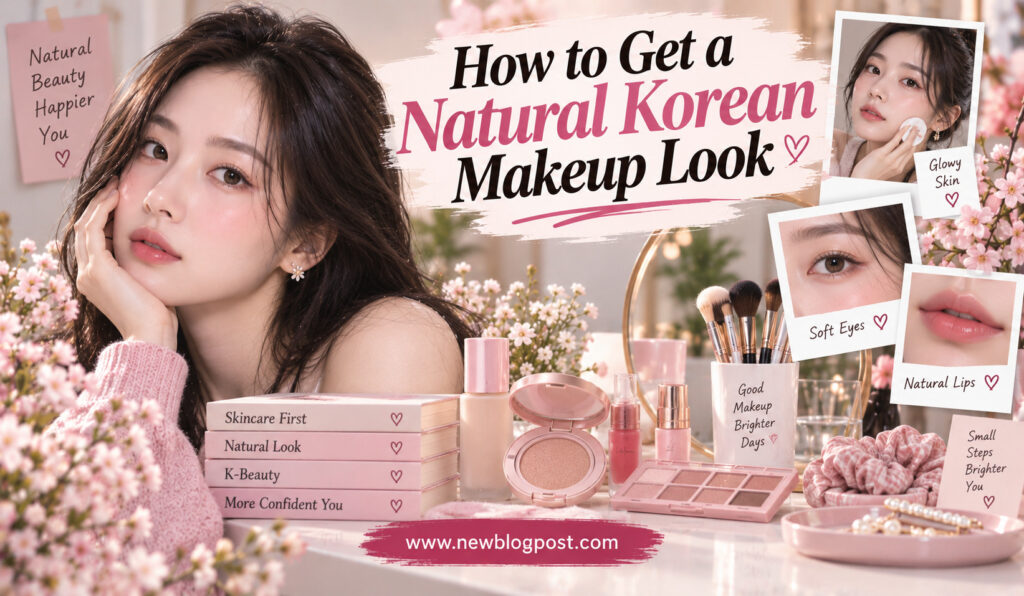

Korean makeup is loved around the world for its fresh, youthful, and effortless appearance. Instead of creating a heavily sculpted face, the Korean makeup approach usually focuses on enhancing natural features with soft colors, lightweight coverage, subtle definition, and a healthy-looking glow.
The beauty of a natural Korean makeup look is that it can work for almost any occasion. You can wear it to work, college, a casual outing, a coffee date, or even a special event when you want your features to look polished without appearing overly made up.
You also do not need dozens of products to recreate the style. The most important elements are good skin preparation, a lightweight complexion, softly defined eyes, naturally flushed cheeks, and a tinted or glossy lip. Once you understand the basic techniques, the look becomes surprisingly easy to create at home.
What Makes Korean Makeup Look So Natural?
The Korean makeup aesthetic is built around enhancement rather than transformation. Instead of completely changing the shape of the face, makeup is used to bring attention to features while keeping the overall appearance soft.
Skin is usually kept luminous or satin-like rather than extremely matte. Blush tends to appear fresh and blended, while contouring is often subtle. Eye makeup uses soft neutral, pink, peach, or brown shades instead of very dramatic colors.
The lips are another important feature. Tints, balms, and glossy textures create color without the sharp outline associated with heavier Western-style lipstick application.
The overall goal is to make people notice how fresh you look rather than immediately notice the makeup itself.
Step 1: Prepare Your Skin
Good skin preparation is one of the most important steps in achieving natural Korean makeup. Makeup sits more smoothly when the skin is comfortable and hydrated.
Start with a gentle cleanser, followed by a lightweight hydrating product if it suits your skin. Apply moisturizer and allow it to settle before moving on to makeup. During the daytime, sunscreen should also be part of your routine.
The amount of skincare you use should depend on your skin type. Dry skin may benefit from additional hydration, while oily skin generally looks better with lighter layers.
Try not to rush directly from skincare into foundation. Giving products a few minutes to settle can help prevent makeup from slipping or becoming uneven.
Step 2: Create a Lightweight Base
A natural Korean makeup look rarely depends on heavy foundation. Instead, choose a skin tint, BB cream, cushion foundation, or lightweight foundation that allows some of your natural skin to remain visible.
Apply a small amount starting from the center of the face and blend outward. If certain areas require additional coverage, use a little concealer rather than adding another full layer of foundation.
This technique keeps the complexion looking more natural.
The aim is not to make every pore invisible. Real skin has texture, and allowing some of that texture to remain can actually make the makeup appear more realistic.
For areas that become shiny quickly, use a small amount of powder. Avoid covering the entire face with powder if you want to maintain a soft Korean-inspired glow.
Step 3: Keep the Brows Soft and Natural
Brows have a major influence on the overall character of a makeup look. Korean makeup often favors brows that appear neat, softly defined, and relatively natural.
Instead of creating an extremely sharp arch, follow the natural shape of your eyebrows. Fill sparse areas with small, light strokes and use a brow gel to keep the hairs in place.
Avoid using a shade that is dramatically darker than your natural brow color. A softer shade usually creates a more youthful appearance.
The objective is definition without making the eyebrows become the most noticeable feature on the face.
Step 4: Create Soft Korean-Inspired Eye Makeup
Eye makeup is one of the easiest ways to achieve the Korean aesthetic. The goal is usually to make the eyes look brighter and more defined while keeping the colors understated.
Start with a neutral beige, soft brown, peach, or pink shade across the eyelid. Add a slightly deeper color near the lash line or outer corner for gentle dimension.
A thin line of brown or dark brown eyeliner can define the eyes without creating a dramatic effect. If you prefer a more noticeable look, slightly extend the outer corner, but keep the line delicate.
Mascara should separate and lengthen the lashes. Heavy, clumpy lashes can make the look feel more dramatic than intended.
For a subtle highlight, apply a small amount of champagne or light shimmer near the inner corner of the eyes.
Step 5: Add a Fresh Flush With Blush
Blush is one of the defining features of natural Korean makeup. Instead of creating sharply sculpted cheekbones, the goal is to give the face a soft, healthy-looking flush.
Cream and liquid blushes can work especially well because they blend naturally into lightweight base makeup. Powder blush can also be used when applied with a light hand.
Pink, peach, coral, and muted rose are versatile options. Choose a shade that complements your natural undertone rather than simply following a trend.
Apply the blush gradually. It is much easier to add more color than to remove excessive pigment.
Korean Makeup Features at a Glance
| Feature | Natural Korean Approach | Effect |
| Base | Lightweight and luminous | Fresh complexion |
| Brows | Soft and naturally shaped | Youthful definition |
| Eyes | Neutral, pink, peach, or brown | Bright and subtle |
| Blush | Soft pink, peach, or coral | Healthy flush |
| Lips | Tint, balm, or gloss | Natural color |
| Contour | Minimal | Soft facial structure |
Step 6: Add Subtle Dimension
Natural Korean makeup usually avoids strong contouring. Instead, dimension is created through soft shading and carefully placed color.
If you want to define your nose or jawline, use a small amount of neutral-toned contour and blend it thoroughly. The product should create a shadow rather than an obvious stripe.
You can also use blush placement to gently shape the face. Applying color slightly higher on the cheeks can create a lifted appearance without requiring heavy sculpting.
Highlighter should be subtle as well. Focus on small areas such as the tops of the cheekbones, the bridge of the nose, or the inner corners of the eyes.
Step 7: Create Soft, Juicy Lips
Korean lip makeup is often recognized for its soft color and hydrated appearance. Instead of creating an extremely precise lip outline, many Korean-inspired looks use blurred edges or concentrated color in the center.
Start with a moisturizing lip balm if your lips feel dry. Apply a tint or lipstick in a pink, coral, rose, peach, or berry shade.
For a gradient effect, place more pigment toward the center of the lips and gently blend it outward. Add clear or tinted gloss if you prefer a juicy finish.
If you want a more natural result, choose a shade close to your own lip color and apply only a small amount.
Step 8: Choose the Right Finish for Your Skin Type
The natural Korean makeup look can be adapted to different skin types. You do not have to force your skin into one particular finish.
For dry skin, a hydrating base and cream products can create a comfortable glow. Normal or combination skin can experiment with a satin complexion and targeted radiance.
Oily skin may benefit from controlling shine around the forehead, nose, and chin while keeping the cheek area fresh. This creates a balanced appearance rather than making the entire face completely matte.
The best Korean-inspired makeup is the version that works with your skin rather than against it.
Common Mistakes to Avoid
Creating natural makeup sounds simple, but certain techniques can accidentally make the look appear heavier.
Avoid applying too much foundation simply because you want flawless skin. Excessive powder can also remove the freshness that makes Korean makeup distinctive.
Other mistakes include:
- Drawing overly sharp eyebrows.
- Using too much contour or highlighter.
- Applying blush without blending the edges.
- Choosing lip colors that are dramatically darker than the rest of the makeup.
Another common mistake is trying to copy a celebrity’s exact makeup style without considering your own facial features. Korean makeup is best viewed as a set of techniques that can be adapted rather than a strict formula.
How to Make Your Korean Makeup Last Longer
Natural makeup can last surprisingly well when it is applied in thin, controlled layers.
Begin with properly prepared skin and avoid applying too much skincare immediately before makeup. Use thin layers of complexion products and allow each layer to settle before adding another.
A setting spray can help if it works well with your products. For oily areas, keep a small amount of translucent powder available for touch-ups.
Cream products should also be blended thoroughly. When too much product remains on the surface of the skin, it is more likely to move throughout the day.
The secret to long-lasting natural makeup is usually better preparation and controlled application rather than simply using more product.
A Simple Korean Makeup Routine for Beginners
If you are new to Korean makeup, you can keep your first routine extremely simple. Start with skincare, sunscreen, a lightweight base, concealer, brow product, blush, mascara, and lip tint.
Once you are comfortable with those steps, experiment with soft eyeliner, subtle eyeshadow, highlighter, or a gradient lip.
A beginner-friendly routine could follow this order:
- Prepare and moisturize the skin.
- Apply a lightweight complexion product.
- Define brows and add soft eye makeup.
- Apply blush and subtle highlight.
- Finish with a tinted lip product.
This keeps the process manageable while still creating the essential Korean makeup effect.
Frequently Asked Questions
1. What is the main goal of natural Korean makeup?
The main goal is to enhance your existing features while maintaining a fresh, youthful, and lightweight appearance. The makeup should look soft and integrated with the skin rather than heavily layered.
2. Do I need Korean makeup products to achieve the look?
No. While Korean beauty products can make the style easier to recreate, the techniques are more important than specific brands. Lightweight base products, soft blush, natural eye colors, and lip tints can be found in many makeup collections.
3. How can I make my foundation look natural?
Use a small amount of lightweight foundation or skin tint and blend it outward from the center of the face. Add concealer only where additional coverage is needed instead of applying several layers everywhere.
4. What blush colors work best for Korean makeup?
Soft pink, peach, coral, and muted rose shades are popular choices. The best color depends on your skin tone and undertone, so choose a shade that creates a natural-looking flush.
5. Can I wear natural Korean makeup for an evening event?
Absolutely. You can make the look more suitable for evening by adding slightly stronger eye definition, a deeper lip tint, or a touch more blush while keeping the complexion lightweight and luminous.
Final Thoughts
A natural Korean makeup look is all about balance. Instead of hiding the skin beneath heavy coverage or relying on dramatic contouring, the technique focuses on creating a fresh complexion and gently emphasizing the eyes, cheeks, brows, and lips.
The most important steps are good skin preparation, a lightweight base, soft brows, subtle eye makeup, naturally flushed cheeks, and hydrated-looking lips. Once you understand these principles, you can adapt them to your own features, skin type, and personal style.
The real appeal of Korean makeup is its flexibility. You can keep it almost invisible for everyday wear or add a little more definition for special occasions. With the right products and a light hand, achieving a fresh, youthful Korean-inspired makeup look at home can be both simple and enjoyable.