
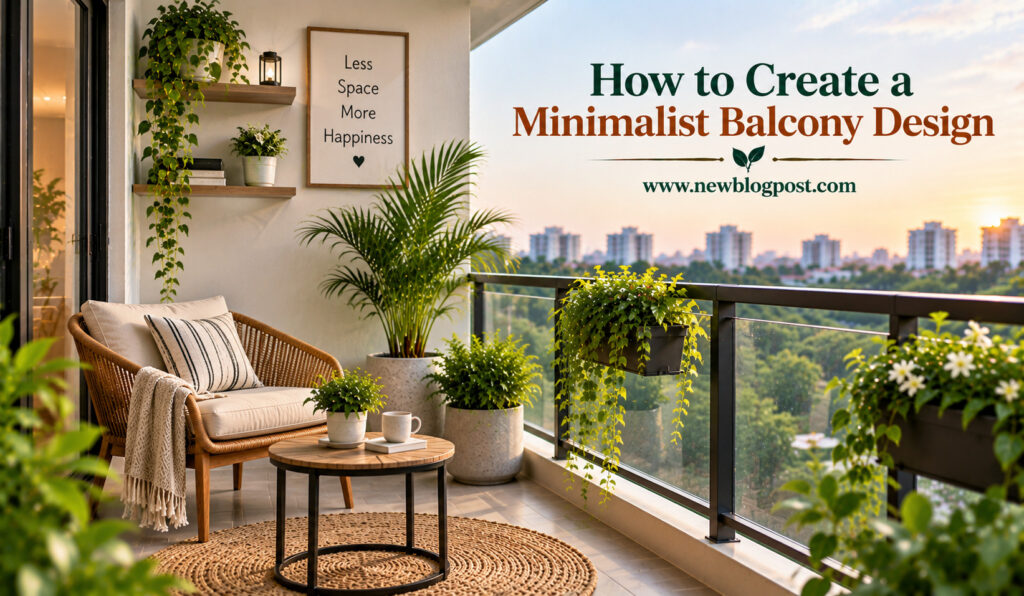

A minimalist balcony design focuses on simplicity, comfort, and functionality. Instead of filling the space with too many decorations or pieces of furniture, the goal is to create an open and peaceful area where every item has a purpose. Even a small balcony can look stylish when you use the right colors, furniture, plants, and lighting.
Whether you live in an apartment or a compact home, a minimalist balcony can become a relaxing place for morning tea, reading, or enjoying fresh air. With thoughtful planning, you can create a beautiful outdoor space without making it feel crowded.
Start With a Clear Balcony Purpose
Before decorating your balcony, decide how you want to use it. A balcony can serve as a reading corner, coffee space, mini garden, or quiet relaxation area. Choosing one main purpose helps prevent unnecessary furniture and accessories.
For example, if you want a relaxing balcony, a comfortable chair and a small side table may be enough. If you prefer a garden-inspired space, focus more on plants and simple planters.
Remove Unnecessary Items
Minimalism begins with decluttering. Remove old furniture, unused pots, broken decorations, and anything that does not contribute to the balcony’s purpose. Keeping the floor as open as possible will instantly make the space feel larger.
Try to keep only items that are useful, attractive, or both. This approach creates a cleaner appearance and makes everyday maintenance easier.
Choose a Simple Color Palette
Color plays an important role in minimalist balcony design. Neutral shades such as white, beige, grey, cream, and soft brown can make the space feel calm and spacious.
You do not need to use only one color. Instead, choose two or three complementary shades and repeat them across furniture, flooring, cushions, and planters.
Add Small Color Accents
A minimalist balcony does not have to look boring. Add small touches of green through plants or introduce subtle colors with cushions and rugs. Keeping brighter shades limited to a few accessories helps maintain a balanced appearance.
Select Functional Balcony Furniture
Furniture should match the size of your balcony. Large sofas or bulky chairs can quickly make a small outdoor area feel cramped. Choose compact furniture that provides comfort without taking up unnecessary floor space.
Good options include:
- Foldable chairs and tables
- Compact benches with storage
- Slim lounge chairs
- Small nesting tables
Multifunctional furniture is particularly useful for small balconies. A storage bench, for example, can provide seating while keeping cushions and gardening supplies out of sight.
Keep the Floor Open
An open floor area can make a balcony appear larger. Avoid placing too many objects directly on the ground. Instead, use wall-mounted shelves, railing planters, or vertical plant stands where practical.
Simple outdoor floor tiles or a small weather-resistant rug can also define the space without overwhelming it.
Bring in Greenery Carefully
Plants are a natural addition to minimalist balconies, but too many pots can create visual clutter. Select a few plants that suit your balcony’s light conditions and arrange them neatly.
Use matching or similar planters to create a coordinated appearance. Tall plants can be placed in corners, while smaller plants can decorate shelves or tables.
Try Vertical Plant Displays
Vertical gardening is a useful solution when floor space is limited. A simple wall planter, hanging pot arrangement, or narrow plant stand can add greenery while keeping the main walking area clear.
The key is to keep the arrangement organized rather than covering every available surface with plants.
Use Natural Materials
Wood, bamboo, cotton, jute, and other natural-looking materials can make a minimalist balcony feel warm and inviting. Wooden furniture can add texture, while a simple woven rug or cotton cushion can soften the space.
Combining natural materials with neutral colors creates a relaxed outdoor atmosphere without requiring many decorative pieces.
Add Soft and Simple Lighting
Lighting can transform a minimalist balcony in the evening. Instead of using multiple decorative lights, choose one or two simple lighting solutions.
String lights, wall-mounted lamps, or small lanterns can provide a warm glow. Place lighting where it improves visibility and creates a comfortable atmosphere without making the balcony look overly decorated.
Keep Accessories Limited
Accessories should support the overall design rather than dominate it. A small candle holder, simple planter, outdoor cushion, or decorative tray may be enough to complete the look.
A useful minimalist rule is to leave some surfaces intentionally empty. Empty space helps the important elements stand out.
Create Privacy Without Adding Clutter
Privacy can be important, especially for apartment balconies. Instead of using heavy or visually distracting screens, consider simple outdoor curtains, bamboo panels, trellis plants, or subtle privacy screens.
Choose materials and colors that match the rest of the balcony. This keeps the privacy solution integrated into the design.
Maintain a Minimalist Balcony
A minimalist balcony looks best when it remains clean and organized. Regularly remove dry leaves, unnecessary items, and unused accessories. Store cushions and other movable items properly when they are not needed.
Follow a simple maintenance routine:
- Clean the floor regularly.
- Remove damaged or unused items.
- Trim plants when necessary.
- Keep furniture arranged neatly.
Regular decluttering prevents the balcony from gradually becoming crowded again.
Common Mistakes to Avoid
A minimalist balcony depends on balance, so excessive cushions, plants, lights, and accessories can work against the design.
Another mistake is choosing furniture that is too large for the available space. Always measure the balcony before purchasing furniture and leave enough room to move comfortably.
Using too many colors can also reduce the calm appearance of a minimalist space. Stick to a simple palette and use stronger colors only as small accents.
Final Thoughts
Creating a minimalist balcony design is less about buying new decorations and more about making thoughtful choices. Start by deciding how you want to use the space, remove unnecessary items, and select furniture that combines comfort with functionality.
Neutral colors, carefully chosen plants, natural materials, simple lighting, and open floor space can turn even a small balcony into a peaceful outdoor retreat. The best minimalist balcony is one that feels comfortable, organized, and easy to maintain.
FAQs
1. What is a minimalist balcony design?
A minimalist balcony design uses simple furniture, limited colors, selected plants, and fewer decorations to create a clean and functional outdoor space.
2. How can I make a small balcony look minimalist?
Use compact furniture, keep the floor open, choose a simple color palette, and avoid unnecessary decorations. Vertical storage and plants can also save valuable floor space.
3. Which colors work best for a minimalist balcony?
Neutral shades such as white, cream, beige, grey, and natural wood tones work well. Small green or muted color accents can add personality without creating visual clutter.
4. Are plants suitable for minimalist balconies?
Yes. A few carefully selected plants can make a minimalist balcony feel fresh and natural. Matching planters and organized arrangements help maintain a clean appearance.
5. How do I maintain a minimalist balcony?
Keep the area clean, regularly remove unused items, maintain plants, and store movable accessories when they are not required. Regular decluttering will help preserve the minimalist look.