
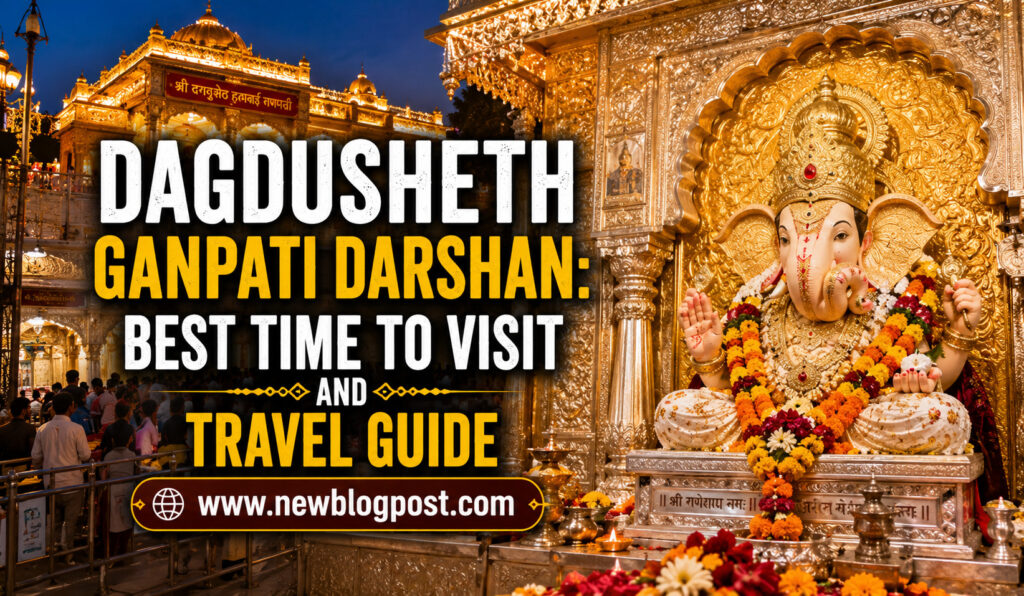

Pune is known for its rich cultural heritage, historic landmarks and deep-rooted Ganesh festival traditions. At the centre of this cultural identity stands the famous Dagdusheth Ganpati Temple, one of the most visited religious destinations in Maharashtra. Every year, thousands of devotees come to Pune to seek the blessings of Lord Ganesha, while the number rises significantly during the Ganesh festival.
For first-time visitors, planning a Dagdusheth Ganpati darshan involves more than simply reaching the temple. Choosing the right time, understanding the crowd situation, knowing how to travel and keeping basic temple etiquette in mind can make the experience smoother. Whether the visit is part of a dedicated pilgrimage or a Pune city trip, the temple offers a memorable spiritual experience.
Dagdusheth Ganpati Temple: A Landmark of Pune
The Dagdusheth Halwai Ganpati Temple is located in the Budhwar Peth area of central Pune. The temple is dedicated to Lord Ganesha and is particularly famous for its beautifully decorated idol and strong connection with the cultural life of the city.
The temple’s history is associated with Dagdusheth Halwai, a well-known sweet maker in Pune. According to the temple’s traditional history, the Ganpati idol was established after the family experienced personal loss. Over time, the devotion surrounding the idol grew, and the temple became an important religious institution in Pune.
Today, Dagdusheth Ganpati is not only a place of worship but also a major cultural symbol of the city. The temple attracts devotees from Maharashtra and other parts of India throughout the year.
Why Dagdusheth Ganpati Is So Popular
The popularity of Dagdusheth Ganpati comes from a combination of faith, history and public participation. The idol is known for its elaborate appearance, and during special occasions the temple is decorated in ways that attract both devotees and visitors.
The temple’s location in the heart of Pune also makes it convenient to combine darshan with visits to other historic places. Nearby areas contain several traditional markets, old temples and heritage structures, giving visitors a broader view of Pune’s history.
During the annual Ganesh festival, however, the atmosphere changes completely. The surrounding streets become crowded with devotees, processions and cultural activities. The temple becomes one of the key centres of Ganesh Chaturthi celebrations in the city.
Best Time for Dagdusheth Ganpati Darshan
The best time to visit Dagdusheth Ganpati depends on whether the priority is a peaceful darshan, festival atmosphere or convenient sightseeing.
For a relatively comfortable visit, weekdays and early morning hours are generally preferable. The crowd can increase as the day progresses, particularly on weekends and during religious occasions. Early morning visits can also be more comfortable during Pune’s warmer months.
Evening is another popular period because the surrounding area becomes lively and the temple lighting can create a beautiful atmosphere. However, visitors should expect more people during evening hours.
Ganesh Chaturthi is undoubtedly the most energetic period to visit, but it is also the busiest. Devotees who specifically want to experience Pune’s famous Ganesh festival should be prepared for long queues, traffic restrictions and large crowds.
Best Visiting Periods at a Glance
- Early morning: Suitable for visitors looking for a comparatively peaceful darshan.
- Weekdays: Usually more convenient than weekends for general sightseeing.
- Evening: Good for experiencing the illuminated temple and lively surroundings.
- Ganesh festival: Best for experiencing the city’s grand celebrations, but expect heavy crowds.
What to Expect During Darshan
Dagdusheth Ganpati darshan can be a quick or extended experience depending on crowd levels. On ordinary days, visitors may be able to complete the visit without spending several hours, while special occasions can significantly increase waiting time.
Devotees should follow the queue system and instructions provided by temple authorities. It is better to avoid carrying unnecessary belongings because crowded religious areas can make movement difficult.
Photography rules may vary depending on the area and occasion, so visitors should follow the instructions displayed at the temple rather than assuming that photography is permitted everywhere.
The overall atmosphere inside and around the temple is devotional, particularly during aarti and special religious programmes. Visitors who want to spend more time in prayer should consider visiting during comparatively less crowded hours.
Dagdusheth Ganpati During Ganesh Chaturthi
Ganesh Chaturthi is the most important time of the year for devotees of Dagdusheth Ganpati. Pune has a long-standing tradition of celebrating the festival on a grand scale, and Dagdusheth Ganpati plays a prominent role in these celebrations.
The temple and surrounding areas receive huge numbers of visitors during the festival. Decorative themes, cultural programmes and religious ceremonies add to the atmosphere. The city also becomes a major attraction for tourists interested in Maharashtra’s Ganesh festival traditions.
However, festival travel requires patience. Roads around central Pune may experience restrictions, parking can be difficult and public transport may become crowded. Visitors travelling with elderly family members or children should plan their route carefully.
The final immersion procession is another major attraction, but it can bring very large crowds and extended traffic restrictions. Visitors should check local administration and temple announcements before travelling during these dates.
How to Reach Dagdusheth Ganpati Temple
The temple’s central location makes it accessible from different parts of Pune. Visitors can travel by local buses, taxis, auto-rickshaws and private vehicles. Pune Railway Station is also relatively accessible from the temple area.
For people travelling from outside Pune, reaching the city by train can be convenient because Pune has strong railway connectivity with Mumbai and several other major cities. Those travelling by air can use Pune International Airport and continue toward central Pune by road.
Using public transportation can be more practical during major festivals because parking and road access around the temple can become challenging.
| Travel Option | Suitable For | Important Point |
| Local bus | Budget travellers | Check routes and traffic conditions |
| Auto-rickshaw | Short city journeys | Convenient for central Pune |
| Taxi/Cab | Families and groups | More comfortable for door-to-door travel |
| Train | Outstation visitors | Pune Railway Station connects major cities |
| Private vehicle | Flexible travel | Parking may be difficult near the temple |
Places to Visit Near Dagdusheth Ganpati
A visit to Dagdusheth Ganpati can easily be combined with other attractions in central Pune. Shaniwar Wada is one of the most famous historical landmarks in the city and is located within a short travelling distance.
Lal Mahal is another important site connected with Pune’s history. Visitors interested in traditional markets can also explore the nearby areas around Tulshibaug and Laxmi Road.
The famous Shreemant Dagdusheth Halwai Ganpati Temple itself can therefore become one part of a larger Pune heritage and cultural tour.
Visitors should remember that travel time between attractions can vary significantly depending on traffic, especially during weekends and festival periods.
What to Eat Around the Temple
Central Pune is known for its traditional Maharashtrian food, and visitors can find several local snacks and sweets around the temple area. Misal pav, poha, sabudana khichdi, bhakri-based meals and traditional sweets are among the foods travellers may encounter during a Pune visit.
Street food can be tempting, but visitors should choose hygienic and busy establishments, particularly during crowded festival periods. Those visiting with children or elderly family members may prefer established restaurants for a more comfortable meal.
Food is not the main purpose of a temple visit, but trying local Maharashtrian cuisine can add another dimension to the overall Pune travel experience.
Travel Tips for a Comfortable Darshan
A little preparation can make the Dagdusheth Ganpati visit considerably easier. Visitors should consider the expected crowd, weather and transportation situation before leaving their accommodation.
Comfortable footwear and light clothing can be useful, especially when visitors expect to walk or stand in a queue. During monsoon, carrying basic rain protection is advisable, while summer visitors should avoid prolonged outdoor waiting during the hottest part of the day.
Useful Tips for Visitors
- Check the latest temple timings and special-event arrangements before travelling.
- Avoid carrying large bags or unnecessary valuables.
- Follow queue arrangements and temple instructions.
- Keep additional travel time during weekends and festivals.
- Respect devotees, religious customs and photography restrictions.
Best Time of Day: Morning vs Evening
Choosing between morning and evening depends largely on the kind of experience a visitor wants.
Morning darshan is generally preferred by devotees seeking a quieter environment. It can also be easier for travellers planning to visit multiple attractions afterward.
Evening visits offer a different atmosphere. The surrounding streets are more active, and temple illumination can make the visit visually appealing. However, evening crowds can be larger, particularly on weekends.
For first-time visitors who want a balance between convenience and atmosphere, a weekday morning or early evening visit can be a practical choice.
A One-Day Dagdusheth Ganpati and Pune Heritage Trip
A one-day visit can be planned without making the schedule too complicated. Visitors can begin with an early morning darshan at Dagdusheth Ganpati and then explore nearby historical attractions.
After breakfast, the itinerary can move toward Shaniwar Wada and Lal Mahal. The afternoon can be used for lunch and exploring traditional shopping areas such as Tulshibaug or Laxmi Road.
In the evening, visitors can return toward the temple area or explore another nearby attraction before concluding the day. This approach allows travellers to experience both the spiritual and historical sides of Pune without filling the schedule with too many stops.
Why Dagdusheth Ganpati Should Be on Your Pune Travel List
Dagdusheth Ganpati is more than a popular temple. It represents Pune’s religious traditions, community spirit and cultural history. The temple has become a familiar symbol of the city’s identity, particularly during Ganesh Chaturthi.
For devotees, the visit is primarily about prayer and seeking blessings. For tourists, it provides an opportunity to understand one of Maharashtra’s most important Ganesh traditions. The combination of the temple’s history, distinctive idol, central location and festival celebrations makes it a unique destination.
A visit can be especially rewarding when combined with Pune’s historic landmarks and traditional food culture. Instead of treating the temple as a quick stop, travellers can use the opportunity to explore the heritage of central Pune.
Conclusion
Dagdusheth Ganpati is one of Pune’s most recognisable religious landmarks and an important destination for devotees and tourists alike. From the spiritual experience of darshan to the vibrant celebrations of Ganesh Chaturthi, the temple reflects the strong connection between Pune’s religious traditions and cultural identity.
For a comfortable visit, early morning on a weekday is generally a practical choice. Those who want to experience the grand festival atmosphere can plan around Ganesh Chaturthi, while keeping in mind the heavy crowds, traffic diversions and longer waiting times.
A well-planned Dagdusheth Ganpati trip can also become a broader Pune heritage experience by including nearby historical landmarks, traditional markets and local cuisine. Whether travelling for faith, culture or simply to explore Pune, a visit to Dagdusheth Ganpati offers an experience that stays closely connected to the city’s history and traditions.
Frequently Asked Questions
1. What is the best time to visit Dagdusheth Ganpati?
Weekday mornings are generally a good choice for visitors looking for a comparatively comfortable darshan. Evening visits can also be enjoyable but may have larger crowds.
2. Is Dagdusheth Ganpati open throughout the year?
The temple receives devotees throughout the year, but timings and arrangements can change during festivals, special religious occasions and other events. Visitors should confirm the latest information before travelling.
3. How much time is required for Dagdusheth Ganpati darshan?
The time required depends on the crowd. On normal days, the visit may be relatively quick, while weekends, festivals and special occasions can involve longer queues.
4. What is the nearest railway station to Dagdusheth Ganpati?
Pune Railway Station is the main railway station commonly used by visitors travelling to central Pune. From there, travellers can continue by taxi, auto-rickshaw or local public transport.
5. Can Dagdusheth Ganpati be covered in a one-day Pune trip?
Yes. The temple can be combined with nearby attractions such as Shaniwar Wada, Lal Mahal and traditional shopping areas for a one-day cultural and heritage tour.
6. Is it better to visit Dagdusheth Ganpati during Ganesh Chaturthi?
Ganesh Chaturthi offers the most spectacular festival atmosphere, but it also brings very large crowds and traffic restrictions. Those seeking a peaceful darshan may prefer visiting outside the festival period.
7. What should I avoid carrying to the temple?
Visitors should avoid unnecessary valuables and large bags. Temple security and entry rules may change, so it is best to follow the latest instructions at the premises.