
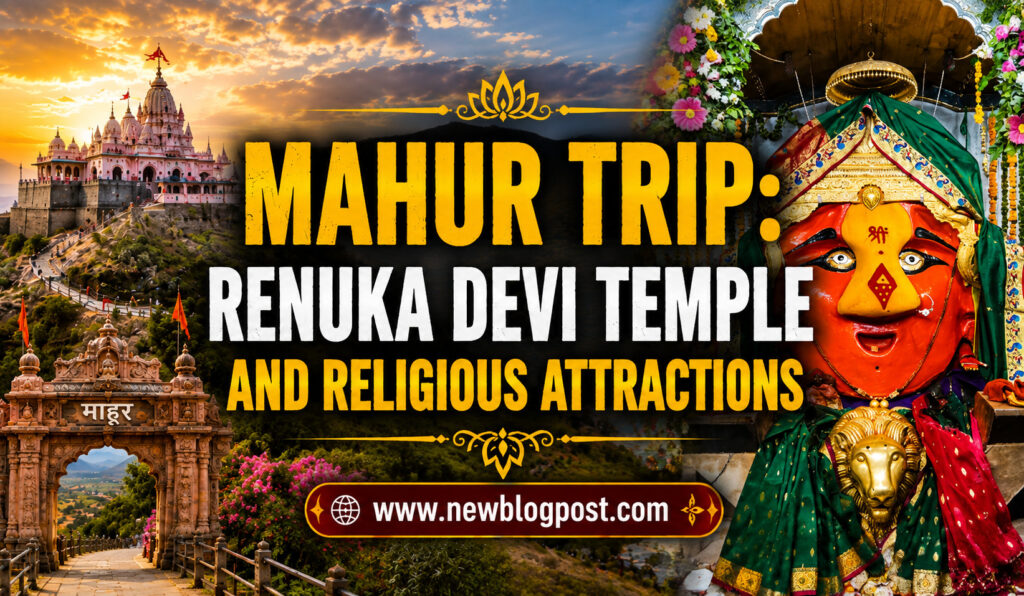

Mahur, located in Maharashtra’s Nanded district, is one of the state’s most important pilgrimage destinations. Surrounded by green hills and rural landscapes, the town is best known for the revered Renuka Devi Temple. For devotees, Mahur is closely associated with Goddess Renuka, the mother of Lord Parashurama, and is regarded as an important Shakti pilgrimage centre.
A Mahur trip offers more than a visit to a single temple. The surrounding hills contain several religious sites connected with Hindu mythology, including the temples of Lord Dattatreya and Anusaya Mata. The natural setting of the region adds another dimension to the pilgrimage, making Mahur suitable for travellers interested in spirituality, culture and Maharashtra’s lesser-known religious destinations.
Unlike some of Maharashtra’s larger pilgrimage centres, Mahur has a comparatively peaceful atmosphere outside major festivals. During Navratri and other important religious occasions, however, the town attracts large numbers of devotees. Travellers planning a visit should therefore consider both the religious calendar and seasonal weather before finalising their journey.
Why Mahur Is Important for Religious Tourism
Mahur occupies a special place in Maharashtra’s religious traditions. The town is traditionally identified with Renuka Devi and is considered one of the important Shakti Peeth-associated pilgrimage locations in the region. Devotees visit the Renuka Devi Temple to seek blessings and participate in religious rituals.
The religious significance of Mahur is also connected with the story of Lord Parashurama, one of the Dashavatara of Lord Vishnu. According to Hindu tradition, Renuka was the mother of Parashurama. Several locations around Mahur are associated with stories concerning her life and the broader mythology surrounding Parashurama.
Mahur is also associated with Lord Dattatreya, making the destination particularly significant for followers of the Datta tradition. The combination of Renuka Devi worship, Dattatreya traditions and the area’s natural surroundings gives Mahur a distinctive identity among Maharashtra’s pilgrimage destinations.
Renuka Devi Temple: The Main Attraction
The Renuka Devi Temple is the heart of the Mahur pilgrimage. Located on a hill, the temple requires visitors to climb a series of steps before reaching the shrine. The elevated location provides views of the surrounding landscape and creates a peaceful atmosphere away from the busier parts of the town.
The temple is dedicated to Goddess Renuka, who is revered as the mother of Lord Parashurama. Devotees from Maharashtra and neighbouring states visit the shrine throughout the year, with particularly large crowds during Navratri.
The journey towards the temple is itself an important part of the experience. The hill, trees and surrounding countryside create a traditional pilgrimage atmosphere. During the monsoon season, the landscape around Mahur can become especially green, although wet conditions can make the steps and roads more difficult to navigate.
Visitors should check the latest temple timings and local arrangements before travelling, particularly during festivals when crowd-management systems may change.
Religious Importance of Renuka Mata
Renuka Mata occupies an important position in Hindu mythology. According to traditional accounts, she was the wife of Sage Jamadagni and the mother of Parashurama.
The stories associated with Renuka are found in Hindu religious literature and have been interpreted in different ways across regional traditions. In Mahur, these traditions have become an important part of the town’s religious identity.
For devotees, visiting Renuka Devi Temple is therefore not simply an act of worship. It is also an opportunity to connect with a tradition that has been preserved through generations.
The annual celebrations at the temple create a particularly vibrant atmosphere. Devotees participate in prayers, religious ceremonies and other activities, transforming the usually quiet hill town into a major pilgrimage centre.
Dattatreya Temple and Mahur’s Spiritual Landscape
Another important religious attraction in Mahur is the temple associated with Lord Dattatreya. Dattatreya is traditionally regarded as a combined manifestation of Brahma, Vishnu and Shiva and is an important figure in several Hindu spiritual traditions.
The Dattatreya Temple is located on another hill and attracts devotees throughout the year. The climb can be physically demanding, but many pilgrims consider the effort part of the spiritual experience.
The hilltop setting also provides an opportunity to enjoy views of the surrounding countryside. Travellers who plan to visit both Renuka Devi and Dattatreya temples should allow sufficient time rather than trying to complete the two visits in a rushed schedule.
Anusaya Mata Temple
The Anusaya Mata Temple is another religious site that can be included in a Mahur pilgrimage. Anusaya Mata is traditionally associated with the story of Dattatreya and is revered as the mother of the deity.
According to Hindu mythology, Anusaya was known for her devotion and spiritual power. The stories surrounding her and Sage Atri form an important part of the religious traditions associated with Dattatreya.
The temple’s presence adds another layer to Mahur’s spiritual significance. Visitors interested in Hindu mythology can explore how the different temples and stories in the region are connected.
Pandavleni and Other Local Attractions
Mahur’s religious landscape is complemented by natural and historical attractions in the surrounding area. The hills and forests provide a scenic backdrop to the pilgrimage route, particularly during the monsoon and winter seasons.
Local visitors may also explore sites associated with Parashurama and other religious traditions. Some locations are less developed for tourism, so travellers should follow local guidance and avoid entering isolated areas without appropriate preparation.
Mahur is best experienced slowly. Rather than treating every site as a quick stop, visitors can spend time understanding the religious traditions behind the temples and enjoying the natural surroundings.
Best Time to Visit Mahur
Mahur can be visited during most of the year, but the ideal period depends on the traveller’s priorities.
The winter months are generally comfortable for temple visits and hill climbs. Temperatures are more manageable, particularly for visitors who plan to spend several hours exploring the pilgrimage sites.
The monsoon season transforms the surrounding landscape with greenery. However, rain can make roads and temple steps slippery, so visitors should exercise additional caution.
Navratri is one of the most significant periods for Renuka Devi worship. The temple attracts large numbers of devotees during the festival, creating a lively religious atmosphere. Travellers who prefer a quieter trip may choose dates outside major festivals.
| Period | Travel experience |
| Winter | Comfortable for temple visits and hill climbs |
| Monsoon | Green landscapes but wet and slippery conditions |
| Summer | Hot afternoons; early morning visits are preferable |
| Navratri | Major religious celebrations and heavy crowds |
Before travelling during festival periods, visitors should confirm local arrangements, accommodation availability and road conditions.
How to Reach Mahur
Mahur is located in the Nanded district of Maharashtra and can be reached by road from Nanded and other nearby cities.
Nanded is an important transport hub for travellers visiting Mahur. From Nanded, visitors can continue by road using buses, taxis or private vehicles.
For travellers arriving by train, Nanded railway station is generally one of the most practical railway connections. The remaining journey to Mahur has to be completed by road.
Air connectivity is more limited compared with Maharashtra’s larger cities. Travellers coming from distant locations may therefore find it more convenient to reach Nanded or another nearby transport centre before continuing to Mahur.
| Travel mode | Practical option |
| Train | Reach Nanded and continue by road |
| Road | Buses, taxis and private vehicles from Nanded and nearby towns |
| Flight | Use a suitable nearby airport and continue by road |
| Local travel | Auto-rickshaws, taxis and local vehicles, depending on availability |
Because Mahur is a hill pilgrimage destination, travel times can be affected by road conditions and seasonal weather.
What to Expect at the Renuka Devi Temple
The hilltop location means visitors should be prepared for walking and climbing. Comfortable footwear can make a significant difference, particularly for elderly pilgrims.
During normal days, visitors may be able to explore the temple area at a relaxed pace. During major religious festivals, queues can become considerably longer and the approach road may be crowded.
Travellers should follow temple instructions regarding footwear, photography, offerings and entry. Religious places should be treated as active places of worship rather than ordinary tourist attractions.
A few basic preparations can make the visit easier:
- Wear comfortable clothing and footwear suitable for climbing steps.
- Carry drinking water, especially during warmer months.
- Keep personal medicines and essential documents with you.
- Check local temple timings and festival arrangements before travelling.
A One-Day Mahur Pilgrimage Plan
Travellers with limited time can cover the major attractions in a single day, although an early start is advisable.
The morning can begin with Renuka Devi Temple while temperatures are still comfortable. After spending sufficient time at the shrine, visitors can proceed towards the Dattatreya Temple and explore the surrounding hill area.
The remaining time can be used to visit Anusaya Mata Temple and other nearby religious sites. Travellers who want a slower experience can stay overnight and explore the area again the following morning.
A one-day trip is suitable for visitors coming from nearby areas, while those travelling from farther cities may prefer a two-day plan to avoid spending too much time on the road.
A Two-Day Mahur Travel Plan
A two-day trip provides a more relaxed experience. The first day can focus on Renuka Devi Temple and the main pilgrimage area. Visitors can spend the evening exploring the town and resting after the hill climb.
The second day can be dedicated to Dattatreya Temple, Anusaya Mata Temple and nearby attractions. Depending on weather and local conditions, travellers can also explore the surrounding hills and countryside.
This approach is particularly useful for families and elderly travellers because it reduces the need to visit several hilltop temples in a single day.
Local Food and Accommodation
Mahur is primarily a pilgrimage destination, so visitors will find simple vegetarian food around the temple areas and town. Traditional Maharashtrian meals and basic snacks are commonly available.
Travellers should not expect the same variety of restaurants found in major cities. Those with specific dietary requirements may find it useful to carry suitable packaged foods.
Accommodation options are generally simpler than those available in larger tourist destinations. During major festivals such as Navratri, demand can rise sharply. Booking accommodation in advance is therefore advisable if travelling during peak pilgrimage periods.
Mahur During Navratri
Navratri is one of the most important times to visit Renuka Devi Temple. The festival is associated with the worship of Goddess Durga and her various forms, and the temple attracts a large number of devotees during this period.
The town takes on a festive appearance, with religious ceremonies, decorations and increased activity around the temple. For pilgrims, this can be an especially meaningful time to visit.
However, the large crowds also mean that travellers need more patience. Parking, accommodation, road travel and temple queues can all become challenging. Visitors should plan ahead and follow instructions from local authorities and temple management.
Those looking for a peaceful sightseeing experience may find the winter months outside major festivals more suitable.
Responsible Tourism in Mahur
Mahur’s natural environment and religious sites deserve careful treatment. The hills surrounding the temples are part of the area’s appeal, but increased tourism can create problems if visitors leave waste behind.
Travellers should avoid plastic litter, use designated waste bins and keep the temple surroundings clean. Visitors should also avoid damaging plants or disturbing wildlife while exploring the hills.
Religious etiquette is equally important. Photography should not interfere with rituals or other devotees, and visitors should follow rules concerning temple entry and offerings.
Supporting local shops, food vendors and accommodation providers can also help the local economy.
Why Mahur Is Worth Visiting
Mahur may not receive the same nationwide tourism attention as some of Maharashtra’s largest pilgrimage destinations, but that is part of its appeal. The town offers a combination of sacred temples, mythology, hill landscapes and local traditions.
The Renuka Devi Temple provides the central pilgrimage experience, while the Dattatreya and Anusaya Mata temples broaden the spiritual journey. The surrounding hills make the destination visually distinctive, especially during the monsoon and winter seasons.
For travellers interested in Maharashtra’s religious heritage, Mahur provides an opportunity to experience a pilgrimage tradition that remains closely connected with local communities.
Conclusion
A Mahur trip is a journey into one of Maharashtra’s significant religious landscapes. The Renuka Devi Temple remains the main attraction, but the spiritual experience becomes richer when travellers explore the Dattatreya Temple, Anusaya Mata Temple and other sites connected with the region’s mythology.
The best time to visit depends on personal preferences. Winter offers comfortable conditions for sightseeing, monsoon brings greenery to the hills, while Navratri provides the strongest festival atmosphere but also attracts large crowds.
Travellers should plan their route carefully, carry suitable footwear and water, check temple timings and allow enough time for hill climbs. Respecting local religious traditions and keeping the surrounding environment clean will also help preserve Mahur’s unique character.
Whether travelling as a family pilgrimage, a weekend religious trip or part of a wider Maharashtra itinerary, Mahur offers an experience that combines devotion, mythology and the peaceful beauty of the Deccan landscape.
Frequently Asked Questions
1. Why is Mahur famous?
Mahur is famous mainly for the Renuka Devi Temple and its association with Goddess Renuka and Lord Parashurama. It is also an important centre for Dattatreya worship.
2. Where is Mahur located?
Mahur is located in Nanded district of Maharashtra. It is a hill pilgrimage destination surrounded by forests and rural landscapes.
3. What is the main temple in Mahur?
The Renuka Devi Temple is the principal pilgrimage shrine in Mahur. It is situated on a hill and is dedicated to Goddess Renuka.
4. What other temples can be visited in Mahur?
Visitors can explore the Dattatreya Temple and Anusaya Mata Temple along with several smaller religious sites in the surrounding area.
5. How can I reach Mahur?
Nanded is one of the main transport points for reaching Mahur. Travellers can reach Nanded by train or road and continue towards Mahur by bus, taxi or private vehicle.